According to www.vietnam.vn, Vietnam’s logistics sector is accelerating its strategic positioning amid a $550 billion total merchandise import-export value in the first half of 2026, reflecting a 27.1% year-on-year increase.
Global Supply Chain Restructuring Opens Strategic Window
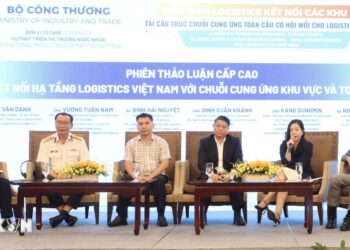
On 24 July 2026, the Ministry of Industry and Trade hosted the Logistics Connectivity Forum in Ho Chi Minh City under the theme “Global Supply Chain Restructuring — New Opportunities for Vietnam’s Logistics.” The event brought together national and local government agencies, domestic enterprises, and international partners including APM Terminals, Tan Cang Saigon Joint Stock Company, and Busan Port Authority (South Korea) to assess evolving global supply chain dynamics shaped by geopolitical shifts, digital transformation, and green transition imperatives.
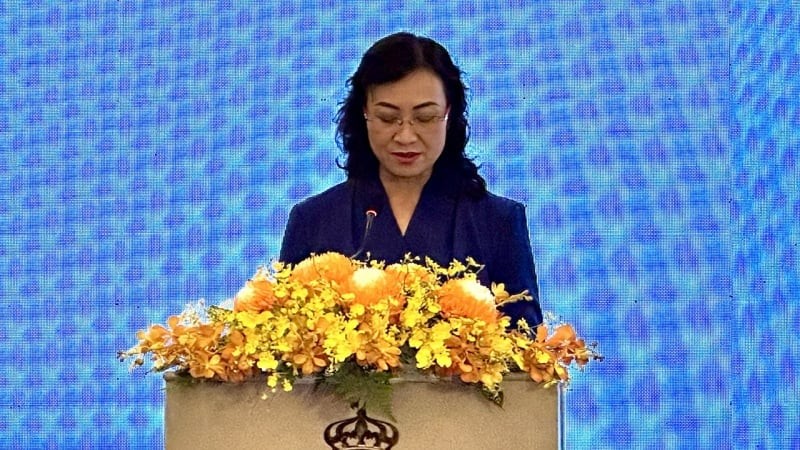
The forum served as a high-level dialogue platform to align policy, infrastructure investment, and operational innovation. Deputy Minister of Industry and Trade Phan Thi Thang underscored logistics’ growing centrality to national competitiveness and export growth, noting that Vietnam’s strategic geography, expanding port infrastructure, and network of next-generation free trade agreements position it to deepen integration into regional and global value chains.
Aggressive 2026 Export Targets and Trade Performance
The Vietnamese government has set an ambitious minimum economic growth target of 10% for 2026, with export-import expansion identified as the primary driver. Specifically, total import-export growth is targeted at 8% over 2025, while exports alone are projected to rise 15–16%.
Early results support this trajectory: in the first six months of 2026, Vietnam recorded $266.5 billion in exports — up 21% year-on-year — and $283.2 billion in imports, an increase of 33.4%. This robust performance signals strong adaptive capacity across domestic production and export systems within regional and global supply networks.
Logistics Strategy 2025–2035: Concrete Targets and Enablers
Vietnam’s official Logistics Services Development Strategy for 2025–2035, with a vision to 2050, establishes quantified benchmarks: logistics value-added contribution to GDP should reach 5–7%; annual logistics services growth must average 12–15%; and logistics costs as a share of GDP must fall from the current 17% to 12–15%.
To achieve these goals, the strategy prioritizes five interlinked enablers: synchronized infrastructure investment — especially in integrated logistics centers; accelerated digital transformation across documentation, tracking, and customs clearance; adoption of green logistics practices including low-emission transport and energy-efficient warehousing; administrative reform to reduce procedural friction; and strengthened inter-regional and intermodal coordination among provinces, economic zones, and transport modes.
International Collaboration and Infrastructure Priorities
The forum highlighted concrete cross-border collaboration, with presentations from APM Terminals, Tan Cang Saigon, and Busan Port Authority focusing on port modernization, post-port logistics ecosystems, multimodal connectivity, digitalization, and decarbonization. All emphasized that competitive advantage hinges on three pillars: integrated infrastructure deployment, efficient port utilization, and seamless linkage between inland logistics hubs and international transport corridors.
This agenda gains urgency ahead of the FIATA World Congress 2025, scheduled for 6–10 October 2025 in Hanoi — an event explicitly designed to elevate Vietnam’s profile as a regional logistics hub and convergence point for Asian and global supply chains.
Academic Leadership and Policy Influence
The forum also spotlighted long-term institutional capacity building. Professor Ho Thi Thu Hoa, Senior Lecturer and Head of the Logistics and Supply Chain Management Department at the International University (Vietnam National University, Ho Chi Minh City), has contributed to over 30 strategic research projects and policy frameworks during her nearly 30-year career — directly shaping Vietnam’s national logistics development agenda.
Her work informs core elements of the national strategy, including the design of logistics zoning, regulatory harmonization across transport modes, and metrics for measuring efficiency and sustainability improvements across the sector.
Source: vietnam.vn
Compiled from international media by the SCI.AI editorial team.