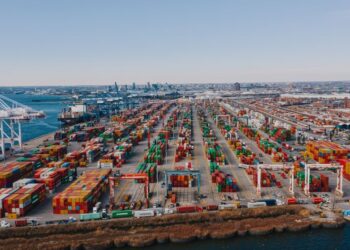
According to theloadstar.com, former U.S. President Donald Trump has imposed additional 50% tariffs on hundreds of Canadian products, effective at 12.01 a.m. eastern time on 19 August 2026. The move targets goods in response to Canadian trade measures affecting U.S. motor vehicles, alcoholic beverages, and dairy exports.
Legal uncertainty looms over Section 338 authority
The tariffs are authorized under Section 338 of the Tariff Act, a nearly century-old provision permitting up to 50% duties when the president determines another country discriminates against U.S. commerce. Though the statute has existed since the 1930s, the U.S. has never previously used it to impose tariffs — making this the first-ever invocation. Congressional researchers note the law does not appear to require a prior agency investigation, raising questions about the scope of presidential discretion. Legal scholars and trade practitioners warn that the unprecedented application invites immediate judicial scrutiny.
The White House confirmed the proclamations may be suspended, revoked, supplemented, or amended “if the president considers it to be in the public interest.” That clause — embedded in Section 338 — provides a narrow but constitutionally significant escape valve, though its use would likely trigger further litigation. A recent federal trade court ruling on 8 May 2026 already dealt a major setback to the administration’s broader tariff strategy, underscoring heightened legal vulnerability.
Strategic exemptions shield integrated supply chains
Critically, the new duties exclude several high-value, deeply integrated sectors. Products already subject to Section 232 duties — including passenger vehicles, light trucks, vehicle parts, steel, aluminium, and copper — are fully exempt. Semiconductor articles and patented pharmaceutical products are also excluded. Qualifying civil aircraft, engines, and components fall outside the tariff scope under separate statutory provisions — though unmanned aircraft do not qualify for this exemption.
These carve-outs significantly reduce the risk of tariff stacking on North America’s most tightly coordinated industrial ecosystems. For example, automotive supply chains spanning Ontario, Michigan, and Quebec remain insulated from the new duties. Similarly, aerospace manufacturing clusters linking Montreal, Winnipeg, and Seattle avoid compounding levies. As one trade lawyer observed:
“This is less about economic disruption and more about calibrated political signaling — the exclusions were designed to prevent immediate blowback from key U.S. manufacturers dependent on just-in-time cross-border flows.”
Three-tiered product lists target broad sectors
The tariffs apply across three distinct product categories, none of which benefit from USMCA origin treatment — meaning even goods qualifying as originating under the United States-Mexico-Canada Agreement (USMCA) will incur the additional duty. The first list covers alcoholic drinks, selected wood and paper products, and sporting goods — including hockey sticks. The second targets dairy inputs: milk powders, whey products, lactose, syrups, and casein. The third and broadest list includes agricultural items, food preparations, chemicals, cement, machinery, electrical equipment, and consumer goods.
Notably, several strategically vital categories are excluded: energy exports, potash, fish, critical minerals, and certain other commodities. This selective approach reflects ongoing U.S. policy priorities — particularly around securing non-Chinese sources of critical minerals and maintaining stable North American energy flows. The 30-day implementation window — from 21 July 2026 to 19 August 2026 — leaves room for diplomatic negotiation, though no formal talks have been announced.
Supply chain implications for freight operators
The road freight network between the U.S. and Canada is expected to feel the sharpest initial impact, especially for carriers handling non-exempt goods across border crossings like Buffalo–Fort Erie, Detroit–Windsor, and Blaine–Abbotsford. Shippers report immediate cost modeling exercises underway, with some anticipating rate adjustments of 12–18% on affected lanes by early September. Meanwhile, air cargo volumes for exempt categories — such as semiconductor test equipment and aerospace tooling — show no projected change.
Logistics professionals emphasize that the exemptions provide crucial operational breathing room but do not eliminate complexity. “Compliance teams now face parallel classification regimes: one for Section 232, one for Section 338, and one for USMCA origin rules,” said a senior customs specialist at SEKO Logistics. “It’s not just about duty rates — it’s about documentation velocity, bond requirements, and real-time CBP alignment.” Industry data shows average customs clearance times for non-exempt Canadian imports rose by 22% during the 2025 steel tariff episode — a precedent suggesting similar delays may recur.
Source: The Loadstar
Compiled from international media by the SCI.AI editorial team.