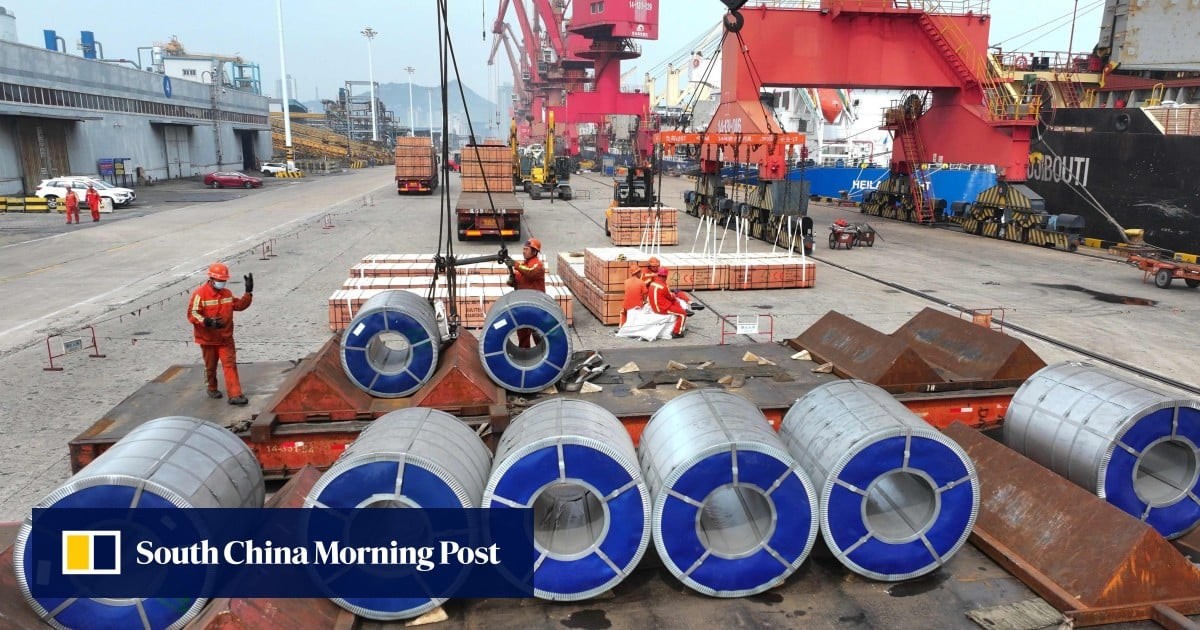
According to www.scmp.com, China’s leading steelmakers are intensifying coordinated efforts to adapt export strategies, compliance systems, and pricing models in response to the full implementation of the EU’s Carbon Border Adjustment Mechanism (CBAM) in 2026.
Industry-Wide Coordination Amid CBAM Expansion
The European Union launched CBAM in 2023, requiring importers to pay the carbon price differential between the origin country and the EU. Its scope is expanding from raw materials to downstream products—including machinery, vehicles, and appliances—amplifying exposure for Chinese exporters. As the world’s largest steel producer, China faces dual pressures: rising export costs driven by carbon levies and increasingly stringent disclosure requirements for carbon footprint transparency.
Key Operational Challenges Identified
At an industry meeting held online earlier this month and attended by more than 100 steelmakers and upstream and downstream stakeholders, participants focused on practical CBAM-related hurdles. According to the report, key concerns included:
- Emissions factor recognition
- Pre-verification procedures
- Testing methodologies
- Data security
Industry insiders said carbon costs are expected to cascade through supply chains, adding to compliance costs for Chinese exporters.
Official Perspectives on Policy and Engagement
“China’s indirect steel exports to the EU are substantial, and a significant portion consists of high value-added products.” — Jiang Wei, vice-chairman and secretary general of the China Iron and Steel Association
“As CBAM expands downstream, the transmission effects along the industrial chain will be further amplified.” — Jiang Wei, vice-chairman and secretary general of the China Iron and Steel Association
Wang Tian, deputy director of the cooperation division at the Ministry of Ecology and Environment’s climate department, stated at the same meeting that CBAM was essentially a policy tool adopted by the EU based on industrial competitiveness and trade considerations—and that its rules remained subject to ongoing adjustments. This signals continued technical engagement by Chinese regulators to ease implementation pressures.
Practitioner Implications for Global Supply Chains
For global supply chain professionals, CBAM’s expansion represents more than a tariff-like levy: it introduces new data governance demands, cross-border verification workflows, and cost-allocation complexities across multi-tier supplier networks. Chinese steel—often embedded in EU-bound machinery, automotive components, and white goods—now carries traceable carbon liability. This requires procurement teams to assess not only material specifications and lead times but also upstream emissions reporting capacity. Meanwhile, logistics and compliance officers must prepare for documentation harmonization across jurisdictions, especially as CBAM’s pre-verification phase tightens scrutiny on testing protocols and data integrity. With no major Chinese steelmaker named individually in the source, the response remains sector-wide—highlighting the collective nature of regulatory adaptation in globally integrated manufacturing supply chains.
Source: South China Morning Post
Compiled from international media by the SCI.AI editorial team.