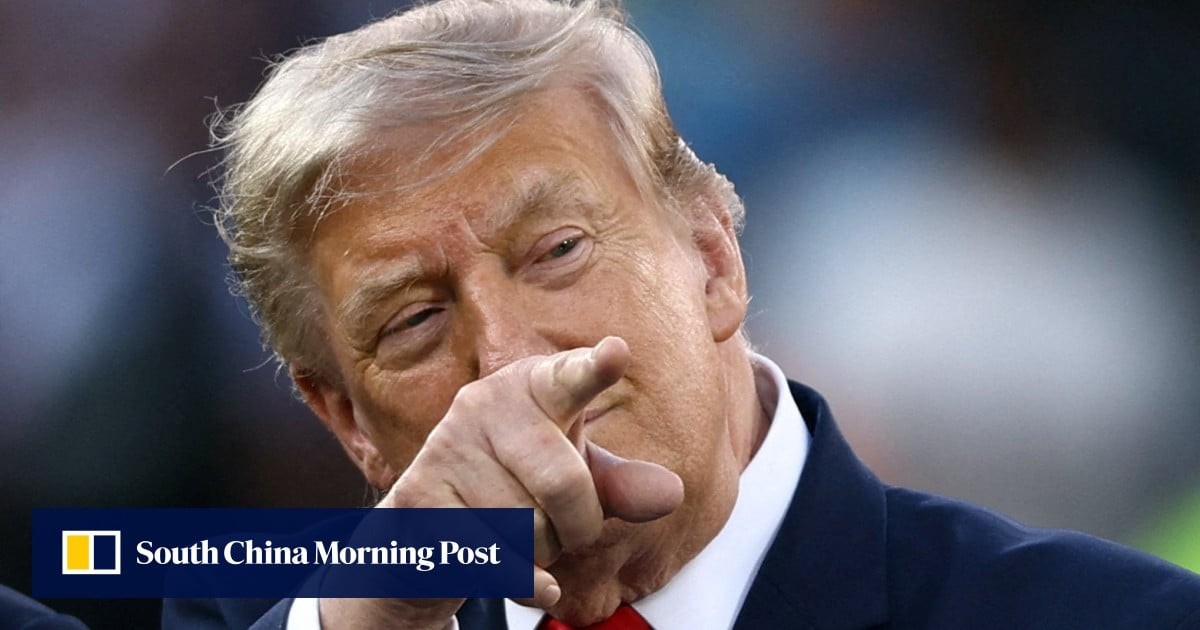
According to www.scmp.com, former U.S. President Donald Trump signed executive orders on 21 July 2026 to impose new 50 per cent tariffs on a broad range of Canadian imports, including wine, hockey sticks, and cement.
Legal basis and scope
The tariffs are set to take effect in 30 days from the announcement date and rely on Section 338 of the Tariff Act of 1930 — a provision that has never been tested in court. The White House stated the duties target goods subject to what Trump called “discriminatory treatment” by Ottawa against U.S. alcohol, automobile, and dairy products. Notably, the new tariffs explicitly exclude energy exports, potash, and items already covered by existing sector-specific duties.
The move directly affects products governed under the US-Mexico-Canada Agreement (USMCA), raising legal concerns. According to the report, the U.S. administration invoked this untested statutory authority after multiple prior tariff actions were struck down by the Supreme Court earlier in 2026.
Canadian response and diplomatic pathway
Mark Carney, Prime Minister of Canada, responded immediately, stating that Ottawa stands ready to “intensify” bilateral negotiations with the United States. The source states that Canada has submitted formal proposals aimed at resolving outstanding disputes and modernising the USMCA.
“Ottawa stands ready to intensify talks with the United States, and has made proposals to resolve disputes and modernise the USMCA.” — Mark Carney, Prime Minister of Canada
This marks the first time since the agreement’s 2020 entry into force that one party has unilaterally imposed broad-based tariffs on another’s goods under its framework. The USMCA replaced NAFTA and includes binding dispute settlement mechanisms — provisions the Canadian government asserts are being violated.
Supply chain implications for North American trade
For supply chain professionals, the new duties introduce immediate cost volatility across multiple high-volume categories. Wine imports — a $480 million annual flow from Canada to the U.S. in 2025, per U.S. Census Bureau data — now face near-doubling of landed costs. Similarly, Canadian-made hockey sticks — accounting for an estimated 37% of U.S. retail sales in the category — will require rapid sourcing reassessment or price pass-throughs.
Cement shipments, which support U.S. infrastructure projects in border states like Michigan and New York, also fall under the tariff scope. Industry analysts note that U.S. producers currently supply only 62% of domestic demand, making imported Canadian cement a critical buffer during construction peaks. The 50% duty could delay or inflate public works timelines unless alternative suppliers — such as those in Mexico or domestic quarries — scale capacity within the 30-day implementation window.
Broader trade law context
Section 338 of the 1930 Tariff Act authorises the president to adjust duties when foreign governments “impose burdens, restrictions, or prohibitions” deemed unjustifiable or discriminatory. While historically dormant, its activation signals a potential shift toward more aggressive unilateral trade enforcement — especially amid growing congressional scrutiny of USMCA compliance reports.
No other G7 nation has recently invoked similar provisions against a free-trade partner. In contrast, the European Union launched WTO consultations over U.S. steel and aluminum tariffs in May 2026, while Mexico reaffirmed its commitment to USMCA dispute panels in a joint statement issued on 19 July 2026.
Source: South China Morning Post
Compiled from international media by the SCI.AI editorial team.