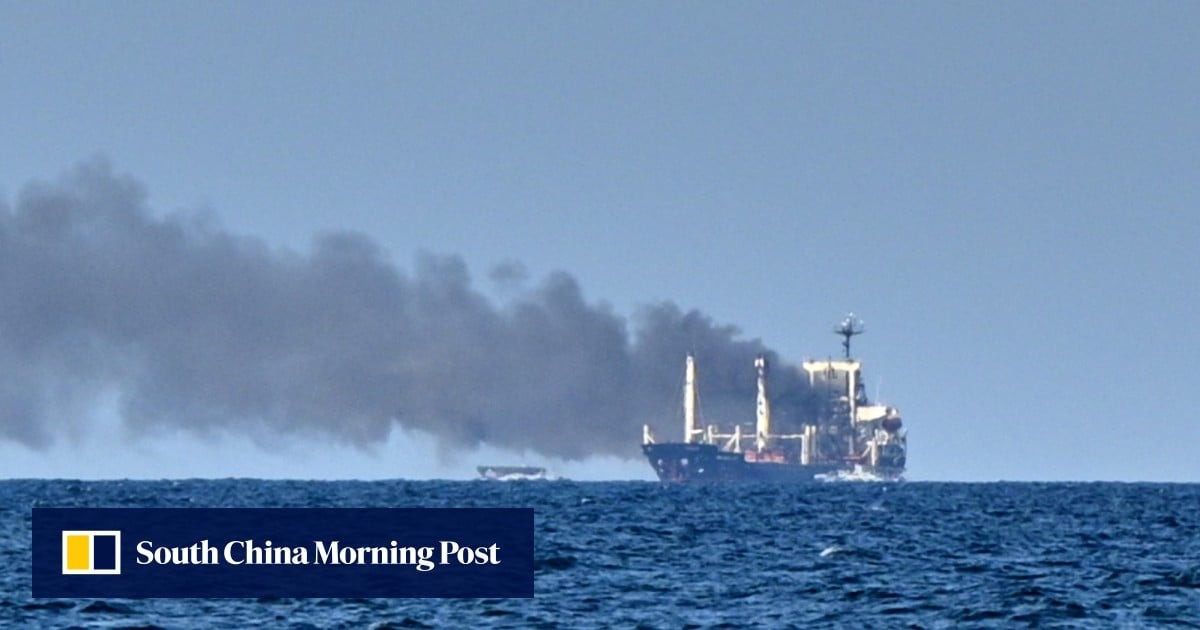
According to www.scmp.com, Ukraine’s navy confirmed that 6 sailors died and 4 remain missing after Russian cruise missiles struck the Turkish-owned cargo vessel Golden Leo near Odesa on 20 July 2026.
Russian missile strike on civilian grain vessel
Ukraine’s navy stated that Russia launched three cruise missiles at the Golden Leo, a vessel registered under the flag of Guinea-Bissau, as it was “leaving the combat zone with a cargo of grain”. The attack occurred hours after Moscow conducted a fresh barrage of missiles against Kyiv — underscoring the intensification of strikes targeting both urban centers and maritime logistics infrastructure in the Black Sea region.
The vessel was en route from Ukrainian port facilities when hit. Prime Minister Sergiy Koretsky confirmed the location of the strike occurred near Odesa, a critical export hub for Ukrainian grain. The incident directly impacts one of the few remaining functional maritime corridors established under the Black Sea Grain Initiative’s successor arrangements, despite the formal collapse of that UN-brokered deal in 2023.
Casualties and crew composition
Kyiv’s transport minister Mykola Kalashnyk reported on Telegram that eight crew members were rescued, two of whom sustained injuries. He added: “Unfortunately, as of now, six sailors are confirmed dead, and four more are missing.”
Foreign Minister Andriy Sybiga disclosed that the crew included citizens of Syria and India. In a statement posted on X (formerly Twitter), Sybiga confirmed the death of a Ukrainian maritime pilot aboard the vessel — a detail highlighting the direct involvement of Ukrainian personnel in commercial shipping operations supporting grain exports. He condemned the attack as part of an ongoing campaign, saying:
“While the world is still responding to Russia’s brutal overnight attack on Kyiv, Moscow continues its campaign of terror throughout the day.”
Geopolitical and supply chain implications
The strike occurred amid renewed volatility in Black Sea shipping lanes, where insurers have withdrawn coverage for vessels transiting within 12 nautical miles of Ukraine’s coast since early 2024. According to industry data from the International Chamber of Shipping, average insurance premiums for Black Sea voyages rose over 300% between Q1 2024 and Q2 2026, pushing many operators to reroute via longer, costlier alternatives — including the Suez Canal detour or overland rail corridors through Central Europe.
This incident further erodes confidence in the viability of the Odesa corridor, which handled 12.5 million metric tons of Ukrainian grain in the first half of 2026 — down 18% year-on-year, per the Ukrainian Ministry of Agrarian Policy. For global buyers reliant on Ukrainian wheat, maize, and sunflower oil, the disruption compounds existing price pressures: Chicago Board of Trade wheat futures rose 4.2% on 20 July following news of the attack.
Source: South China Morning Post
Compiled from international media by the SCI.AI editorial team.