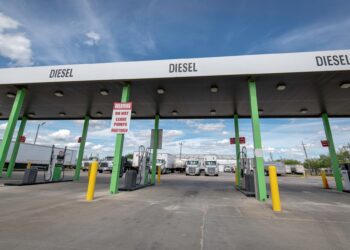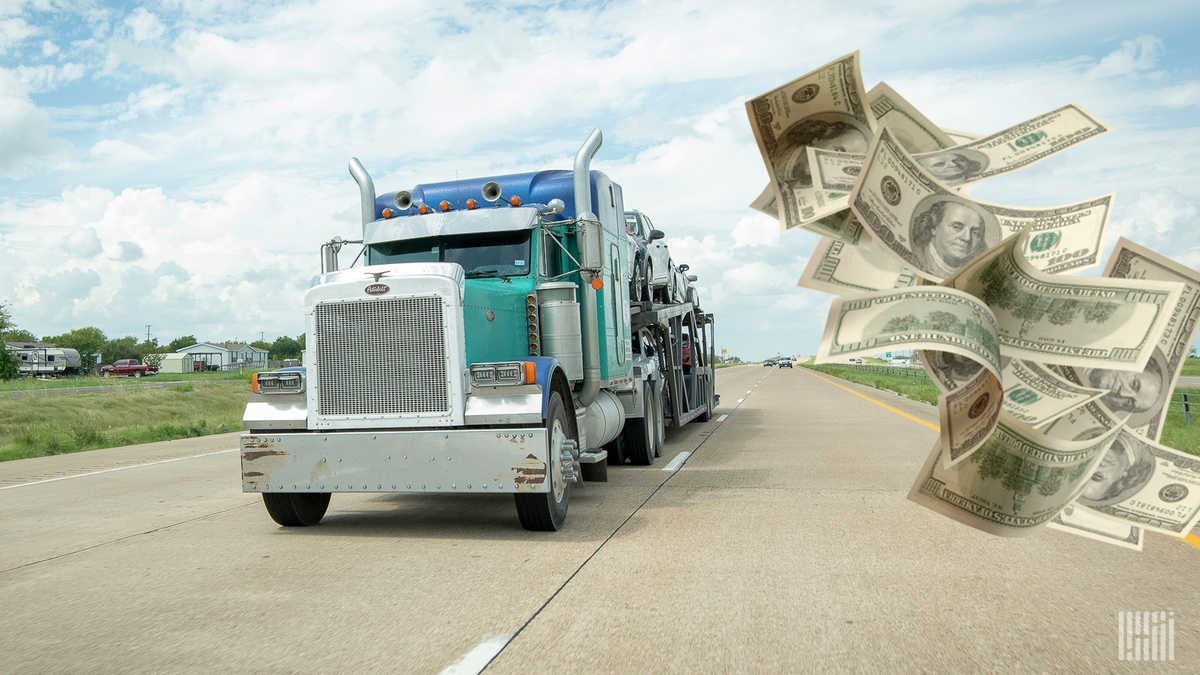
According to FreightWaves, national truckstop diesel prices hit a record $5.32 per gallon on May 1, 2022 — up $1.57 per gallon since February 1, 2022.
Diesel’s Economic Lifeline
Diesel fuel is not a niche commodity — it powers the physical backbone of the U.S. economy. Craig Fuller, CEO of FreightWaves, emphasized that without diesel, ‘the U.S. economy would collapse in a matter of days.’ The supply chain would ‘completely shrivel, almost overnight.’
Trucks haul over 70% of domestic freight by weight, and 97% of Class 8 trucks — the heavy-duty workhorses moving goods coast-to-coast — run exclusively on diesel. Rail transport is similarly dependent: nearly all freight locomotives rely on diesel, including those operated by BNSF, which moves coal critical to power generation. In fact, 22% of U.S. electricity comes from coal, much of it transported by diesel-powered trains.
Ocean shipping — the artery of global trade — also depends overwhelmingly on diesel. 80% of ocean-going vessels transporting U.S. imports and exports are diesel-powered, including container ships operated by Maersk. A disruption in diesel supply would rapidly empty grocery store shelves, halt restaurant deliveries, and deplete hospital inventories of essential medical supplies.
Agriculture: Diesel at Every Link
The agricultural sector is wholly integrated with diesel infrastructure — from planting to plate. According to the Diesel Technology Forum, diesel engines power more than two-thirds of all U.S. farm equipment, transport 90% of agricultural output, and pump one-fifth of the nation’s irrigation water.
96% of large trucks moving crops to railheads and warehouses use diesel engines. Likewise, 100% of freight locomotives, marine river grain barges, and ocean-going vessels delivering U.S. agricultural commodities domestically and abroad run on diesel. There is ‘no cost-effective substitute for diesel engines’ offering the same blend of energy efficiency, durability, reliability, and high-torque performance required across this sector — from tractors and combines to irrigation pumps and fishing vessels.
The Pharr-Reynosa International Bridge — one of the largest land ports for fruits and vegetables entering the U.S. — handles produce shipments heavily reliant on diesel-powered cross-border trucking. Without diesel, this vital flow would stall, directly impacting food security and retail inventory levels nationwide.
Construction and Industrial Dependence
Industrial activity is equally inseparable from diesel. Roughly 850,000 diesel-powered vehicles operate daily on U.S. construction sites, delivering materials, equipment, and personnel. Heavy machinery — including earthmovers, bulldozers, cranes, excavators, and motor graders — depends on diesel for its unmatched power density.
For machines exceeding 500 horsepower, no viable alternative currently exists; some construction engines generate several thousand horsepower. Diesel remains the only practical energy source capable of powering infrastructure expansion and maintenance at scale. As May 2022 data shows, price surges compound existing inflationary pressures across transportation, agriculture, and construction — sectors already experiencing unprecedented cost increases.
This escalation risks triggering demand destruction: carriers may reduce mileage, shippers may delay projects, and farmers may defer planting or harvesting cycles — all contributing to downstream ripple effects across employment, consumer pricing, and GDP growth.
Electric Alternatives Fall Short — For Now
While electrification efforts continue, current deployment lags far behind projections. When Tesla unveiled its Semi truck in 2017, CEO Elon Musk projected over 100,000 units would be produced by 2022. As of May 2022, fewer than 20 Semis existed — mostly prototypes — underscoring the technological, infrastructural, and economic barriers to fleet-scale electrification.
No major Class 8 OEM has achieved commercial-scale battery-electric truck deployment in long-haul operations. Meanwhile, diesel remains indispensable — not merely as a transitional fuel but as the operational standard anchoring U.S. logistics resilience. As Craig Fuller stated, ‘No, Elon Musk is not going to save us here.’
Source: FreightWaves
Compiled from international media by the SCI.AI editorial team.