According to nongnghiepmoitruong.vn, Vietnam’s national logistics costs remain elevated primarily because multimodal transport—especially rail and inland waterway freight—is underutilized, with its combined share still below 15% of total freight volume.
Infrastructure Fragmentation Undermines Supply Chain Efficiency
A key bottleneck identified in the report is the lack of integrated infrastructure connectivity. Although Vietnam has invested heavily in highways, seaports, airports, and logistics centers in recent years, development remains fragmented and lacks strategic coordination. Road, rail, inland waterways, maritime, and air transport continue operating as isolated modal silos rather than forming seamless multimodal corridors linking raw material zones, industrial parks, seaports, border gates, and end markets.
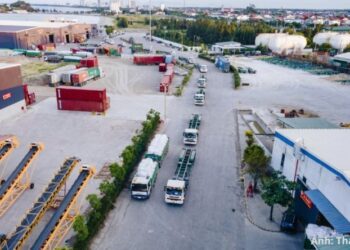
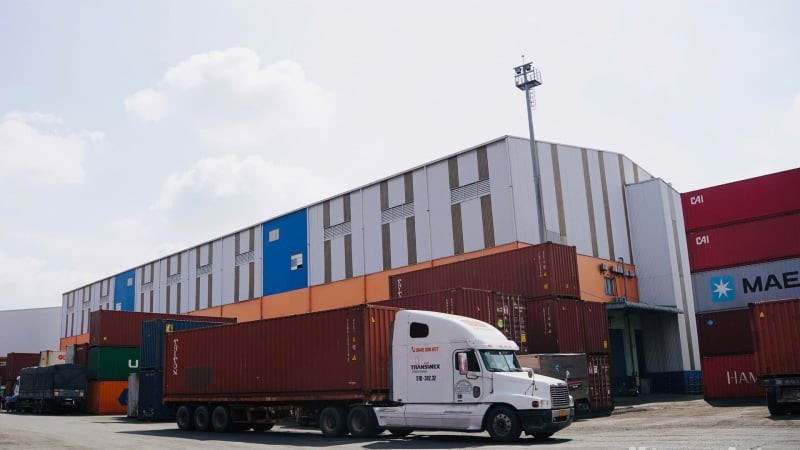
For example, many cargo shipments require multiple transshipments due to insufficient direct intermodal transfer points—particularly between road and rail or road and inland waterways. At major seaports, over 85% of container movements still rely on trucking, despite rail and inland water transport offering significantly lower unit costs. This inefficiency inflates system-wide expenses and delays.
Strategic Gaps in Planning and Governance
At the July 15, 2026, Ministry of Industry and Trade–organized National Logistics Strategy Implementation Conference (2025–2035, vision to 2050), experts attributed high logistics costs to two systemic failures: inadequate strategic connectivity planning and misaligned infrastructure master planning. Trần Đức Nghĩa, Chairman of the Hanoi Logistics Association, emphasized that multimodal transport has not been formally organized nationwide—a gap that prevents cost optimization across the supply chain.
He stated:
“If the national logistics center fulfills its pivotal role—integrating transport modes—national logistics costs will decline substantially.” — Trần Đức Nghĩa, Chairman, Hanoi Logistics Association
The report underscores that such integration requires centralized state-led planning and investment. Without a unified national framework, individual enterprises continue building standalone logistics assets—warehouses, terminals, IT systems—rather than sharing infrastructure or data, further raising total chain costs.
Digital and Green Infrastructure Deficits
Beyond physical infrastructure, digital fragmentation compounds inefficiencies. Data systems among freight carriers, ports, customs agencies, warehouses, and regulatory bodies remain incompatible and non-interoperable. This hampers real-time visibility, automated documentation, and coordinated scheduling—critical enablers for multimodal efficiency.
The article identifies three foundational pillars for upgrading Vietnam’s logistics sector: integrated hard infrastructure, digital transformation, and green logistics. Yet progress on all three remains uneven. For instance, while the government aims to raise the rail-inland waterway freight share to 30% by 2030, current utilization stands at just 14.7%—a figure cited by industry analysts at the conference. Similarly, national logistics expenditure accounts for approximately 16.2% of GDP, well above the ASEAN average of 11.5%.
Efforts to address these gaps include proposals to establish dedicated logistics hubs serving the Central Highlands’ agricultural output, such as a regional center to manage post-harvest handling, cold storage, and export-ready packaging for coffee and pepper—two commodities representing over $4.2 billion in annual export value.
Industry Leadership and Operational Realities
Trương Tấn Lộc, Marketing Director of Saigon New Port Corporation and Chairman of Tan Cang Cai Mep International Terminal (TCIT), pointed to weak inter-enterprise collaboration as a core constraint. He noted that logistics firms still prioritize independent infrastructure investment over shared service models—limiting scale economies and increasing redundant overhead.
“One of today’s biggest bottlenecks isn’t just international freight rates—it’s the lack of supply chain coordination and optimization,” said Trương Tấn Lộc.
“Many companies invest separately instead of jointly developing shared infrastructure and digital platforms—driving up total chain costs.” — Trương Tấn Lộc, Marketing Director, Saigon New Port Corporation
This operational reality persists despite policy momentum: Vietnam’s 2025–2035 Logistics Development Strategy explicitly mandates interoperable digital platforms and intermodal terminal standards. However, implementation lags—only 7 of 22 priority logistics projects approved under the strategy have reached financial close as of mid-2026.
Source: nongnghiepmoitruong.vn
Compiled from international media by the SCI.AI editorial team.