According to www.vietnam.vn, Nghệ An Province’s high-tech industrial exports rose 52% year-on-year in the first half of 2026, reaching $1.96 billion, while imports of machinery, components, and raw materials totaled $2.09 billion — up 51% over the same period in 2025.
Export Growth Fuels Urgent Logistics Gap
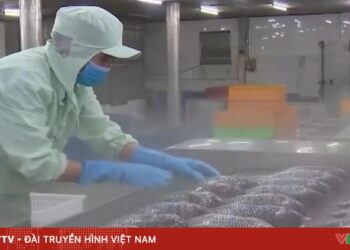
The rapid expansion of high-tech manufacturing — anchored by global electronics and precision engineering firms — has transformed Nghệ An into one of Vietnam’s fastest-growing industrial hubs. Electronics and technology products now account for 86.8% of export value from the Southeast Economic Zone, with precision machinery contributing 9.9%. These sectors demand stringent environmental controls: temperature- and humidity-sensitive components, vibration-prone assemblies, and high-value microelectronics require logistics infrastructure far beyond standard freight handling.
Major foreign-invested enterprises operating in Nghệ An’s industrial parks include Foxconn, Luxshare, Goertek, Runergy, and Everwin Precision. Collectively, they drive demand for integrated, compliant supply chain services — not just transportation, but end-to-end control of quality, traceability, and regulatory adherence across air, sea, and land corridors.
Specialized Logistics: Beyond Warehousing and Trucks
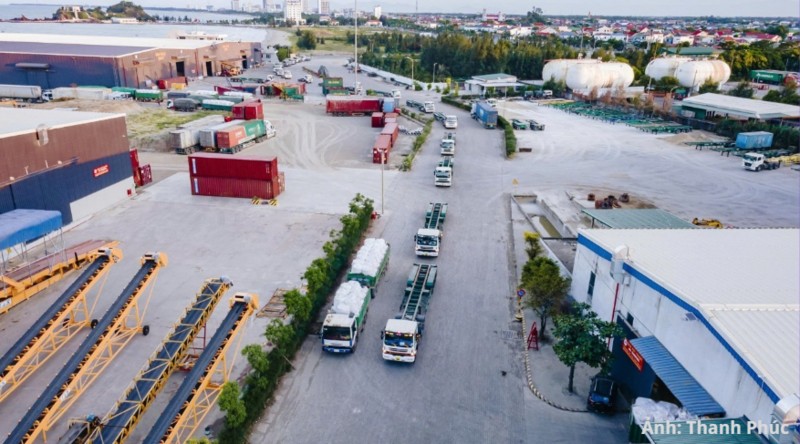
Specialized logistics in Nghệ An encompasses purpose-built infrastructure: clean-room warehouses, certified cold-chain facilities, refrigerated tankers for dairy transport, cryogenic storage for pharmaceuticals and vaccines, and heavy-lift transport for oversized factory equipment. It also serves hazardous cargo categories including liquefied gases, lithium batteries, flammable chemicals, and petroleum products — all requiring certified handling protocols, trained personnel, and real-time monitoring systems.
This model diverges sharply from conventional logistics. As defined in the source, specialized logistics is “a service system designed exclusively for specific commodity groups,” integrating dedicated vehicles, modern material-handling equipment, ISO-certified storage environments, and technical staff qualified in sector-specific compliance — such as FDA, GMP, or IATA Dangerous Goods regulations.
Private Investment Steps Into the Breach
Recognizing this structural gap, Vietnamese logistics providers are scaling vertically. Avina Joint Stock Company, headquartered in VSIP Industrial Park and founded in 2012, exemplifies this shift. Under CEO Lê Thị Hoàng Oanh, the firm moved beyond transactional freight forwarding to offer integrated supply chain consulting, customs compliance advisory, post-clearance risk management, and value-added logistics solutions tailored for high-tech manufacturers and FDI clients.
Avina’s service portfolio includes international freight forwarding by sea, air, and road; customs brokerage; integrated logistics; and post-entry customs support. According to Lê Thị Hoàng Oanh, “We aim to be a strategic partner — advising and optimizing the entire supply chain for our clients, not just moving goods.” She emphasized that Vietnam’s broader economic integration, global supply chain reconfiguration, and Nghệ An’s accelerating FDI inflows have created “significant untapped potential” for professional, sector-specific logistics capacity.
Strategic Implications for Supply Chain Professionals
For procurement and logistics managers sourcing in northern Vietnam, the data signals urgent operational adjustments. With export volumes growing at over 50% annually and electronics dominating the trade mix, reliance on generalist carriers or ad-hoc warehousing poses tangible quality, compliance, and delivery-risk exposure. The $2.09 billion in imported production inputs — mostly high-value components — further underscores the need for bonded, climate-controlled, and audit-ready storage and transit capabilities.
Practitioners must now evaluate partners not only on cost and lead time, but on verifiable certifications (e.g., ISO 13485 for medical devices, AEO status for customs reliability), technical staffing ratios, real-time visibility platforms, and documented experience with similar product classes — whether lithium-ion battery modules, optical sensors, or sterile biopharma intermediates. The convergence of high-tech manufacturing scale and infrastructure lag makes Nghệ An a critical test case for Vietnam’s ability to deliver end-to-end, industry-aligned logistics — not just port throughput.
Source: vietnam.vn
Compiled from international media by the SCI.AI editorial team.