According to economymiddleeast.com, non-oil trade between the United Arab Emirates and Panama reached $186 million in 2025, marking a 49.7 percent increase compared with 2024.
High-level diplomacy advances bilateral economic integration
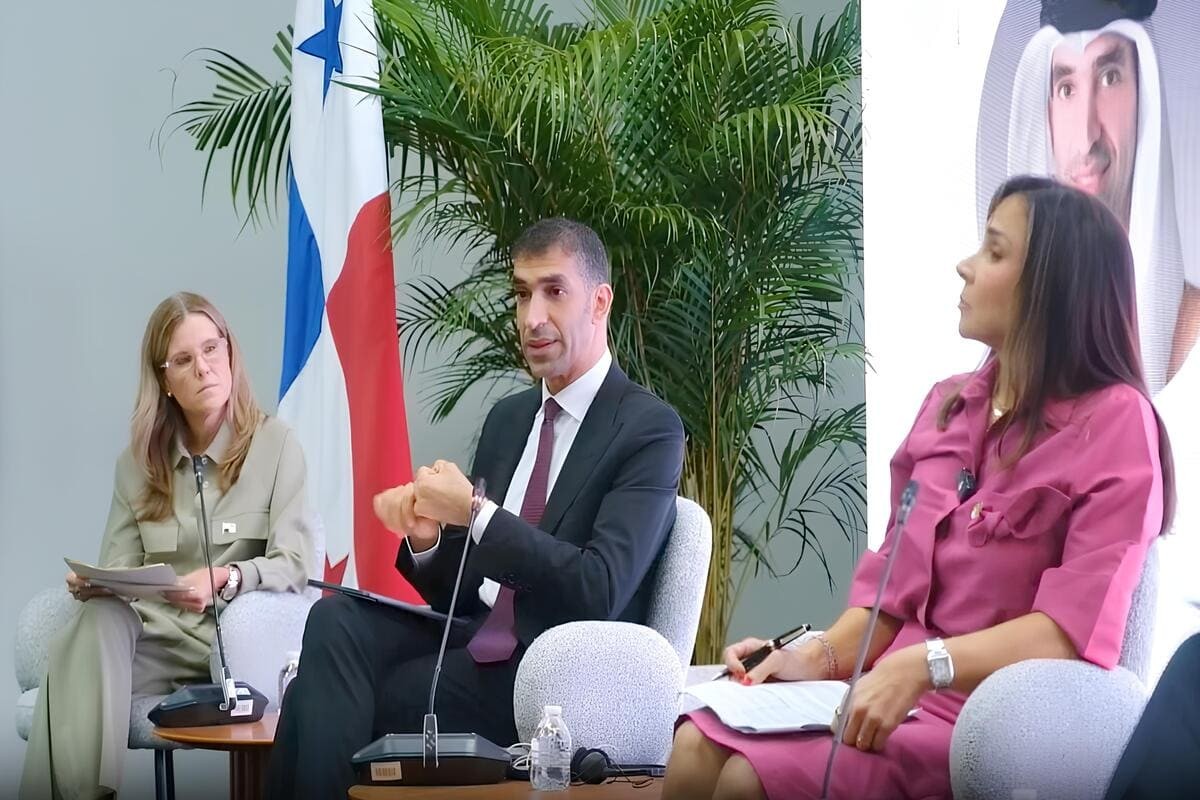
UAE Minister of Foreign Trade Dr. Thani bin Ahmed Al Zeyoudi led a delegation to Panama in late June 2026, holding high-level discussions with Panamanian government officials and private-sector representatives. The visit aimed to strengthen trade and investment cooperation and expand broader economic partnership opportunities. Attendees included Mohammed Abdullah bin Khater Al Shamsi, UAE Ambassador to Colombia and non-resident Ambassador to Panama; Panama’s Foreign Minister Javier Martinez-Acha; Deputy Foreign Minister Carlos Guevara Mann; Vice Minister of Economy Eida Gabriela Sáiz; José Ramon Icaza, Minister of Panama Canal Affairs; Jorge Herrera, President of the National Assembly; and Ashok Nandwani, Acting President of the Panama Chamber of Commerce, Industry, and Agriculture.
The engagement aligns with the UAE’s Comprehensive Economic Partnership Agreement (CEPA) programme, launched in 2021, which has systematically expanded trade relationships across Latin America, Asia, and Africa. CEPA forms a central pillar of the UAE’s strategy to diversify its non-oil foreign trade and deepen engagement with strategic global markets.
Logistics and infrastructure as strategic levers
Discussions emphasized leveraging the UAE’s position as a global trade hub and Panama’s role as a key logistics and maritime gateway. Officials explored concrete pathways to strengthen flows of goods, services, and capital — particularly in infrastructure, logistics, transport, and advanced services. A business roundtable brought together investors and business leaders from both countries to examine cross-market investment opportunities and private-sector collaboration models.
As part of the visit, the UAE delegation toured critical national assets: the Panama Canal, the Panama Pacifico Special Economic Area, and multiple commercial and industrial institutions. These site visits enabled Emirati delegates to assess Panama’s trade infrastructure firsthand and identify sector-specific cooperation opportunities in logistics, renewable energy, agriculture, food industries, mining, healthcare, and financial services.
Global supply chain resilience through regulatory alignment
Dr. Al Zeyoudi participated in a panel titled “Economic Development and Promoting Global Connectivity and Integration” at the Global Leaders Forum in Panama City — held to mark the 200th anniversary of the 1826 Panama Amphictyonic Congress. He stressed that accelerating investment in ports, airports, transport systems, and logistics networks is essential for global economic integration.
“Diversifying production bases, integrating digital and technological systems, and synchronising cross-border procedures are increasingly important in strengthening global supply chain resilience in a rapidly evolving economic environment.” — Dr. Thani bin Ahmed Al Zeyoudi, UAE Minister of Foreign Trade
He further highlighted regulatory alignment, harmonisation of standards, and streamlined customs procedures as essential tools for improving global trade efficiency. His remarks underscored coordinated efforts between the UAE and Panama to support a rules-based international trading system and facilitate smooth, secure trade flows amid ongoing shifts in international trade patterns.
Public-private coordination drives CEPA implementation
The UAE delegation included representatives from government entities and private-sector companies spanning technology, digital services, renewable energy, agriculture, food industries, logistics, transport, mining, healthcare, financial services, and security solutions. This breadth reflects the UAE’s integrated approach to economic diplomacy — explicitly aligning public and private sector strengths in international partnerships.
Similar UAE-led investment engagement platforms have increasingly prioritised private-sector participation as a key driver of CEPA-led trade expansion. Since its launch, the CEPA programme has reinforced the UAE’s position as a globally connected and diversified trading economy — with non-oil trade with Panama now standing at $186 million, up 49.7 percent year-on-year.
Source: economymiddleeast.com
Compiled from international media by the SCI.AI editorial team.