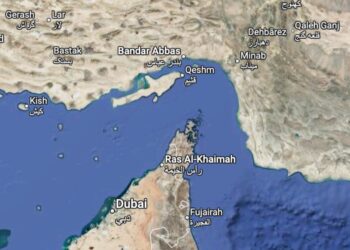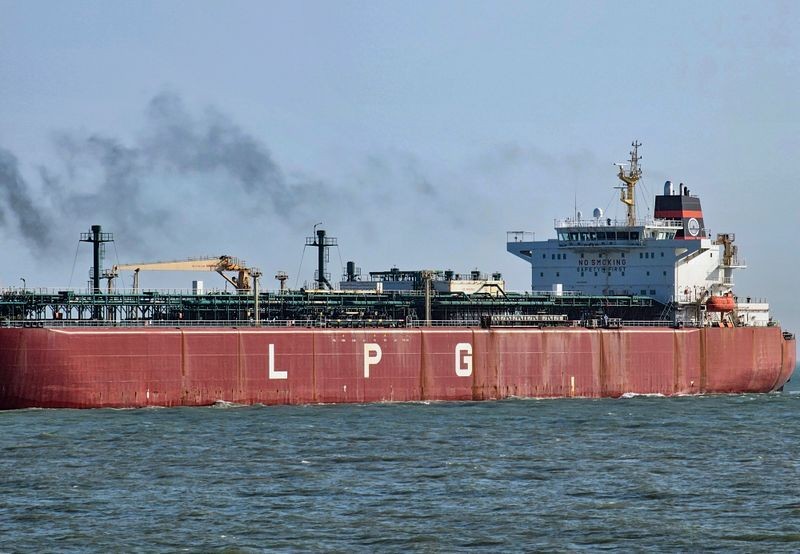
According to www.tribuneindia.com, former U.S. President Donald Trump announced on Monday, July 13, 2026, a 20 per cent tariff on all cargo transiting the Strait of Hormuz — a move that threatens to disrupt India’s energy and agricultural supply chains.
Trump’s ‘Guardian’ declaration triggers maritime toll
On his Truth Special platform, Trump declared the U.S. would henceforth be known as “THE GUARDIAN OF THE HORMUZ STRAIT”, justifying the 20 per cent tax as reimbursement for security operations in the volatile waterway. He stated:
“The USA will be, from this point forward, known as ‘THE GUARDIAN OF THE HORMUZ STRAIT,’ but as such, and as a matter of FAIRNESS, will be reimbursed, at the rate of 20% on all cargo shipped, for any and all costs necessary to do the job of providing safety and security to this very volatile section of the World.”
Trump affirmed the Strait remains open for non-Iranian traffic while reinstating what he termed the “IRANIAN BLOCKADE” — restricting only Iranian vessels and their customers. The announcement was issued on July 13, 2026, with implementation stated to begin “immediately”.
Direct impact on India’s energy imports
India faces acute exposure: over 50 per cent of its liquefied natural gas (LNG) imports and 35–50 per cent of its crude oil imports transit the Strait of Hormuz. The new 20 per cent tariff compounds existing maritime war-risk insurance premiums, directly inflating landed fuel costs.
The combined effect is expected to raise freight expenses and drive up domestic fuel prices — a critical pressure point given India’s reliance on imported energy. Crude oil imports alone accounted for $127.4 billion in fiscal year 2023–24, according to official data from the Ministry of Petroleum and Natural Gas — making even marginal cost increases highly consequential for trade balance and fiscal stability.
Fertiliser supply chain disruption
India’s fertiliser sector is similarly vulnerable. The country imports over 80 per cent of its urea and diammonium phosphate (DAP) raw materials — primarily from Gulf producers including Saudi Arabia, Qatar, and the UAE. Bottlenecks in Persian Gulf logistics could push up input costs for farmers ahead of the upcoming kharif sowing season.
With fertiliser subsidies constituting ₹1.35 trillion ($16.2 billion) in India’s Union Budget for FY 2024–25, any sustained price spike risks widening the subsidy burden or reducing farm-level affordability — both of which threaten food security and rural income stability.
Route diversions inflate costs and delay deliveries
Shipping lines are already evaluating alternative routes, notably via the Cape of Good Hope. Such detours increase baseline freight rates by up to 30 per cent and extend maritime transit times by 10–15 days — significantly straining just-in-time inventory systems across Indian manufacturing and retail sectors.
For example, LNG shipments from Qatar to India’s Dahej terminal — normally taking 7–9 days via Hormuz — would require 22–25 days around Africa. This delays power plant fuel replenishment and increases storage and financing costs for state-owned entities like GAIL and IOCL.
Inflationary ripple effects
India’s headline inflation stood at 4.38 per cent in May 2026, within the Reserve Bank of India’s target band. However, the tariff-driven surge in transportation and raw material costs is projected to lift wholesale price index (WPI) inflation by 0.8–1.2 percentage points over the next two quarters — potentially forcing monetary policy recalibration.
Supply chain professionals report immediate pressure on procurement planning cycles, with importers now requiring 14-day buffer stocks for key commodities instead of the usual 5–7 days. This shift reflects growing uncertainty about port clearance timelines, insurance claim processing, and real-time vessel tracking reliability in conflict-adjacent waters.
Source: tribuneindia.com
Compiled from international media by the SCI.AI editorial team.