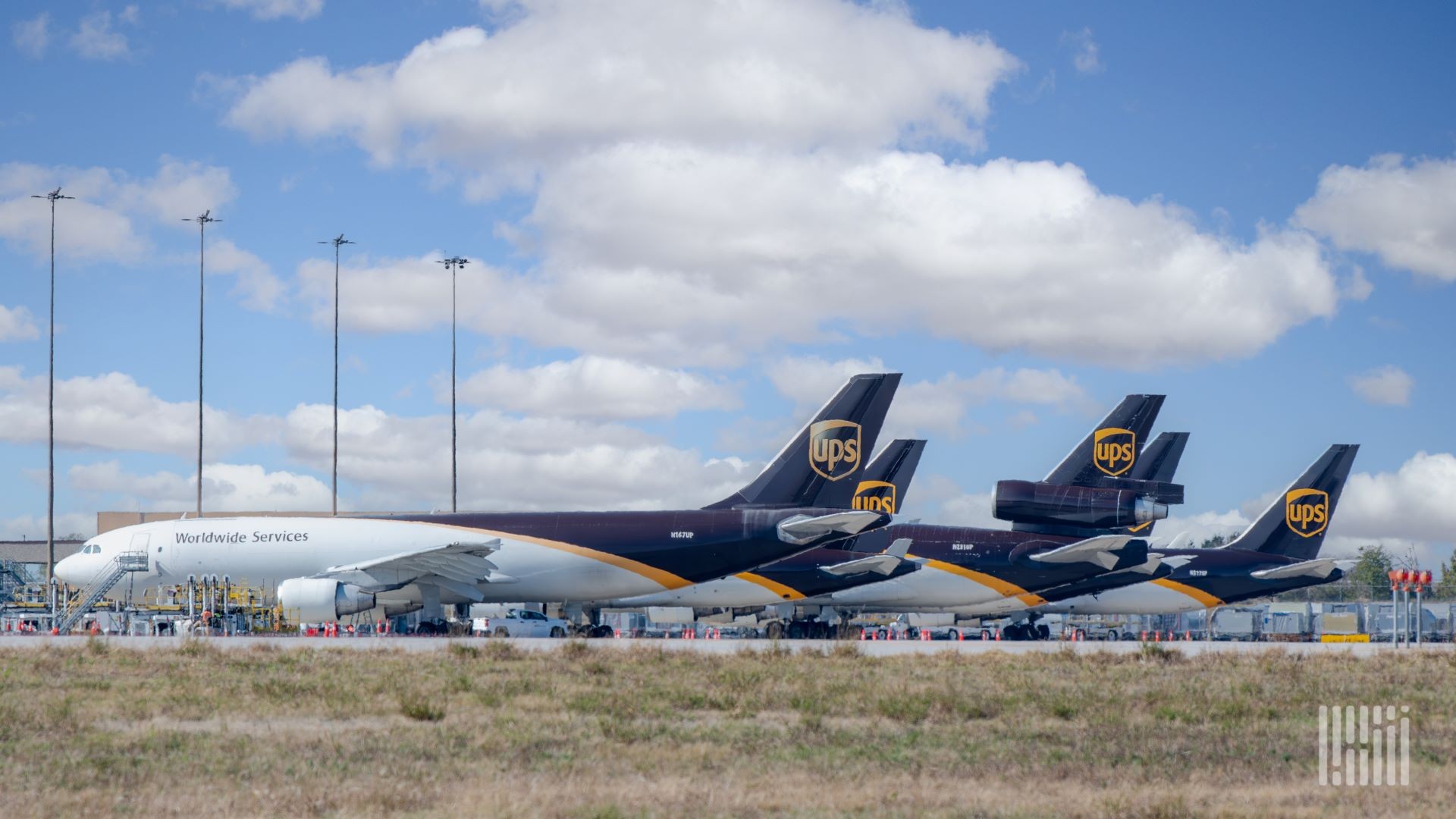
According to www.freightwaves.com, the U.S. Postal Service is moving approximately half of its long-distance First-Class mail by air — up from just 2% in October 2024 — primarily to fulfill minimum volume commitments under its air cargo contract with UPS.
Air contract drives operational reversal
The Office of the Inspector General (OIG) released an audit on Tuesday that found the USPS misaligned its UPS air cargo agreement with actual parcel volume trends and internal transportation strategy. The contract, awarded in April 2024 and effective in full by October 2024, carries a base term of 5.5 years and an estimated annual value of $1.5 billion. The OIG now places its total projected value at more than $10 billion.
The audit states that USPS failed to account for a steep decline in Priority Mail volume — down 54% before the contract announcement and another 31% afterward — while forecasting instead a modest 2% increase in average daily volume. To avoid penalties for missing minimum cubic-foot volume thresholds, USPS redirected First-Class and Marketing Mail to air transport, even though those categories had historically moved by surface.
Costs surge despite efficiency goals
As part of its six-year Delivering for America transformation plan, USPS had deliberately shifted mail and parcels toward motor carriers to reduce reliance on expensive air transport. In October 2021, it extended First-Class delivery standards by one to two days to enable more surface movement. Then, in 2024, it replaced FedEx as its domestic air cargo provider with UPS. That same year, USPS also adjusted service standards further: adding an extra day to First-Class delivery for post offices located 50 miles or more from regional processing centers while shortening bulk mail delivery times.
The agency projected annual savings of $1.1 billion from surface transportation and $701 million from air transportation due to these optimization initiatives. Yet in fiscal year 2025, USPS exceeded its transportation cost management plan by about $200 million, partly due to returning mail to air transport — a direct consequence of contractual volume obligations.
Contract structure amplifies inefficiency
The UPS contract uses a per-cubic-foot pricing model tied to average daily volume. USPS guarantees a minimum average daily volume, with premium rates triggered if volumes fall below or exceed negotiated thresholds — though specific percentages and volumes are redacted in the public audit report. To maintain favorable pricing tiers and service performance, USPS increased the share of First-Class mail traveling by air within the three-to-five-day delivery window from 2% in October 2024 to 50% by March 2025. It also began flying Marketing Mail — including flyers, brochures, and fundraising letters — for the first time, a category previously handled exclusively by truck.
“The Postal Service did not properly forecast declining package volumes or impacts of subsequent network changes when establishing the volume requirements of its new air cargo contract,” the audit states, “resulting in a decision to put more mail on planes even though this contradicts previous decisions to extend delivery standards to allow more mail to move by surface — simply to meet contractual minimums and avoid even higher expenses.”
OIG recommends contract reassessment
The Inspector General urged USPS logistics officers to consider early termination of the current UPS air contract and pursue a replacement with more adaptable terms. Specifically, the audit recommends a new agreement with a shorter base term and option years to better align with fluctuating volume realities and evolving ground network configurations.
USPS leadership disagreed with the OIG’s assessment, asserting that flying First-Class mail has helped stabilize air network costs by preserving favorable pricing tiers and improving service performance. It also rejected the need for an updated cost-benefit analysis, maintaining that the existing contract provides sufficient flexibility. However, the OIG emphasized that “while the Postal Service’s new air cargo contract delivered several important benefits, including lower rates, greater flexibility, and stronger service performance requirements, the full potential of these advantages was not fully realized as the volume requirements are not aligned with actual volume and operational realities.”
According to the report, failing to supplement package volume with mail would have triggered an additional penalty of $127 million for unused air capacity — illustrating how contractual design, rather than operational logic, now dictates transportation mode selection across the national mail network.
Source: FreightWaves
Compiled from international media by the SCI.AI editorial team.