Personalized Service Trumps Technology, Says Veteran Air Freight Executive
=======================================================
Author: Chris Barnett
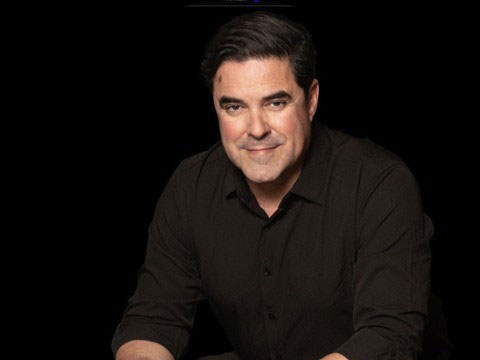
Angel Rodriguez, a veteran with 30 years of experience in the most time-sensitive transportation sector within supply chains, states that technology, computer tracking and traceability technologies, as well as the continuous reduction in peak and off-peak shipping seasons driven by the sustained surge in e-commerce, have significantly altered the world of air freight and forwarding, making global logistics less personal.
Rodriguez has held senior leadership positions at Panalpina, DB Schenker, DSV (the recently merged company), and most recently Flexport. He is currently the President of ASF Air and resides in Southern California, where he plans to establish an office for ASF Global Logistics’ air freight division. Based in Charleston, South Carolina, ASF Global, a 25-year-old global forwarding company, is known for introducing “people-centric” processes, policies, and “human standards” into solutions addressing global logistics challenges.
Rodriguez asserts that the convergence of mindsets at ASF Air and ASF Global is an ideal fit. “We all believe this is fundamentally a people business,” he said in an exclusive interview with American Shipper Magazine. “In the end, boxes, cargo, and pallets do need to be moved, but we often get bogged down by metrics and data trying to squeeze into some ranking and forget that it’s about dealing with people. This is a relationship-driven industry where you encounter different clients, cultures, and challenges, requiring flexibility and agility.”
Rodriguez emphasizes that this isn’t just a business of transactions and transportation; he has worked for around 12 freight forwarders and logistics companies of varying sizes across the eastern, western, and southern coasts of the United States during his career.
“We take time to understand why it’s so important for a client to ship air cargo at 4 PM on Wednesday afternoon because they have their daughter’s ballet performance at 5. So we ensure pickup is made by 3 PM, guaranteeing delivery to the airport and confirmation that it will be loaded onto the plane before 6 PM. This is very personal; we take time to understand the reasons behind it. The reality is clients trust us as an extension of their own logistics department,” he added, noting that technology alone isn’t enough.
His philosophy is grounded in a vast network of “colleagues, friends, and acquaintances” from his work with other logistics companies 20 to 30 years ago. “I still keep in touch, many have moved into client or supplier roles, giving them new perspectives on business and creating opportunities for collaboration again,” he said. “There is so much to learn in this industry that one can’t master it all in a lifetime.”
ASF Global and ASF Air emphasize “personalized human interaction” in logistics with a focus on “multi-tiered services and multiple solutions,” tailored to the needs and requirements of shippers, according to the senior air freight executive. “We do this because every client requires options; one solution does not fit all. It’s like providing personalized service and attention at a five-star boutique hotel rather than a two-star establishment.”
Rodriguez was first exposed to “customer service and solving logistics problems” while working part-time at Builder’s Square (later acquired by The Home Depot) during his university days in Miami. “In Miami, due to frequent hurricanes and tropical storms, the store opened an international department exporting generators and building materials to the Caribbean,” he said. “I learned a lot about export terminology and documents—through hard ways, not formal ones—and decided to take an international export course at the University of Miami before joining DB Schenker where we established what we called the Miami Gateway.”
At DB Schenker, his primary responsibility was consolidating air cargo exports from across the United States into Miami for shipment to Latin America to create critical mass and leverage volume advantages. “We also routed European shipments bound for Latin America through Miami,” Rodriguez said.
But young Rodriguez loved the role of air freight in logistics and saw opportunities beyond export gateways. He moved to New England, joining a new organization directly serving larger corporate clients. “There I learned that whether it’s bulk cargo or pallets or boxes,” the senior executive noted, “you must have the flexibility to design logistics solutions; it’s not just about moving a batch of goods but providing value to customers.”
Freight forwarders rely on airline schedules, but for the logistical flexibility Rodriguez considers crucial, he joined Panalpina (now DSV) in Southern California, which has a cargo charter network agreement with Atlas Air Worldwide, one of the world’s largest aircraft leasing companies. Atlas Air is particularly strong in Latin America markets familiar to Rodriguez. “When you talk about the human aspect of logistics, you build and maintain relationships,” he said. “Ultimately, it’s about making your client look good. Again, this isn’t just about moving boxes.”
Rodriguez, who has worked for several large global forwarding companies, believes that not only do large multinational shippers need personal attention and time- and cost-saving solutions but also small to medium-sized family-run businesses. “Today, even small to mid-sized family enterprises require such attention, yet they don’t always get it when turning to larger industrial freight forwarders,” he insists.
However, ASF Air has extensive experience and expertise in developing logistics plans for the automotive industry. Rodriguez is tight-lipped about this due to competitive reasons but emphasizes that most car manufacturers and tier-one, two suppliers need “just-in-time” transportation solutions.
“Clients are either tier one or two suppliers,” he explained. “For example, BMW or Chevrolet is a tier-one supplier; in such cases, we work closely with the client, the manufacturer itself. Or we plan alongside tier-one and two suppliers (usually for branded parts and components following similar just-in-time delivery guidelines and restrictions).”
These shipments are not short-haul. Typically, second-tier parts—precision electronics placed behind car dashboards or elsewhere—are sourced from “high-tech demand” countries such as Thailand and Malaysia in Southeast Asia, Guangzhou in Southern China, and other places like Mexico.
ASF Air executives say that international just-in-time air freight is becoming increasingly challenging. A typical door-to-door cargo flight from Asia to the U.S. East Coast during peak season takes 96 hours. But with the surge of e-commerce on these flights, “it slows down.”
To maintain efficient operations, ASF Air’s cargo facilities operate year-round, seven days a week. “Usually, freight forwarders and airlines are hard to reach after 5 PM on Fridays,” Rodriguez insists. “I’m not saying it’s impossible, but for us, we’ve created a personalized (corporate) brand where clients know they can call us at any time of the day or week, and we will focus on their biggest or smallest issues or solutions.” By offering round-the-clock “humanized service,” he adds, this makes the ASF Air brand more vibrant. “Clients gradually entrust us with larger regular air shipments and in some cases even their non-scheduled air freight.”
Rodriguez and his team invest significant personal time and communication to identify any “production line stoppages” within supply chains. “At that point, we immediately intervene for what’s called on-board courier (OBC) service, which involves hand-carried services or high-standard delivery for smaller packages. Whether it’s machine parts or full container loads, we provide a door-to-door delivery clients can rely on,” he said. “Our client’s reputation, the carrier’s reputation, and our own are all put to the test.”
Over his 30-year career in air freight logistics, Rodriguez says “it takes an entire army to get these (logistics solutions) done.” It requires relationships because it’s a relationship-driven business where you know who to call and say, “Hey, I know you’re about to clock out in ten minutes, but can you give me another ten to handle my truck tonight so we don’t have to wait until tomorrow for unloading.”
Personal relationships are crucial, but they aren’t the “magic” freight forwarders rely on when solving international supply chain issues. ASF’s president notes that the expected “off-peak” season following Chinese New Year and throughout summer did not materialize due to strong demand from Asia to the U.S. and Europe.
To support his argument, Rodriguez cites Apple’s experience with robust market demand for its newly launched Asian-manufactured iPhone 16 and new Apple Watch during the summer. “Since starting phone production 17 years ago, these products have consumed air freight capacity,” he said. “It’s not just seasonal anymore. There are no peak or off-peak seasons; it’s year-round.”
Chris Barnett
Journalist
Chris Barnett is a seasoned San Francisco-based freelance journalist who has been reporting on world trade, transportation, air cargo, and business travel for 54 years. He regularly contributes to the Journal of Commerce, Copley News Service, Los Angeles Times, airline inflight magazines, and JoeSentMe.com (a private website for global business travelers).