According to mexicobusiness.news, logistics has evolved from an operational function into a strategic pillar shaping North American trade dynamics — particularly under the United States–Mexico–Canada Agreement (USMCA). What was once focused on low costs and next-day delivery now prioritizes resilience, flexibility, and certainty amid regulatory volatility and geopolitical uncertainty.
North America’s Integrated Trade Engine
North America accounts for nearly 30% of global GDP, driven by deeply interconnected supply chains in manufacturing, automotive, technology, and energy. The US and Canada maintain annual trade exchanges approaching US$1 trillion, largely overland. Meanwhile, Mexico emerged as the United States’ top trading partner in 2025, with exports exceeding US$399.5 billion, per the US Department of Commerce Census Bureau.
Record Cross-Border Flows
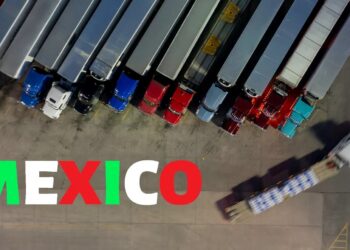
During the first 10 months of 2025, Mexican exports to the US reached nearly US$448 billion, setting a new bilateral record; US shipments to Mexico exceeded US$283 billion in the same period. These flows span vehicles, engine parts, appliances, avocados, beer, electronic components, heavy machinery, and natural gas — illustrating bidirectional dependency. As the source states:
“If that logistical engine slows down, the economies on both sides slow down.”
Strategic Corridors and Border Agility
Critical land ports — including Laredo, Ciudad Juárez, and Tijuana — act as global trade funnels. Highway 57 serves as a vital north-south artery. Mexecution’s infrastructure analysis highlights how technology-enabled demand forecasting is no longer optional but essential to avoid border congestion.
Canada: An Underutilized Opportunity
Though less emphasized, Canada remains a stable, USMCA-integrated market. In 2022, Mexico exported over US$22 billion worth of goods to Canada — primarily delivery trucks, auto parts, and tropical fruits — according to official figures from Mexico’s Ministry of Economy and the Bank of Mexico. For many Mexican firms, expanding into Canada requires route optimization rather than full operational redesign.
From Function to Strategic Advantage
Modern supply chain planning now includes scenario analysis, multi-supplier networks, and diversified transportation options to ensure continuity. As Francisco Ricaurte, UPS Latin America President, notes:
“Flexibility is today’s stability.”
Partners like UPS provide end-to-end solutions combining technology, expertise, and infrastructure to deliver visibility, speed, and above all — certainty.
Source: mexicobusiness.news
Compiled from international media by the SCI.AI editorial team.