According to procurementmag.com, NASA and the U.S. Small Business Administration (SBA) have signed a Memorandum of Agreement (MOA) to strengthen supply chain resilience by channeling private investment toward innovative small businesses in strategic space and advanced technology sectors.
Strategic Alignment and Operational Framework
The partnership operates jointly through NASA’s Office of Strategic Capital (OSC) and the SBA’s Office of Investment and Innovation (OII), leveraging the agency’s Small Business Investment Company (SBIC) program. Under the MOA, SBIC funds pledge at least 60% of their capital to NASA-specified focus areas — a quantified commitment central to the initiative’s design. These priority domains include energy production and storage, nuclear power and propulsion, advanced software and avionics, specialised materials and components, infrastructure for inhospitable environments, scaled launch infrastructure, and biomedical and life support technology.
The agreement directly supports objectives outlined in the Trump Administration’s National Space Policy, as reaffirmed during NASA’s ‘Ignition Day’ event in March 2026. According to Jared Isaacman, Administrator for NASA, “To achieve President Trump’s National Space Policy, NASA needs a stronger industrial base capable of moving at the speed this new space race demands.” He added:
“Through the NASA Office of Strategic Capital, this partnership with the SBA will help small businesses access the capital they need to scale, strengthen critical supply chains, rebuild America’s industrial might and deliver the outcomes necessary to ensure the United States leads the next era of space exploration.”
SBA Leadership and Capital Mobilization
Kelly Loeffler, SBA Administrator, emphasized the role of private-sector capital mobilization. She stated:
“To meet President Trump’s objective of securing American leadership on every frontier, the SBA and NASA are partnering to supercharge the industrial base behind our space program and connect the innovators building critical technologies with needed capital.”
Loeffler further explained that the SBA is deploying SBIC funds not only to finance startups but also to empower manufacturers and suppliers embedded across aerospace value chains. The effort explicitly ties capital allocation to national strategic priorities — a structural shift from broad-based small business support to mission-driven investment targeting high-leverage technical domains. This targeted approach marks a departure from traditional SBIC deployment models and reflects growing interagency coordination between civil space and economic development authorities.
Complementary Procurement Actions in 2024–2026
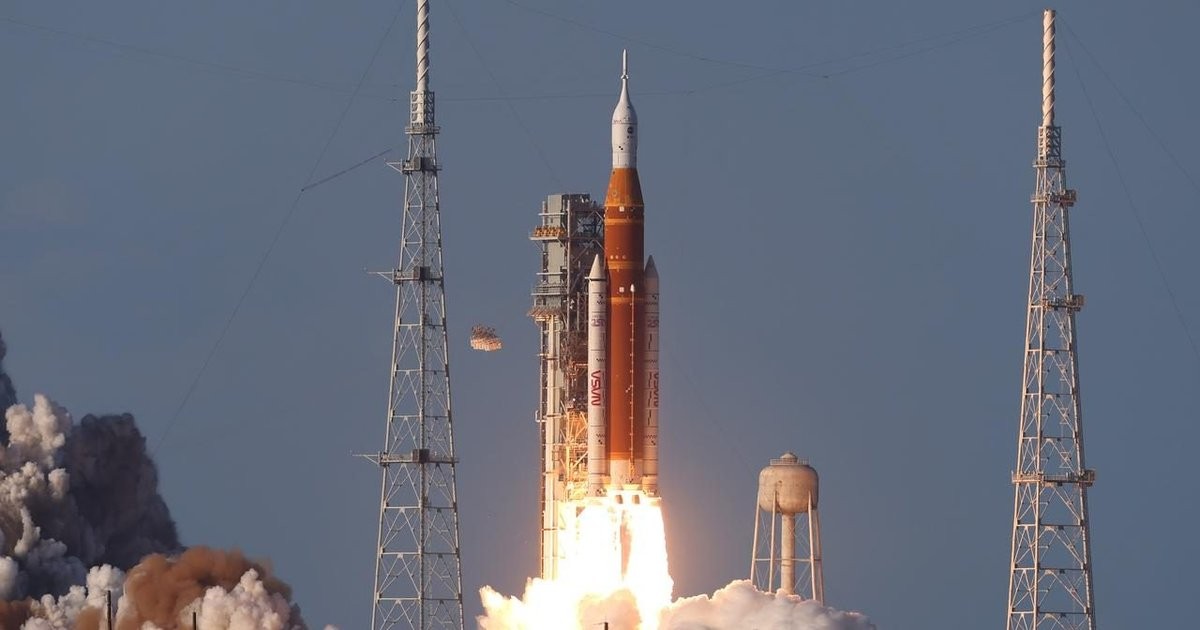
Beyond the SBA collaboration, NASA has pursued parallel procurement initiatives to reinforce supply chain depth and diversity. In 2026, NASA partnered with Lockheed Martin to launch the Artemis II Orion spacecraft — a vehicle designed, developed, and produced by Lockheed Martin with participation from more than 27,000 other suppliers. This multi-tiered supplier engagement underscores NASA’s reliance on distributed industrial capacity.
In 2024, NASA publicly released its 2023 Equity Plan, committing to expand opportunity in underserved communities. The plan prioritises STEM education outreach to cultivate talent for what NASA calls the “Artemis Generation,” while also enhancing language access policies, improving accessibility to Earth science data, and reforming grants and agreements to boost representation. As Bill Nelson, former NASA Administrator, stated:
“At NASA, we are committed to advancing equity to ensure our work benefits all humanity. The Equity Action plan deepens our long-term commitment to recognise and overcome systemic barriers that limit opportunity in underserved and underrepresented communities.”
Implications for Supply Chain Professionals
For procurement and supply chain practitioners, the NASA–SBA pact introduces a new model of public–private co-investment where federal agencies actively shape capital flows to de-risk innovation pipelines. Unlike conventional subcontracting mandates, this MOA embeds financial engineering — directing 60% of SBIC capital toward defined technical clusters — into sourcing strategy. It signals that resilience now requires not just diversified suppliers, but financially viable, technologically aligned small enterprises capable of rapid iteration.
The emphasis on nuclear propulsion, advanced avionics, and inhospitable-environment infrastructure implies near-term demand signals for precision manufacturing, radiation-hardened electronics, and autonomous systems integration. Practitioners should anticipate increased bid opportunities tied to SBIC-backed ventures — particularly those certified under SBA’s 8(a), HUBZone, or Women-Owned Small Business programs. With implementation anchored in 2026 and policy continuity linked to the National Space Policy, this framework is expected to influence DoD, DOE, and NOAA procurement alignment over the next five years.
Source: procurementmag.com
Compiled from international media by the SCI.AI editorial team.