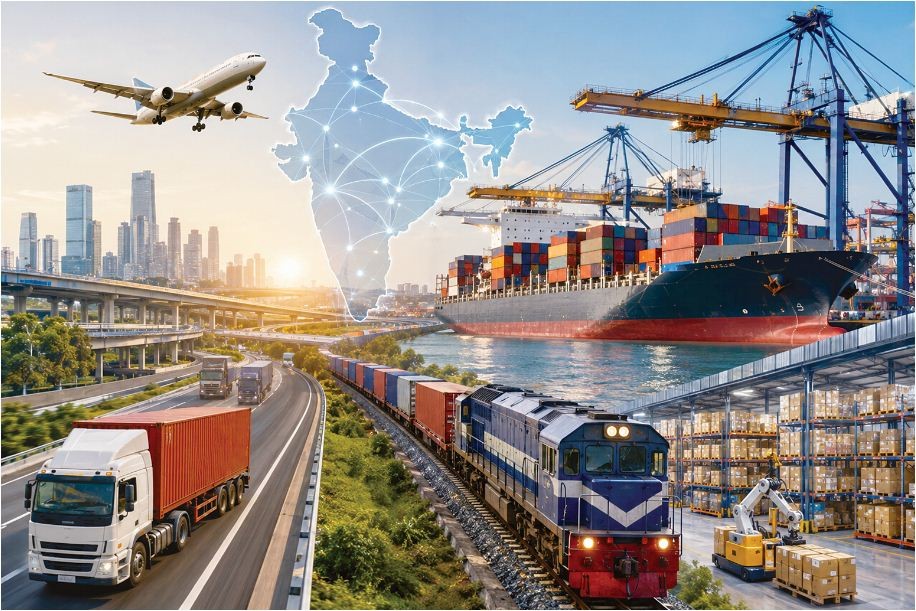
According to www.businessremedies.com, India’s logistics costs have declined from a traditional 13–14% of GDP to under 10%, enabling faster, cheaper movement of goods from domestic factories to international markets.
Integrated Infrastructure Overhaul
The Indian government is deploying a suite of nationally coordinated infrastructure programs to dismantle long-standing bottlenecks. Key initiatives include PM Gati Shakti, the National Logistics Policy, Bharatmala, Sagarmala, and Dedicated Freight Corridors (DFCs). These projects aim to unify road, rail, port, and air connectivity into a single, high-efficiency transport network — with manufacturing clusters in Gujarat, Maharashtra, Uttar Pradesh, and Haryana identified as primary beneficiaries.
The Dedicated Freight Corridors are proving pivotal: by segregating freight trains from passenger services, they reduce transit delays and improve schedule reliability. As of July 2026, multiple DFC segments are operational or nearing completion, supporting time-sensitive export shipments to ports such as JNPT (Navi Mumbai) and Chennai Port.
Port Modernisation and Multimodal Gains
Under the Sagarmala programme, India has upgraded 12 major ports and launched construction of three new deep-water facilities, including the Vizhinjam International Seaport in Kerala. These upgrades have increased average container-handling capacity by 35% at top-tier terminals and cut vessel turnaround time by 28% since 2022 — a critical improvement for just-in-time global supply chains.
- New automated container terminals now operate at Kandla, Paradip, and Tuticorin
- Digital documentation systems like the Electronic Cargo Manifest (ECM) have reduced customs clearance time from 72 hours to under 12 hours for pre-cleared exporters
- 2,000-bed modern hospital near Kolkata — part of broader infrastructure investment — underscores parallel public-sector capital allocation across logistics-adjacent sectors
Technology and SME Enablement
Digital tools are scaling across the logistics stack: GPS-enabled fleet tracking, AI-powered route optimisation algorithms, and cloud-based inventory management platforms now serve over 1.52 lakh MSMEs registered on the MY Bharat platform. Since July 2025, these tools have helped micro-enterprises reduce average inland freight costs by 19% and shorten delivery lead times to overseas buyers by 30%.
These gains directly support India’s export composition: MSMEs contribute nearly 49% of total merchandise exports, and their participation in global value chains has expanded notably in engineering goods, textiles, and pharmaceuticals — sectors where logistics latency historically eroded margins.
Remaining Hurdles and Strategic Implications
Despite progress, structural challenges persist — particularly land acquisition for last-mile connectivity, financing gaps for warehousing modernisation, and inter-agency coordination across ministries governing roads, railways, and ports. Yet the trajectory is unambiguous: India’s logistics sector is shifting from fragmentation toward a multimodal, digitally integrated system.
That shift coincides with global supply chain diversification efforts. As multinational firms seek alternatives to single-source manufacturing hubs, India’s improving logistics performance — quantified by its 13–14% → under 10% GDP cost reduction and 30% export timeline compression — positions it as a viable, operationally competitive base. The India–UK Free Trade Agreement, scheduled to take effect on 15 July 2026, further leverages this foundation by granting duty-free access for 99% of Indian exports to the UK market.
Source: businessremedies.com
Compiled from international media by the SCI.AI editorial team.