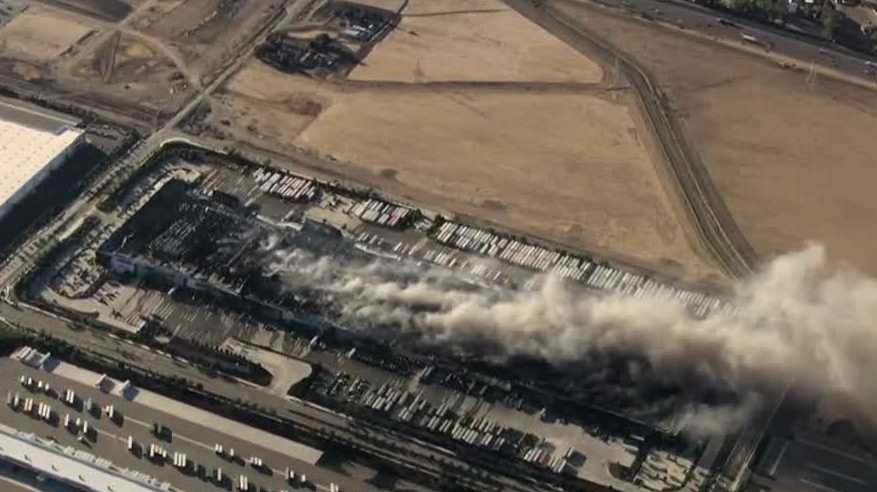
According to www.kcra.com, a Tracy, California resident has filed a lawsuit against Medline Industries and Prologis following a catastrophic fire at a 1 million-square-foot medical supply warehouse on June 11, 2026. The plaintiff, Senthil Velu, alleges acute health injuries—including acute bronchitis—and ongoing respiratory distress linked to toxic smoke, ash, and chemical exposure from the blaze.
Fire Origin and Emergency Response
The fire erupted at Medline’s Tracy distribution facility—a hub serving major healthcare systems including Sutter Health, Kaweah Health, Enloe Health, Stanford Medicine, U.C. Davis Health, Carson Tahoe Health, and the U.S. Department of Veterans Affairs. According to the complaint filed on June 30 in San Joaquin County Superior Court, indoor fire sprinklers were inoperable, allowing flames to spread across the facility in under 30 minutes. Firefighters from Alameda, Stockton, Cal Fire, and Lathrop-Manteca Fire departments responded and spent nearly one week extinguishing the blaze.
Because the private water system—designed to feed both hydrants and sprinklers—was nonfunctional, crews were forced to connect to the municipal water supply outside property lines and lay hose lines as long as 1,600 feet. The fire completely destroyed the structure and released a dense plume of toxic contaminants that traveled miles, blanketing nearby neighborhoods including the Ellis Subdivision.
Health Impacts and Exposure Pathways
Senthil Velu resides approximately 3.4 miles from the warehouse, separated only by an open field. He reported symptoms—including headaches, coughing, vomiting, throat irritation, nasal congestion, and severe breathing difficulty—beginning within one to two days after the fire ignited. Medical evaluation confirmed a diagnosis of acute bronchitis. According to the complaint, he continues to suffer persistent respiratory effects and was instructed not to touch debris deposited in his backyard.
The lawsuit cites public advisories issued by the San Joaquin Valley Air Pollution Control District and the San Joaquin County Office of Emergency Services, urging residents to shelter in place, close windows, and bring pets indoors. Witnesses described the smell as “nauseating,” and Velu stated:
“The smell was nauseating. I’ve had headaches ever since. I mean, it hasn’t left.” — Senthil Velu, Tracy resident
Alleged Systemic Failures
The complaint identifies multiple failures in facility oversight and fire safety infrastructure. It alleges Medline and Prologis neglected mandatory inspections and maintenance, permitting the stockpiling of millions of pounds of highly flammable and toxic materials—including lithium battery-powered autonomous robots. When lithium batteries ignite, they emit intense heat and toxic fluoride gas, the suit notes.
It further states that routine fire suppression system checkups “did not happen,” and that the defendants breached their duty to exercise “the utmost care and diligence” in managing the warehouse and its safety systems. The suit asserts that the defendants’ negligence created a condition harmful to health and interfered with “the comfortable enjoyment of life and property.”
Legal Claims and Remedies Sought
Velu’s lawsuit names both Medline Industries and Prologis and advances three legal theories: negligence, public nuisance, and trespass. The complaint argues that smoke, fumes, and soot invaded Velu’s real property without consent or justification—constituting a physical intrusion. It includes photographic evidence of the smoke plume visible from Velu’s backyard and piles of ash and debris found on his property.
The plaintiff seeks compensation for physical injury, emotional distress, fear, property damage, medical expenses, and other economic losses. Notably, the complaint does not specify a monetary demand at this stage. A spokesperson for Prologis confirmed to KCRA 3 that the company owns the facility but clarified that Medline is the tenant—underscoring shared liability questions central to the litigation.
Source: kcra.com
Compiled from international media by the SCI.AI editorial team.