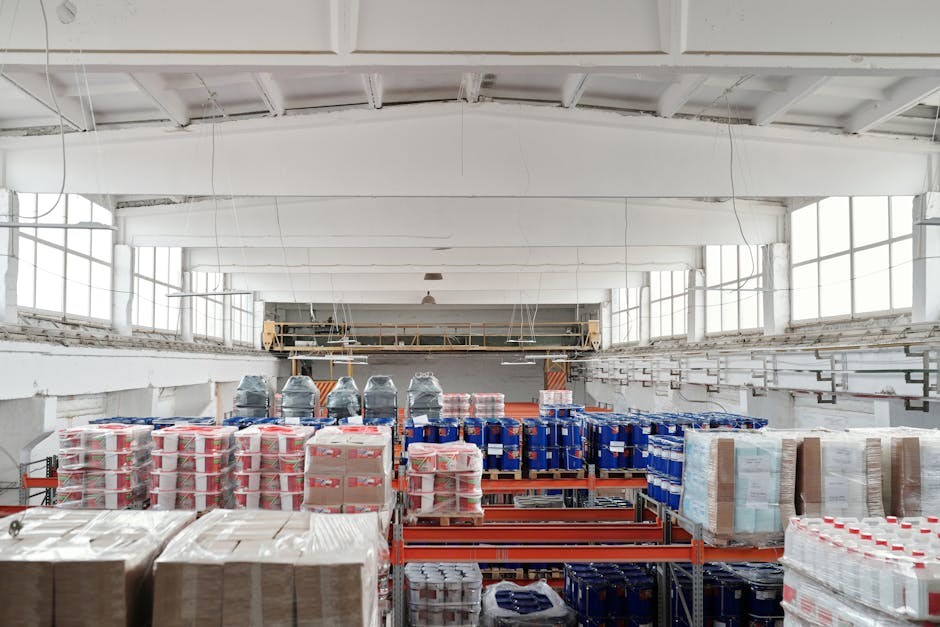
According to www.globenewswire.com, the warehouse automation market size was valued at USD 21.84 billion in 2025 and is projected to reach USD 71.25 billion by 2033, growing at a CAGR of 15.93% from 2026 to 2033.
Key Growth Drivers
The expansion is propelled by surging e-commerce order volumes, rising labor costs, demand for faster fulfillment cycles, broader adoption of robotics and AI for real-time inventory management, and the need for scalable, high-efficiency logistics operations. As noted in the source, “The expansion of the e-commerce business has had a qualitative impact on warehouse automation.” The report emphasizes that IoT technology enables end-to-end process automation and supports heavy-task delegation to machines — enhancing both workplace performance and security.
Market Segmentation Insights
- By Component: Hardware held over 58% market share in 2025; software is forecast to grow at the fastest CAGR during 2026–2033.
- By Technology: Retrieval systems & automated storage (AS/RS) led with more than 30% share in 2025; autonomous mobile robots (AMR) are expected to register the highest CAGR due to demand for faster order processing and labor cost reduction.
- By Application: Key sectors include e-commerce, food & beverage, pharmaceutical, automotive, apparel, and grocery.
Regional Leadership and Trends
North America commanded approximately 41% market share in 2025, driven by AI and machine learning integration improving production and logistics efficiency. The Asia Pacific region is anticipated to see gradual CAGR growth, supported by expanding e-commerce and retail infrastructure requiring cost-effective, high-efficiency warehousing solutions.
Operational Challenges and Recent Developments
Lack of regular maintenance poses a significant constraint: system downtime for repairs halts core warehouse operations, leading to substantial losses. Maintenance costs and time escalate with extended shutdowns.
Recent developments include:
- In January 2024, Honeywell partnered with Hai Robotics to deploy high-density ACR-based storage and retrieval systems — integrating Hai’s 32-ft-reach robots (achieving 500 picks per hour, versus 100–250 pph without robotics) with Honeywell’s Momentum WES.
- In February 2025, Swisslog highlighted rising brownfield automation, with scalable retrofits and increased adoption of micro-fulfillment and hub-and-spoke models — responding to high land costs, labor shortages, and demand for AI-enabled intralogistics.
Strategic Metrics for Practitioners
The SNS Insider report includes four exclusive analytical frameworks designed for operational decision-making:
- Technology & Innovation Metrics: Tracks AI-driven robotic vision adoption, ML-based route optimization gains, IoT sensor deployment rates, and patent activity across AMRs, AS/RS, robotic picking, and autonomous forklifts.
- Performance & Reliability Benchmarks: Compares robot vs. manual picking accuracy, system uptime, cycle-time reductions via AMRs/AGVs, throughput improvements, and error-rate minimization from automated scanning.
- Deployment & Scalability Metrics: Assesses automation maturity via penetration levels (fully/semi/manual), WMS/WES/ERP integration capability, robot fleet scalability index, SaaS vs. on-premise orchestration, and multi-site deployment trends.
- Cost & Pricing Metrics: Details capex for key automation systems and quantifies labor- and error-related cost savings.
Source: www.globenewswire.com
Compiled from international media by the SCI.AI editorial team.