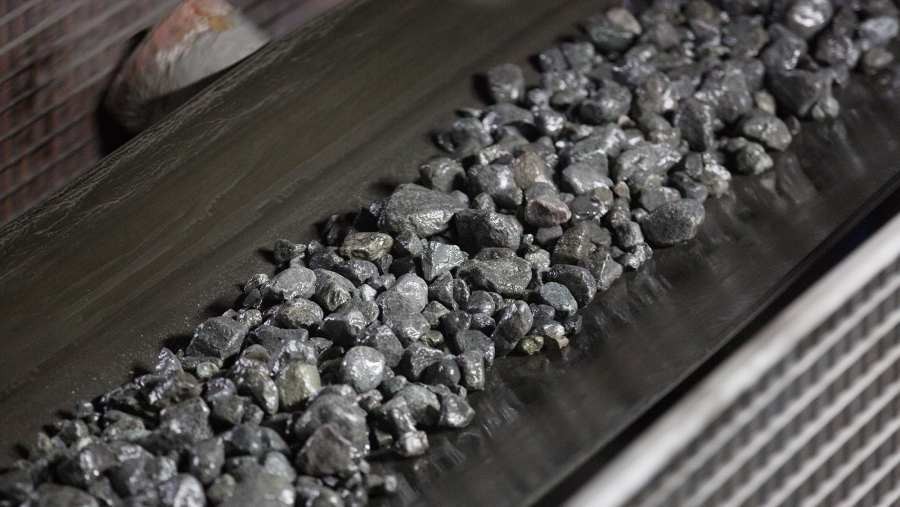
According to www.bloombergtechnoz.com, Indonesia’s processed industrial exports declined 3.59% year-on-year in May 2026, driven by lower shipments of jewelry and other valuables — while nickel product exports surged 49.88% over the same period.
Nickel Dominates Non-Oil Export Growth
The Badan Pusat Statistik (BPS) reported that nickel and nickel-derived products ranked first among Indonesia’s top ten non-oil and gas export commodities for January–May 2026, with export value rising US$2.05 billion — a 60.88% increase compared to the same period in 2025. This growth offset declines in other processing sectors and contributed significantly to overall export resilience.
The BPS stated:
“Of the ten non-oil and gas commodities with the highest export value from January to May 2026, nickel and related products posted the largest growth — US$2.05 billion (60.88%).” — BPS, Official Statistics Bulletin, cited 3 July 2026
Broad Industrial Export Trends
Despite the monthly dip in May, processed industrial exports for the January–May 2026 period rose 6.80% year-on-year. Total national exports across all sectors reached US$115.36 billion in the first five months of 2026 — up 3.02% from January–May 2025. The trade balance recorded a deficit of US$1.6 billion in May 2026, the first monthly deficit since 2020.
This divergence — weakness in high-value manufactured goods like jewelry versus strength in raw-material-based exports — reflects structural shifts in Indonesia’s export composition. Nickel remains central to national downstreaming policy, with state-owned mining firm Antam preparing to submit a revised Rencana Kerja dan Anggaran Biaya (RKAB) for nickel operations, as confirmed in recent reporting.
Geographic and Sectoral Context
China, the United States, and India were Indonesia’s top three export destinations for January–May 2026. The trade deficit with China deepened during this period, while Indonesia maintained a surplus with the U.S. — underscoring persistent imbalances in bilateral commodity flows. Meanwhile, Vietnam’s manufacturing sector expanded sharply, contributing to 8.39% GDP growth in Q2 2026 — highlighting regional competitiveness pressures on Indonesian industrial exporters.
Supply chain professionals monitoring Southeast Asian export dynamics must account for two countervailing forces: tightening global nickel supply chains — evidenced by TotalEnergies offering millions of barrels of Iraqi crude oil to Asian buyers — and intensifying import competition in labor-intensive sectors such as textiles, which have faced three years of mounting Chinese imports.
Policy and Infrastructure Implications
Indonesia’s push to add battery-grade nickel capacity aligns with global electric vehicle supply chain demands. The Ministry of Energy and Mineral Resources (ESDM) is coordinating tax holiday incentives for battery projects with the Directorate General of Taxes (DJP) — including those tied to CATL. Concurrently, PLN targets 19.1 GW of additional solar-plus-battery power generation by 2030, reinforcing energy infrastructure readiness for downstream metallurgical expansion.
Regulatory developments also signal urgency: the Ministry of Communication and Information Technology (Komdigi) warned 25 private electronic system providers (PSE) to register immediately or face blocking — reflecting broader digital governance efforts supporting export data transparency and compliance frameworks.
Source: bloombergtechnoz.com
Compiled from international media by the SCI.AI editorial team.