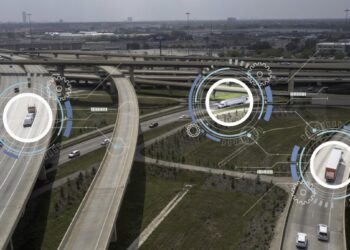
According to www.dcvelocity.com, demand for supply chain roles requiring artificial intelligence skills increased 387% between Q1 2023 and Q1 2026, far outpacing overall labor market growth.
Surging Demand Amid Talent Shortage
Gartner, Inc. analyzed more than 35 million job postings across industries from Q1 2023 through Q1 2026 — including nearly 600,000 supply chain–specific roles. Within that cohort, positions explicitly requiring AI competencies grew at a rate exceeding the cross-industry average for AI-related jobs. This acceleration has intensified competition among employers, driving up hiring costs and extending time-to-fill for hybrid roles demanding both domain expertise in logistics or procurement and technical fluency in machine learning, data engineering, or AI model deployment.
The mismatch is structural: while AI skill requirements now appear in over 12% of senior supply chain analyst and planning roles — up from under 3% in early 2023 — fewer than 7% of entry-level supply chain hires (e.g., supply chain coordinators, logistics associates) carry AI-related qualifications. Yet Gartner notes this cohort represents a substantial, underutilized talent pool with growing exposure to AI tools through academic programs and early-career training platforms launched since 2024.
Strategic Response: Upskilling Over Hiring
To close the gap, Gartner recommends a dual-track approach centered on internal capability building rather than external recruitment alone. Tess Frenzel, Director Analyst in Gartner’s Supply Chain practice, emphasized that organizations cannot rely solely on hiring to meet AI demands: “The demand for AI skills in supply chain is accelerating at a rate that far exceeds the broader labor market, creating a widening talent gap that organizations cannot close through hiring alone.”
This assessment aligns with industry-wide trends: according to the U.S. Bureau of Labor Statistics, median time-to-fill for supply chain technology roles rose to 72 days in Q1 2026 — up from 44 days in Q1 2023. Meanwhile, salary premiums for AI-augmented supply chain roles averaged 22% above non-AI counterparts in 2025, per data from CompTIA’s 2026 Tech Jobs Report. Companies like Amazon and Walmart have publicly committed to reskilling over 100,000 existing employees in AI literacy since 2024, reflecting the shift toward internal development.
Practitioner Implications for Supply Chain Teams
For supply chain professionals, the rapid integration of AI is reshaping daily responsibilities — from predictive demand modeling using transformer-based forecasting engines to real-time anomaly detection in freight tracking systems. The emphasis on hybrid skills means procurement managers now routinely collaborate with data scientists on supplier risk scoring models, while warehouse operations leads co-design AI-driven slotting algorithms with software engineers.
This evolution also impacts vendor selection: Gartner reports that 68% of Tier-1 shippers now require AI-readiness documentation — including API access logs, model explainability frameworks, and data governance certifications — as part of their RFP evaluation criteria, up from 29% in 2023. As a result, supply chain teams are increasingly embedded in enterprise AI governance councils, not just as end users but as co-owners of model performance metrics and ethical guardrails.
Source: DC Velocity
Compiled from international media by the SCI.AI editorial team.