Explore

  • Trending
  • Latest
  • Tools
  • Browse
  • Subscription Feed

Logistics

  • Ocean
  • Air Cargo
  • Road & Rail
  • Warehousing
  • Last Mile

Regions

  • Southeast Asia
  • South Asia
  • Central Asia
  • Japan & Korea
  • Middle East
  • Europe
  • Russia
  • Africa
  • North America
  • Latin America
  • Australia
SCI.AI
  • Supply Chain
    • Strategy & Planning
    • Logistics & Transport
    • Manufacturing
    • Inventory & Fulfillment
  • Procurement
    • Strategic Sourcing
    • Supplier Management
    • Supply Chain Finance
  • Technology
    • AI & Automation
    • Robotics
    • Digital Platforms
  • Risk & Resilience
  • Sustainability
  • Research
  • Expert Columns
  • English
    • Chinese
    • English
No Result
View All Result
  • Login
  • Register
SCI.AI
No Result
View All Result
Home Sustainability ESG & Regulation

Scope 3 Emissions Account for ~80% of Corporate Carbon Footprint — cleantechnica.com

2026/05/04
in ESG & Regulation, Green Supply Chain, Sustainability
0 0
Scope 3 Emissions Account for ~80% of Corporate Carbon Footprint — cleantechnica.com

According to cleantechnica.com, Scope 3 emissions—those generated across a company’s value chain, both upstream and downstream—typically account for around 80% of a company’s carbon footprint. In highly polluting sectors such as oil and gas, this share can be even higher. Yet only 5% of US companies report their Scope 3 greenhouse gas (GHG) emissions, despite growing investor pressure and regulatory attention.

By Carolyn Fortuna — May 1, 2026

Regulatory Landscape: SEC Rule Dilution and Reporting Gaps

The U.S. Securities and Exchange Commission (SEC) issued a climate disclosure rule in 2024, but it was severely diluted from its original proposal. Under the final rule, only “large accelerated filers” and “accelerated filers” are required to disclose Scope 1 and Scope 2 emissions; Scope 3 reporting remains voluntary. This regulatory gap persists even as investors have long expressed concern about the portfolio implications of Scope 3 opacity. The source states that federal government references to climate change have been erased—but corporate action continues nonetheless, often behind closed doors.

What Constitutes a Scope 3 Emissions Hotspot?

Emissions hotspotting identifies specific geographic areas, industrial facilities, or operational processes with significantly elevated concentrations or rates of pollutant emissions. These hotspots occur at discrete stages in a material’s lifecycle—such as raw material extraction, component manufacturing, or end-of-life treatment—where emissions intensity far exceeds surrounding activities. According to the report, hotspotting enables targeted environmental management, efficient allocation of monitoring resources, and improved public health protection.

Fifteen Categories, Three Buckets

Scope 3 emissions are formally categorized into 15 distinct areas, grouped under three main buckets:

  • Upstream activities: purchased goods and services; capital goods; fuel- and energy-related activities not covered under Scope 1 or 2; upstream transportation and distribution; waste generated in operations; business travel; employee commuting; upstream leased assets;
  • Downstream activities: downstream transportation and distribution; processing of sold products; use of sold products; end-of-life treatment of sold products; downstream leased assets; franchises; investments;
  • Employee-related activities: included under upstream but explicitly called out due to high variability (e.g., commuting patterns across geographies).

Pragmatic Steps to Reduce Scope 3 Emissions

The World Economic Forum outlines six actionable steps for corporations:

  • Start with materiality analysis and emissions hotspot identification;
  • Improve data quality—not just data volume;
  • Develop supplier decarbonization strategies;
  • Embed Scope 3 disclosure into procurement governance;
  • Standardize metrics and pursue collective action to overcome free-riding;
  • Treat technology as an enabler—not a silver bullet.

Each step reflects practitioner reality: corporations exert limited direct control over suppliers’ production decisions, logistics routing, product usage patterns, or end-of-life disposal methods. As the source notes, top-down mandates often fail; instead, collaborative interventions built on mutual trust and shared goals have shown greater efficacy in reducing supply chain emissions.

Industry Context and Implementation Realities

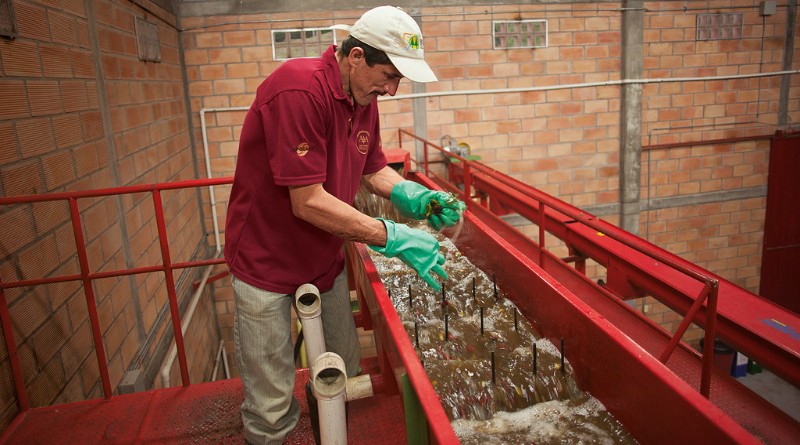
While Nestlé’s “Investing in supply chain water management” initiative (licensed under CC BY-NC-ND 2.0) exemplifies early cross-value-chain sustainability investment, broader adoption remains uneven. Public data shows that among Fortune 500 firms, fewer than 12% publish full Scope 3 inventories—and only 3% set science-based targets covering all 15 categories. Meanwhile, EU policy advances faster: the Corporate Sustainability Due Diligence Directive (CSDDD), effective 2026 for large firms, mandates due diligence across upstream and downstream value chains—including Scope 3 emissions mapping. In parallel, the EU’s Carbon Border Adjustment Mechanism (CBAM) indirectly pressures non-EU suppliers to measure and reduce emissions—making Scope 3 visibility no longer optional for global exporters.

Source: cleantechnica.com

Compiled from international media by the SCI.AI editorial team.
More on This Topic

  • 1 in 5 Trucks Unsafe — FreightWaves (May 11, 2026)
  • Vallarpadam Transhipment Halved, Vizhinjam Hits 1.3M TEU — The Loadstar (May 11, 2026)
  • Trump Pushes Nuclear-Powered Shipping: 1 Initiative (May 11, 2026)
  • Eagle Pass Trade Boom: $3.77B in March — FreightWaves (May 11, 2026)
  • Roadcheck Week Drives Freight Rates Up 7%-9% — FreightWaves (May 11, 2026)
ShareTweet

Related Posts

1 in 5 Trucks Unsafe — FreightWaves
AI & Automation

1 in 5 Trucks Unsafe — FreightWaves

May 11, 2026
3
Vallarpadam Transhipment Halved, Vizhinjam Hits 1.3M TEU — The Loadstar
AI & Automation

Vallarpadam Transhipment Halved, Vizhinjam Hits 1.3M TEU — The Loadstar

May 11, 2026
4
Trump Pushes Nuclear-Powered Shipping: 1 Initiative
AI & Automation

Trump Pushes Nuclear-Powered Shipping: 1 Initiative

May 11, 2026
2
Eagle Pass Trade Boom: $3.77B in March — FreightWaves
AI & Automation

Eagle Pass Trade Boom: $3.77B in March — FreightWaves

May 11, 2026
3
Roadcheck Week Drives Freight Rates Up 7%-9% — FreightWaves
AI & Automation

Roadcheck Week Drives Freight Rates Up 7%-9% — FreightWaves

May 11, 2026
4
Expeditors Sets 100% Air & Sea Emissions Target — seekingalpha.com
ESG & Regulation

Expeditors Sets 100% Air & Sea Emissions Target — seekingalpha.com

May 11, 2026
1

Leave a Reply Cancel reply

Your email address will not be published. Required fields are marked *

Recommended

Toyota Automated Logistics: Global Warehouse Automation Group Formed via 3 Acquisitions

Toyota Automated Logistics: Global Warehouse Automation Group Formed via 3 Acquisitions

13 Views
April 21, 2026
2026 SaaS Market to Hit $315B Amid Native-AI Shift

2026 SaaS Market to Hit $315B Amid Native-AI Shift

15 Views
April 16, 2026
AI Agents Cut Factory Downtime: Accenture, Avanade, Microsoft Launch Agentic Factory System

AI Agents Cut Factory Downtime: Accenture, Avanade, Microsoft Launch Agentic Factory System

11 Views
April 21, 2026
RyderVentures’ Bet on Physical AI: Revolutionizing Warehouse Automation

RyderVentures’ Bet on Physical AI: Revolutionizing Warehouse Automation

5 Views
March 17, 2026
Show More

SCI.AI

Global Supply Chain Intelligence. Delivering real-time news, analysis, and insights for supply chain professionals worldwide.

Categories

  • Supply Chain Management
  • Procurement
  • Technology


  • Risk & Resilience
  • Sustainability
  • Research

© 2026 SCI.AI. All rights reserved.

Powered by SCI.AI Intelligence Platform

Welcome Back!

Sign In with Facebook
Sign In with Google
Sign In with Linked In
OR

Login to your account below

Forgotten Password? Sign Up

Create New Account!

Sign Up with Facebook
Sign Up with Google
Sign Up with Linked In
OR

Fill the forms below to register

All fields are required. Log In

Retrieve your password

Please enter your username or email address to reset your password.

Log In

Scan to share via WeChat

Open WeChat and scan the QR code to share

QR Code

Add New Playlist

No Result
View All Result
  • Supply Chain
    • Strategy & Planning
    • Logistics & Transport
    • Manufacturing
    • Inventory & Fulfillment
  • Procurement
    • Strategic Sourcing
    • Supplier Management
    • Supply Chain Finance
  • Technology
    • AI & Automation
    • Robotics
    • Digital Platforms
  • Risk & Resilience
  • Sustainability
  • Research
  • Expert Columns
  • English
    • Chinese
    • English
  • Login
  • Sign Up

© 2026 SCI.AI