Explore

  • Trending
  • Latest
  • Tools
  • Browse
  • Subscription Feed

Logistics

  • Ocean
  • Air Cargo
  • Road & Rail
  • Warehousing
  • Last Mile

Regions

  • Southeast Asia
  • North America
  • Middle East
  • Europe
  • South Asia
  • Latin America
  • Africa
  • Japan & Korea
SCI.AI
  • Supply Chain
    • Strategy & Planning
    • Logistics & Transport
    • Manufacturing
    • Inventory & Fulfillment
  • Procurement
    • Strategic Sourcing
    • Supplier Management
    • Supply Chain Finance
  • Technology
    • AI & Automation
    • Robotics
    • Digital Platforms
  • Risk & Resilience
  • Sustainability
  • Research
  • English
    • Chinese
    • English
No Result
View All Result
  • Login
  • Register
SCI.AI
No Result
View All Result
Home Supply Chain Inventory & Fulfillment

RyderVentures’ Bet on Physical AI: Revolutionizing Warehouse Automation

2026/03/17
in Inventory & Fulfillment, Supply Chain, Warehousing
0 0
RyderVentures’ Bet on Physical AI: Revolutionizing Warehouse Automation

As the logistics industry grapples with the complexities of warehouse automation, RyderVentures is making a bold move by investing in ‘Physical AI’. This innovative approach aims to break through the biggest barriers in warehouse automation, offering a flexible and multi-use hardware solution that could revolutionize the industry.

The Emergence of Physical AI

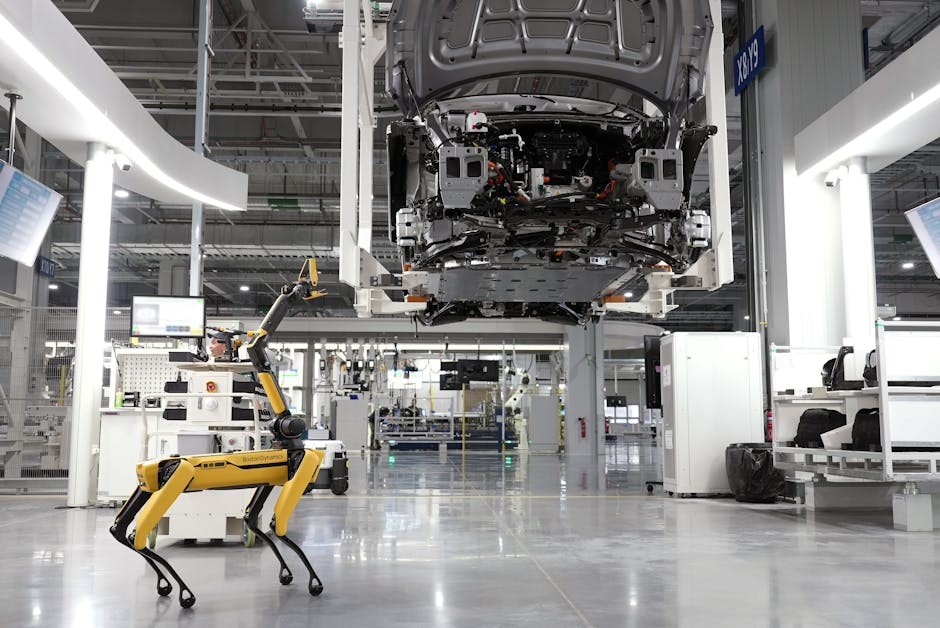
Physical AI, as described by Mike Plasencia, group director of new product strategy and RyderVentures at Ryder System, Inc., represents a significant shift in warehouse automation. Unlike traditional AI, which primarily operates in a virtual or software-based environment, Physical AI is designed to interact with the physical world. This means that it can be integrated into hardware, enabling it to perform tasks that require physical interaction, such as picking and placing items in a warehouse.

According to Plasencia, the key advantage of Physical AI is its flexibility. Traditional automation solutions often require custom hardware and software, making them expensive and time-consuming to implement. Physical AI, on the other hand, can be easily adapted to different environments and tasks, reducing the cost and complexity of warehouse automation.

Challenges in Warehouse Automation

Warehouse automation faces several challenges, including the need for highly specialized and expensive equipment, as well as the complexity of integrating these systems into existing operations. Physical AI aims to address these challenges by providing a more adaptable and cost-effective solution.

One of the biggest barriers to warehouse automation is the lack of standardized hardware and software. This makes it difficult for companies to invest in automation without the fear of becoming locked into a proprietary system. Physical AI, with its focus on flexible hardware, could help break down these barriers by providing a more open and interoperable platform.

RyderVentures’ Investment Strategy

RyderVentures has been investing in disruptive technologies across various sectors, including advanced vehicle technology, e-commerce, digitization, and warehouse automation. The decision to focus on Physical AI is a testament to the company’s commitment to driving innovation in the logistics industry.

Plasencia explains that the company has been working on this technology for five years, investing in over 20 portfolio companies. This long-term commitment reflects the company’s belief in the potential of Physical AI to transform warehouse operations.

The Impact of Physical AI on the Logistics Industry

The adoption of Physical AI in warehouse automation could have a profound impact on the logistics industry. By reducing the cost and complexity of automation, Physical AI could make it more accessible to a wider range of companies, including small and medium-sized enterprises.

This increased adoption could lead to more efficient and cost-effective warehouse operations, ultimately benefiting consumers through faster and more reliable delivery services. Additionally, the use of Physical AI could lead to the development of new business models and services within the logistics industry.

Expert Insight

“Physical AI represents a significant step forward in warehouse automation. Its ability to interact with the physical world in a flexible and adaptable manner makes it a game-changer for the logistics industry.”

— Mike Plasencia, Group Director of New Product Strategy and RyderVentures at Ryder System, Inc.

Conclusion

RyderVentures’ bet on Physical AI is a strategic move that could reshape the landscape of warehouse automation. By focusing on flexible and multi-use hardware, the company aims to break through the biggest barriers in the industry, making warehouse automation more accessible and efficient. As the logistics industry continues to evolve, the adoption of Physical AI could be a key factor in driving innovation and efficiency.

Source: www.freightwaves.com

This article was AI-assisted and reviewed by our editorial team.
Related Posts

Red Sea Logjam: How Saudi Arabia’s Yanbu Surge Exposes Global Energy Supply Chain Fragility
Logistics & Transport

Red Sea Logjam: How Saudi Arabia’s Yanbu Surge Exposes Global Energy Supply Chain Fragility

March 17, 2026
0
CBAM 2026: The EU’s Carbon Border Tax Reshapes Global Supply Chains — A Strategic Deep Dive
Supply Chain

CBAM 2026: The EU’s Carbon Border Tax Reshapes Global Supply Chains — A Strategic Deep Dive

March 17, 2026
0
Latin America’s Port Surge: How DP World’s 2025 Record Throughput Reveals a Fundamental Supply Chain Realignment
Supply Chain

Latin America’s Port Surge: How DP World’s 2025 Record Throughput Reveals a Fundamental Supply Chain Realignment

March 17, 2026
0
Five Customs and Regulations Changes Reshaping European Supply Chains in 2026
ESG & Regulation

Five Customs and Regulations Changes Reshaping European Supply Chains in 2026

March 17, 2026
0
XPENG’s European Expansion: How Digital Supply Chain Infrastructure Is Reshaping Global EV Competition
Strategy & Planning

XPENG’s European Expansion: How Digital Supply Chain Infrastructure Is Reshaping Global EV Competition

March 17, 2026
0
Southeast Asia’s Supplier Renaissance: Becoming 2026’s Global Trade Powerhouse
Manufacturing

Southeast Asia’s Supplier Renaissance: Becoming 2026’s Global Trade Powerhouse

March 17, 2026
0

Leave a Reply Cancel reply

Your email address will not be published. Required fields are marked *

Recommended

SAP’s 2026 Supply Chain Blueprint: How Agentic AI and Sustainability Are Redefining Competitiveness

SAP’s 2026 Supply Chain Blueprint: How Agentic AI and Sustainability Are Redefining Competitiveness

9 Views
February 18, 2026
Strait of Hormuz 70% Traffic Plummet: Middle East Conflict Disrupting Global Food and Agricultural Supply Chains in 2026

Strait of Hormuz 70% Traffic Plummet: Middle East Conflict Disrupting Global Food and Agricultural Supply Chains in 2026

15 Views
March 8, 2026
2023年美国铁路运输的货物情况

Cargo Situation in US Rail Transport in 2023

15 Views
February 16, 2026
H&M停止采购新羽绒纤维:可持续发展的决策与未来展望

H&M Halts Purchase of New Down Feathers: Sustainable Decision and Future Outlook

3 Views
February 16, 2026
Show More

SCI.AI

Global Supply Chain Intelligence. Delivering real-time news, analysis, and insights for supply chain professionals worldwide.

Categories

  • Supply Chain Management
  • Procurement
  • Technology


  • Risk & Resilience
  • Sustainability
  • Research

© 2026 SCI.AI. All rights reserved.

Powered by SCI.AI Intelligence Platform

Welcome Back!

Sign In with Facebook
Sign In with Google
Sign In with Linked In
OR

Login to your account below

Forgotten Password? Sign Up

Create New Account!

Sign Up with Facebook
Sign Up with Google
Sign Up with Linked In
OR

Fill the forms below to register

All fields are required. Log In

Retrieve your password

Please enter your username or email address to reset your password.

Log In

Add New Playlist

No Result
View All Result
  • Supply Chain
    • Strategy & Planning
    • Logistics & Transport
    • Manufacturing
    • Inventory & Fulfillment
  • Procurement
    • Strategic Sourcing
    • Supplier Management
    • Supply Chain Finance
  • Technology
    • AI & Automation
    • Robotics
    • Digital Platforms
  • Risk & Resilience
  • Sustainability
  • Research
  • English
    • Chinese
    • English
  • Login
  • Sign Up

© 2026 SCI.AI