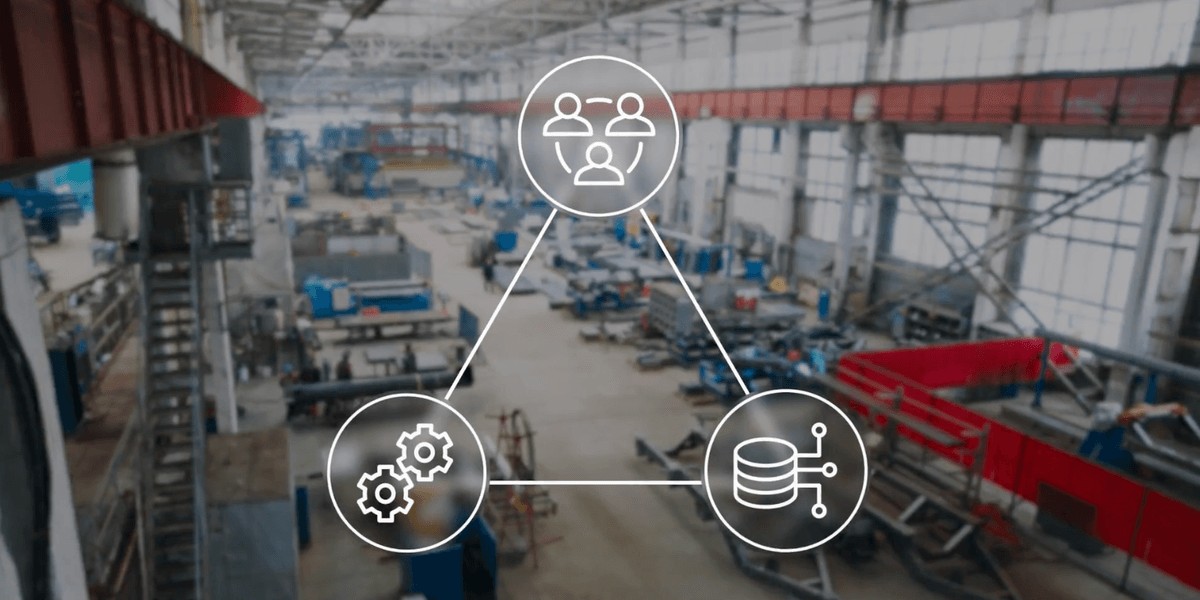
According to www.thescxchange.com, consulting firm Accenture and information technology specialist Avanade are co-developing—alongside Microsoft—a system of artificial intelligence (AI) agents designed to reduce manufacturing downtime by transforming collaboration between humans, machines, AI agents, and data on the factory floor.
The Agentic Factory Framework
The partners define the new offering as an intelligence system built on the Accenture and Avanade Factory Agents and Analytics platform. It leverages Microsoft technologies including Microsoft Azure, Microsoft Fabric, Microsoft Foundry, and Microsoft Copilot, and is delivered via a subscription model that allows clients to start small and scale as value is proven.
This ‘agentic factory’ moves beyond traditional manufacturing analytics, dashboards, and oversight tools. Instead, AI agents assist factory operators with initial status checks, diagnostics, and guided troubleshooting when production lines or machines deviate from intended output rates. The agents analyze operational context, historical machine behavior, and real-time production data to suggest likely causes and recommended actions. When further support is needed, the system helps prepare maintenance tickets or spare parts orders.
Data Integration Architecture
The system unifies structured data—including inputs from manufacturing execution systems, condition monitoring, control and alerting systems, machine and sensor telemetry, and historians—with unstructured sources such as failure mode and effects analysis documentation, operator and machine manuals, and maintenance records.
Frontline Impact for Supply Chain Professionals
According to the report, the solution targets frontline roles across manufacturing operations: production supervisors, machine operators, electricians, mechanics, and quality controllers. Its design emphasizes human-in-the-loop decision-making—supporting rapid issue resolution while keeping workers in control of final judgments.
“Manufacturers are looking to reinvent their shop floor operations with AI for improved safety and productivity. This includes moving beyond visibility toward systems that support frontline workers in critical moments. Our agentic factory helps production supervisors, machine operators, electricians, mechanics and quality controllers resolve issues faster and with greater confidence, remaining in control of final decisions.” — Tracey Countryman, global Supply Chain and Engineering lead at Accenture
For supply chain professionals, this development signals a shift from passive monitoring to active, context-aware intervention. Unlike legacy MES or SCADA systems, the agentic factory dynamically interprets cross-source data—including technical documentation and tacit operational knowledge encoded in manuals and logs—to generate actionable insights tailored to specific equipment, process stage, and operator role. In practice, this reduces mean time to repair (MTTR), improves spare parts forecasting accuracy, and strengthens traceability between machine anomalies and downstream logistics impacts—such as delayed shipments or inventory shortages. Industry-wide, similar AI-integration efforts are gaining traction: Siemens has embedded generative AI into its Mendix low-code platform for shop-floor applications, and Rockwell Automation launched its FactoryTalk AI suite in 2025 to augment predictive maintenance workflows. These developments collectively reflect a broader industry pivot—from descriptive and diagnostic analytics toward prescriptive and autonomous agent-assisted execution.
Source: www.thescxchange.com
Compiled from international media by the SCI.AI editorial team.