According to www.scmp.com, Middle Eastern governments—including Saudi Arabia, Turkey, and the United Arab Emirates—are advancing plans for a multimodal rail-sea logistics corridor designed to bypass the Strait of Hormuz amid persistent wartime disruptions to maritime trade.
Strategic Shift Amid Maritime Vulnerability
The initiative responds directly to sustained threats to two critical maritime chokepoints: the Strait of Hormuz, through which approximately 20 million barrels per day of oil flowed before the conflict escalation, and the Red Sea, where Houthi attacks since late 2023 have rerouted over 60% of container traffic away from traditional Suez Canal routes. The new architecture aims to link ports on the Indian Ocean—specifically in the UAE and Oman—to Mediterranean destinations via overland rail across Saudi Arabia into Jordan, then onward through either Egypt’s Suez Canal or Syria’s Latakia and Tartus ports.
Infrastructure Nodes and Timeline
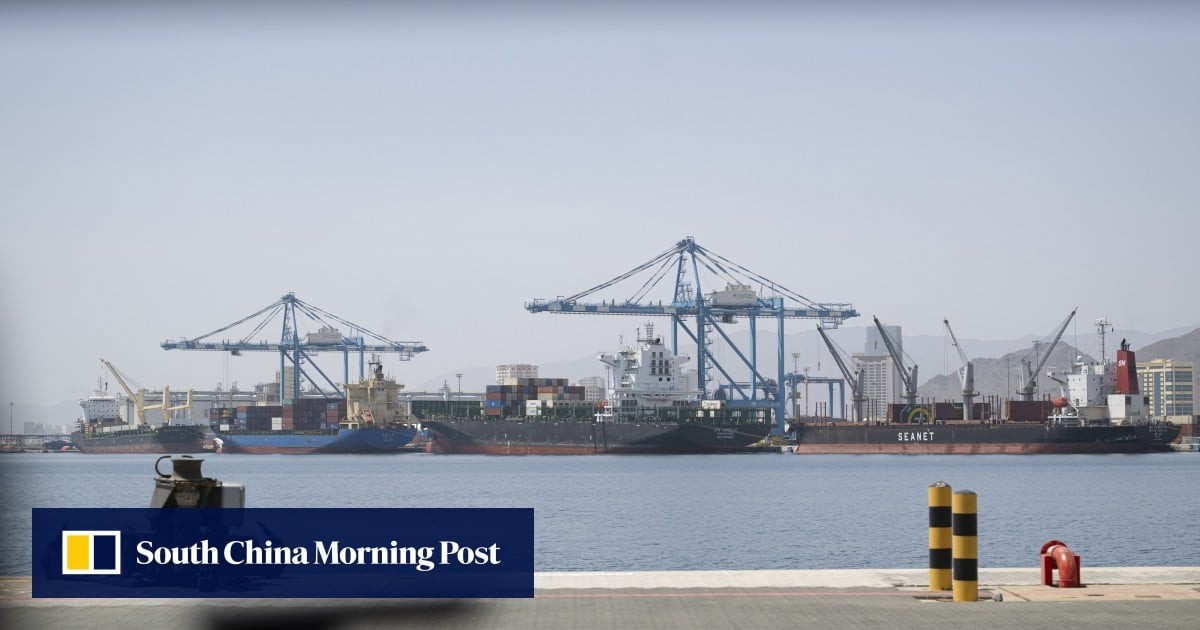
Key infrastructure components include the Khor Fakkan Container Terminal in Sharjah—the only natural deep-sea port in the region located outside the Persian Gulf—and planned rail links connecting it to Riyadh and Amman. According to the report, feasibility studies for the Saudi-Jordan rail segment were launched in Q1 2026, with construction scheduled to begin no later than late 2027. The UAE’s Federal Transport Authority confirmed in March 2026 that it had allocated AED 4.8 billion ($1.31 billion) toward cross-border rail interoperability standards and customs digitization for the corridor.
Analyst Perspective on Structural Change
Robert Mogielnicki, founder of PoliSphere Advisory—a Paris-based geoeconomic consultancy focused on the Middle East—stated that while established infrastructure will eventually resume operations, the conflict has accelerated irreversible changes.
“Eventually a return to utilising established infrastructure will resume, but that won’t necessarily fully stop structural shifts that started in the meantime.” — Robert Mogielnicki, founder of PoliSphere Advisory
This reflects broader regional trends: Saudi Arabia’s Vision 2030 logistics pillar targets raising non-oil exports to $30 billion by 2030, up from $12.4 billion in 2022; meanwhile, the UAE’s National Strategy for Artificial Intelligence allocates AED 1.5 billion ($408 million) to AI-driven port optimization by 2028.
Regional Precedents and Industry Context
This corridor effort aligns with parallel resilience initiatives: In 2025, Turkey activated the Marmaray Rail Tunnel expansion, increasing Istanbul’s rail freight capacity to 12 million tons annually; Jordan’s Aqaba Port handled 3.7 million TEUs in 2025, a 14.2% increase year-on-year, positioning it as a key inland transshipment node. Globally, similar diversification is underway—India’s International North-South Transport Corridor (INSTC) moved 18.6 million tons of cargo in FY2024–25, while the EU’s Trans-Caspian International Transport Route (TITR) saw 2.1 million tons shipped in 2025, up 39% YoY. For supply chain professionals, this means mandatory recalibration of routing algorithms, dual-sourcing protocols for Gulf-origin cargo, and expanded use of bonded rail corridors under WTO’s Revised Kyoto Convention Annex D.
Source: South China Morning Post
Compiled from international media by the SCI.AI editorial team.