# As Labor Agreement Reached in East Coast and Gulf Ports, Industry Stakeholders Focus on Clearing Backlogs and Enhancing Supply Chain Resilience
Author: Jeff Berman October 4, 2024
Although a tentative agreement was reached between the International Longshoremen’s Association (ILA) and the United States Maritime Alliance (USMX) late yesterday, providing some relief to the U.S. supply chain and economy, port operations will not return to normal immediately. However, the situation has not escalated as much as many industry stakeholders had cautiously anticipated.
Despite the strike lasting only three days, existing levels of congestion at ports, vessels waiting to dock, and increased detention times due to the brief work stoppage need urgent resolution. Given that a week-long port disruption typically results in at least one month’s delay, this issue is particularly critical, with delays compounding as goods move inland.
This is according to Mia Ginter, North American Ocean Director at C.H. Robinson.
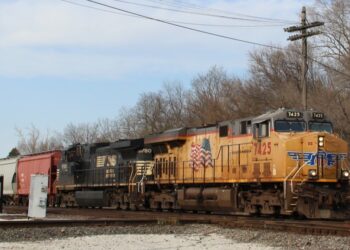
Ginter explained that popular alternative routes such as the U.S. West Coast, Canadian gateways, and non-ILA ports are also facing congestion. Detention times in the Port of Los Angeles and Long Beach have reached up to 30 days in some cases. She added that rail delays on the West Coast can sometimes exceed two weeks.
“Given that railways typically take longer to recover from disruptions, we expect delays at high-volume ports to last for months,” she told _LM_.
Ginter also noted that several vessels are anchoring or waiting to dock along the East Coast and Gulf of Mexico.
“These ports are expected to experience vessel congestion and port backlogs due to immediate ship backlog waiting to berth,” she said. “Additionally, there are containers that failed to exit the ports before the strike. Retrieving and collecting containers unloaded at different port locations could further occupy vessels and increase pressure on available inland transportation and equipment.”
As seen in past events, when port congestion and detention times rise, Ginter pointed out that longer equipment occupation periods often lead to higher rates due to reduced supply. This comes as the Southeastern U.S. is still recovering from Hurricane Herina, she said.
“While truck capacity remains stable and available in affected areas, the load-to-truck ratio on the West Coast is increasing,” Ginter explained. “We expect this trend to continue as rail delays persist, driving up demand for trucks and transload services. We anticipate that air freight and expedited LCL services will continue to play a role in market recovery.”
Everstream Analytics’ analysis aligns with Ginter’s observations.
Everstream noted that it typically takes about a week to clear backlogs from one day of strike action, so a three-day full-scale strike could take at least three weeks for U.S. ports to return to normal operations. The company added that some shippers now face the challenge of retrieving unloaded containers outside the U.S., such as in the Bahamas, due to carriers handling this situation.
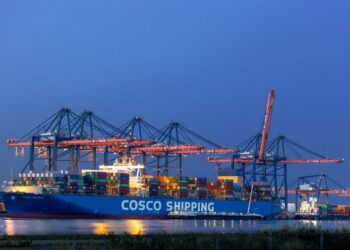
“The number of container ships waiting offshore at Gulf and East Coast ports has dropped to 54 from yesterday’s 59,” Everstream said. “This is largely due to vessels entering ports, particularly Savannah and Charleston, preparing for the reopening of container terminals early today. However, the queue outside New York-Newark port has grown further compared to yesterday, with currently 18 ships waiting, followed by Savannah (10) and Norfolk (9). The total TEU count on these ships has slightly decreased from 406,000 TEUs the previous day to 386,000 TEUs.”
With the tentative agreement between ILA and USMX expiring in January, there is clear pressure for shippers to prepare for potential disruptions, both operationally and from a supply chain resilience perspective.
John Donigian, Senior Director of Supply Chain Strategy at Moody’s, emphasized this point, noting that the suspension of strikes on East Coast and Gulf ports until January 2024 provides temporary relief but highlights unresolved issues in wage, job security, and automation negotiations.
“The new January deadline could exacerbate supply chain bottlenecks as it coincides with key shipping cycles, including post-holiday inventory replenishment, spring product positioning, and preparations for the Chinese New Year,” Donigian said.
He stressed that retailers and manufacturers must remain vigilant because further disruptions could significantly impact consumer goods and industrial parts, adding additional pressure to already strained logistics networks.
“While large retailers may have built up some inventory, small businesses and industries dependent on just-in-time transportation face higher risks,” he added. “If no agreement is reached by January, we might see a replay of delays and cost spikes affecting consumer prices and market stability. Each week of strike action typically means one month of backlog and chaos, so companies need to continue planning for potential long-term supply chain disruptions in 2025.”
Furthermore, Donigian noted that by postponing the strikes, stakeholders have acknowledged the stakes, as businesses must now actively implement strategies to offset potential revenue risks and diversify their supply chain routes where possible.
“Given the industry’s reliance on these critical ports and ongoing labor disputes, flexibility and contingency planning will be crucial in the coming months,” he concluded.