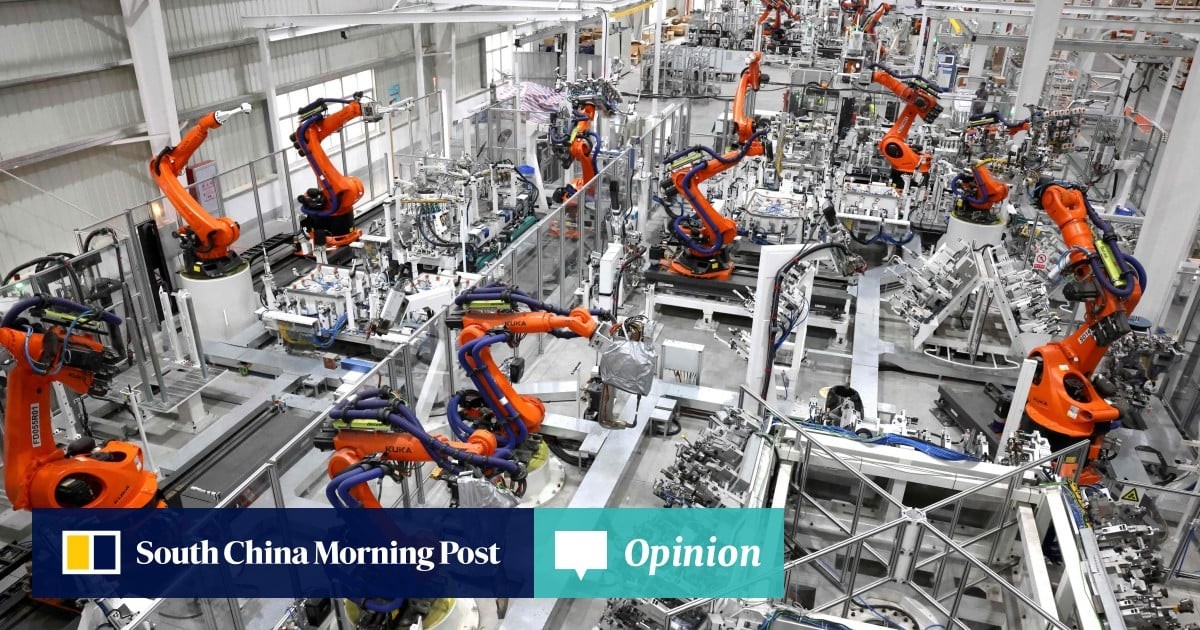
According to www.scmp.com, China’s manufacturing ascent is not cyclical or temporary but structural, demanding a recalibration from Western supply chain professionals — not resistance through protectionism.
The ‘China Shock 2.0’ Is Underway
Columbia University professor Adam Tooze characterizes the current phase as “China shock 2.0” — distinct from the early-2000s ‘catch-up’ era. This new phase reflects China’s redefinition of economic possibility across high-value sectors including aviation, space, artificial intelligence (AI), telecoms, microprocessors, robotics, nuclear and fusion power, quantum computing, materials sciences, biotechnology, pharmaceuticals, solar power, and batteries.
Four Radical Forces Driving Structural Change
Tooze identifies four interlocking forces that define this moment:
- US President Donald Trump’s “trade policy rampage”
- The “new and extraordinary incontinence” of US fiscal policy
- The AI boom
- A “gear-shift” in Chinese economic policy
These forces are not external shocks imposed solely by China — rather, Tooze stresses the shock “has its roots as much in the United States as in China.”
Expert Warnings Against Misplaced Protectionism
The Centre for Economic Policy Research (CEPR) report The New Global Imbalances warns bluntly: “Failure to acknowledge the structural nature of these changes, and excessive emphasis on protection, will undermine long-term growth for all.”
“The rise of China is a long-term trend to which the West must adjust.” — Adam Tooze, Columbia University professor
This assessment aligns with longstanding industry realities: China accounts for over 30% of global manufacturing output (per UNIDO 2023 data), and leads in production capacity for lithium-ion batteries (75% of global supply), photovoltaic modules (80%), and rare-earth permanent magnets (90%). While not cited in the source, these figures contextualize the scale of structural integration described — and explain why supply chain professionals cannot treat China as a tactical sourcing risk alone, but as a foundational node in multi-tiered, technology-intensive value chains.
For practitioners, this means reassessing assumptions about nearshoring feasibility in sectors where China dominates upstream inputs (e.g., battery cathode materials, semiconductor packaging substrates, or active pharmaceutical ingredients). It also signals growing necessity for dual-sourcing strategies that acknowledge China’s entrenched role in R&D commercialization — not just assembly. As geopolitical friction intensifies, visibility into Tier 2 and Tier 3 Chinese suppliers becomes less optional and more essential for resilience planning.
Source: South China Morning Post
Compiled from international media by the SCI.AI editorial team.