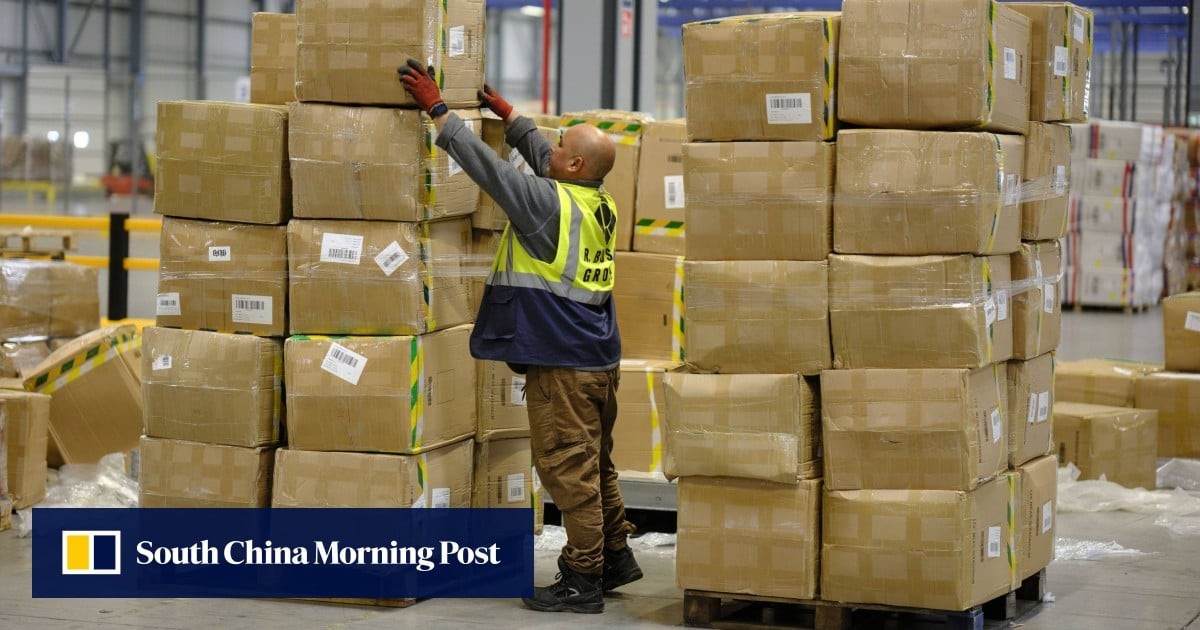
According to www.scmp.com, more than 4 million small parcels from China have arrived daily at the freight airport in Liège, Belgium, since the beginning of 2026 — pushing inspection capacity to its limit.
Operational Pressure and Staffing Gap
The Belgian customs inspection team at Liège Airport numbers just 80 members, a figure starkly insufficient against the volume surge. The airport — strategically located near the Netherlands, Germany, and France — was partly built to serve major e-commerce platforms including Amazon, Shein, Temu, and Alibaba.
Geopolitical and Regulatory Triggers
A key driver cited is the executive order signed by former U.S. President Donald Trump on February 1, 2025, which removed the ‘de minimis’ exemption for Chinese packages valued under US$800. This prompted a rerouting of shipments to Europe. Further pressure emerged this year as Italy and France introduced national handling fees for small parcels, accelerating redirection to Liège to avoid those charges.
EU-Wide Fee Proposal and Chinese Response
In response to mounting strain across member states, the EU has proposed two new fees effective later in 2026: a bloc-wide €2 (US$2.36) handling fee and a €3 flat-rate fee per small parcel valued below €150. Beijing has characterized these proposed measures as “unfair”.
Compliance Crisis Over Product Standards
Belgium’s top customs official, Kristian Vanderwaeren, emphasized that the core challenge lies not in volume but in compliance. He stated:
“The problem for me, as a customs officer, is not so much the quantity. The problem is that we’re being flooded with Chinese products that … do not meet European standards, whose value is not properly declared.”
According to the report, 30 per cent of inspected small parcels violated EU standards; for cosmetic products specifically, the infringement rate reached 100 per cent. Vanderwaeren stressed that pre-arrival alignment with EU regulatory requirements — rather than post-arrival enforcement — is essential. As a result, Belgian customs are now issuing fines very swiftly, according to Xiufang Tu of Daldewolf law firm.
Source: South China Morning Post
Compiled from international media by the SCI.AI editorial team.