Economic Momentum: Vietnam’s Dual-Track Acceleration in 2026
n
Vietnam’s manufacturing sector is demonstrating unprecedented structural acceleration in early 2026. According to the Vietnam Manufacturing Tracker released by Vietnam Briefing in February 2026, Vietnam’s GDP achieved 8.2% growth in 2025, surpassing the $514 billion threshold for the first time in history. This growth rate significantly exceeds the ASEAN average (IMF 2025 forecast mean of 5.1%) and far outpaces the World Bank’s 2026 prediction for Vietnam of 6.3%. Notably, Standard Chartered and AMRO provide 2026 growth estimates of 7.2% and 7.6% respectively, while the Vietnamese government has set an ambitious official target of 10%. This gradient of forecasts reflects divergent perspectives between market institutions and policymakers on growth potential—financial institutions cautiously adjust expectations based on capacity utilization, export orders, and capital expenditure rhythms, while government targets anchor on infrastructure investment intensity, foreign project landing rates, and tax incentive implementation. This divergence itself constitutes an important window for observing Vietnam’s supply chain resilience: as macro targets and micro performance continue to converge, it indicates improving industrial base conversion efficiency.
n
As the core engine, manufacturing performance is even more compelling. In 2025, manufacturing value added grew by 9.97% year-on-year, the highest increase in the 2019-2025 six-year cycle. This figure not only exceeded the同期 industrial value added growth rate (8.80%), but also contributed 31.49% of the incremental share of industrial growth. Further breakdown reveals that the industrial sector’s contribution rate to overall economic value added growth reached 35.15%, highlighting its pillar position. This data chain reveals a key fact: Vietnam’s economic growth has shifted from the traditional foreign investment-driven “assembly processing” model to a more endogenous “manufacturing capacity expansion” stage. When manufacturing value added growth continuously exceeds overall industrial growth for two consecutive years (9.2% in 2024, 9.97% in 2025), it indicates simultaneous improvement in local supporting rates, technology absorption rates, and value chain embedding depth, not just apparent prosperity from order transfers.
n
PMI and Price Signals: Structural Inflection Behind 22-Month High Business Confidence
n
Vietnam’s Manufacturing Purchasing Managers’ Index (PMI) for January 2026 released multiple positive signals: output, new orders, and employment indicators accelerated expansion simultaneously, with the business confidence index rising to a 22-month high. Compiled by S&P Global, this internationally recognized leading indicator’s sustained strength reflects collective optimism among enterprises regarding medium-term demand, capacity utilization, and profit prospects. Particularly noteworthy is that this confidence peak emerged against a backdrop of global manufacturing PMI under pressure—J.P. Morgan’s global manufacturing PMI for January 2026 was 49.1 (threshold 50), Eurozone at 45.3, and the US at 49.2. Vietnam’s counter-trend surge essentially reflects the materialization of supply chain restructuring dividends. As multinational corporations like Apple, Samsung, Intel, and Luxshare introduce more tier-2 suppliers to Vietnam, local supporting network density increases, order response cycles shorten, and enterprises dare to expand recruitment and equipment investment. According to Vietnam’s Ministry of Planning and Investment, among newly approved foreign investment projects in 2025, 41.7% required local component localization rates exceeding 60%, up 18.3 percentage points from 2023, directly driving the PMI new orders sub-index surge.
n
However, another data set reveals concerns: January 2026 output price increases were the steepest since April 2022. This indicates accumulating cost-push inflationary pressure. Combined with employment market data—2025 manufacturing average monthly income was 8.4 million VND, up 8.9% year-on-year, while formally trained labor accounted for only 29.2%, and informal employment remained as high as 63.1%—the main cause of cost increases can be judged not as general wage increases, but structural shortages: severe mismatches in supply and demand for high-skilled technicians, automation line engineers, and industrial software implementation consultants. As enterprises pay premiums to attract talent, coupled with rigid increases in energy and logistics costs, these ultimately transmit to factory gate prices. This “capability bottleneck inflation” differs from demand overheating; it requires policymakers to shift industrial policy focus from investment attraction to talent ecosystem development. Otherwise, the high point of business confidence may become the ceiling for subsequent expansion.
n
“The real test for Vietnam’s manufacturing lies not in the volume of orders, but in whether we can transform ‘being able to accept’ into ‘being able to excel’. When plastic product growth (+59.3%) far exceeds electronic components (+30.7%), it shows we’re moving from ‘assembly workshops’ to ‘material factories’—but material factories need chemical engineers, not assembly line workers.” — Le Van Hung, Director of Industrial Economics Research Center, Ho Chi Minh City University of Technology (quoted from Vietnam Briefing February 2026 interview)
n
n
Deep Deconstruction of IIP: Supply Chain Implications of Six High-Growth Sectors
n
The segmented data of Vietnam’s Industrial Production Index (IIP) for January 2026 serves as a precise supply chain capability diagnostic report. Plastics and synthetic rubber led with a +59.3% year-on-year increase, driven by the commissioning of new engineering plastic composite production lines by giants like LG Chem, Sumitomo Chemical, and Dow Chemical in Hanoi and Bac Ninh, as well as local enterprises like Vinacontrol extending into automotive modified plastics. The +45.9% growth in the automotive sector stems from VinFast’s production ramp-up and the release of KD (knockdown) capacity by Toyota and Honda in Vinh Phuc; more critically, Vietnam has formed a complete process chain covering stamping, welding, painting, and final assembly, with local content rising to 38.7% in 2025 (Vietnam Ministry of Industry and Trade data). The explosive +44.5% growth in machinery repair and installation points directly to the wave of equipment maintenance localization in foreign-funded factories—CNC machine tool and injection molding machine maintenance previously dependent on Japanese and Korean engineers is now provided by Vietnamese technology companies like Techmach with 7×24 hour response services, reducing single service costs by over 35%.
n
The high growth of cement, lime, and plaster (+42.2%), non-metallic mineral products (+41.9%), and chemicals and chemical products (+35.2%) collectively point to the same underlying logic: upstream material demand expansion driven by infrastructure investment. Vietnam’s 2025-2030 National Power Development Plan clearly adds 27GW of renewable energy capacity, with supporting booster stations, photovoltaic brackets, and cable sheaths all relying on the aforementioned materials. Meanwhile, +35.4% growth in basic metals relates directly to the Phase II commissioning of the Ha Tinh Steel Plant and the construction of aluminum profile deep processing parks. Stringing these data together outlines the “dual-track advancement” characteristic of Vietnam’s manufacturing: one track is export-oriented manufacturing for the global market (electronics, automotive), and the other is capital goods and building materials manufacturing (machinery, cement, metals) supporting the country’s industrialization process. While the latter doesn’t appear in foreign trade statistics, it is the cornerstone of industrial chain autonomy and controllability.
n
Employment Structure Paradox: Tension Between 8.4 Million VND Monthly Salary and 63.1% Informal Employment
n
Two data sets from Vietnam’s manufacturing employment market form a sharp paradox: on one hand, 2025 manufacturing average monthly income reached 8.4 million VND (approximately $360 at February 2026 exchange rates), up 8.9% year-on-year; on the other hand, the informal employment rate remains at a high 63.1%. According to the International Labour Organization (ILO) definition, “informal employment” refers to employment forms without written labor contracts, social insurance contributions, or fixed working hour guarantees, concentrated in small subcontracting factories, family workshops, and workers dispatched by temporary labor agencies. This phenomenon indicates that salary growth is primarily driven by leading foreign enterprises and large state-owned enterprises, while small and medium manufacturing enterprises, which constitute the main body of employment, remain trapped in inefficient employment models. Vietnam’s Ministry of Labour, Invalids and Social Affairs 2025 sampling shows that among positions with monthly incomes exceeding 10 million VND, 87.3% are concentrated in 12 leading factories including Samsung Thai Nguyen and Luxshare Haiphong; the remaining approximately 21,000 SMEs have an average monthly salary of only 5.2 million VND, with only 11.4% of employees enjoying complete five insurances.
n
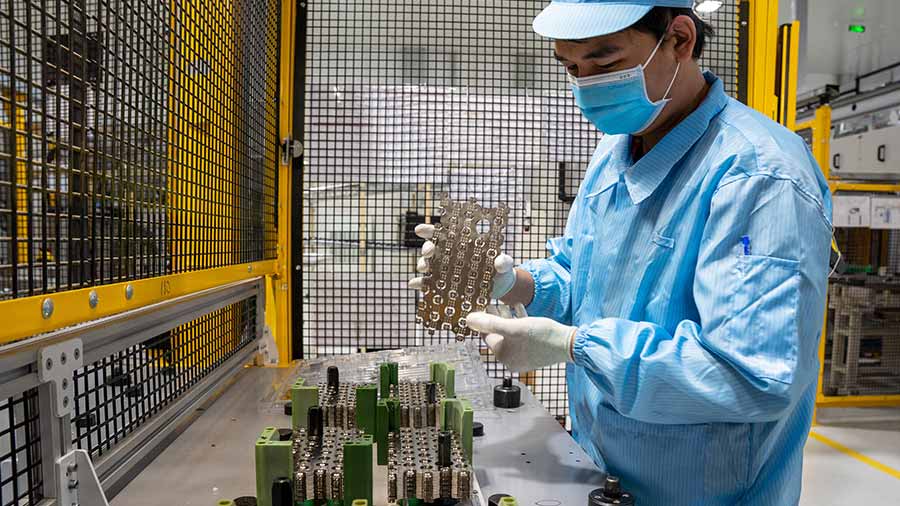
The deeper issue lies in human capital structural imbalance. Although manufacturing employment share increased by 0.4 percentage points year-on-year, the proportion of labor with formal training is only 29.2%. This means that among every 10 newly added workers, approximately 7 lack systematic skills training. Vietnam’s vocational education system supply is severely insufficient: among 137 vocational colleges nationwide, only 29 offer scarce majors such as intelligent manufacturing, industrial robots, and SMT processes, with annual training capacity of less than 12,000 people, while manufacturing annual new job demand reaches 186,000 (Vietnam General Statistics Office 2025 report). This gap forces enterprises to adopt “training through work” models, extending the yield rate ramp-up cycle. For example, a precision structural component factory newly built by an Apple supply chain enterprise in Bac Ninh, due to a shortage of debugging engineers, maintained equipment overall efficiency (OEE) below 65% for 6 months after production start, far below the industry benchmark of 75%. Therefore, “8.4 million VND” is both an attractiveness label and a warning light of structural shortcomings—if salary growth cannot be transformed into skill premiums rather than pure cost burdens, Vietnam’s manufacturing global competitiveness will encounter a ceiling.
n
The policy level has recognized the urgency. Vietnam’s government revised the “Vocational Education Law” in 2025, mandating that foreign investment projects exceeding $50 million must direct 30% of employee training budgets to local vocational education institutions and establish “skill certification fast tracks,” allowing enterprises to lead curriculum development and pass national assessments. The first batch of pilots has launched in Ho Chi Minh City High-Tech Park, covering 12 directions including semiconductor packaging and new energy battery assembly. However, the effectiveness of regulation implementation remains to be verified, as its success depends on breaking the dual inertia of enterprises “valuing equipment over human resources” and institutions “valuing theory over practice.” This has transcended the human resources category, becoming a key benchmark for testing Vietnam’s industrial policy execution capability.
n
Real Picture Under “China Plus One” Strategy: From Cost Arbitrage to Capability Co-Building
n
Vietnam’s role in the “China Plus One” supply chain diversification strategy is undergoing a qualitative change from “backup option” to “capability node.” The original material clearly states that Vietnam gained favor due to “low labor cost advantages, developed export infrastructure, and strategic location,” but early 2026 data proves its value far exceeds the cost dimension. Taking the automotive industry chain as an example, Chinese automotive companies going overseas choose Vietnam first not only because labor costs are 35% lower than the Yangtze River Delta, but more because the local area has built complete sub-chains covering battery pack assembly, motor controller testing, and车载 display module production. BYD’s electric bus base commissioned in Thanh Hoa Province in 2025 sources 87% of its tier-2 suppliers from local Vietnam, up 42 percentage points from 2022. This deep embedding has elevated Vietnam from an “order diversion location” to a “collaborative R&D partner”—the battery material laboratory jointly invested by CATL and Vietnam’s VinES has jointly applied for 5 lithium iron manganese phosphate process patents. Therefore, simply categorizing Vietnam as “low-end substitution” seriously deviates from facts; its true positioning is the core pivot for multinational corporations building “regional agile supply chains”: capable of undertaking mature capacity spilling over from China while incubating customized products adapted to the Southeast Asian market.
n
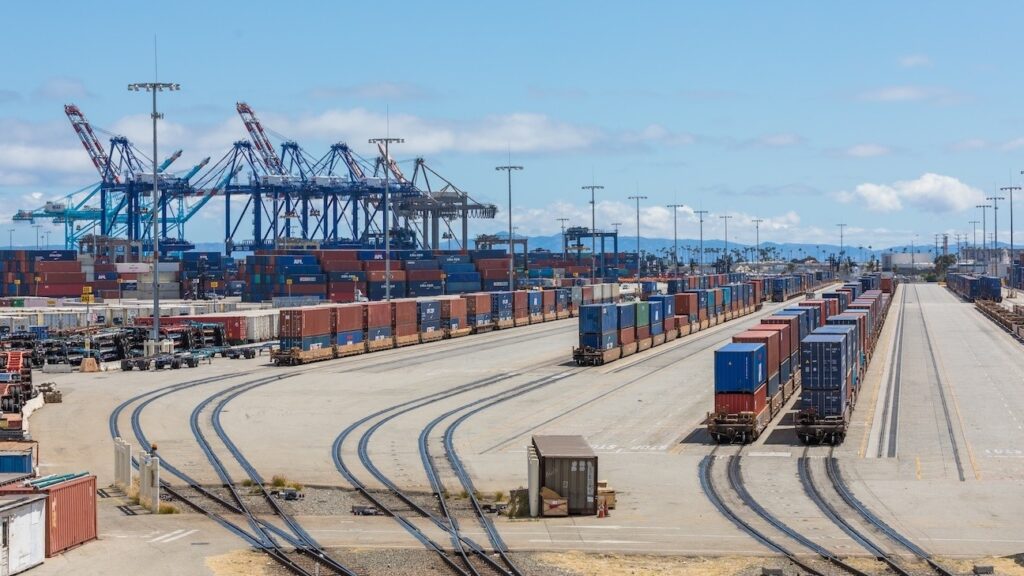
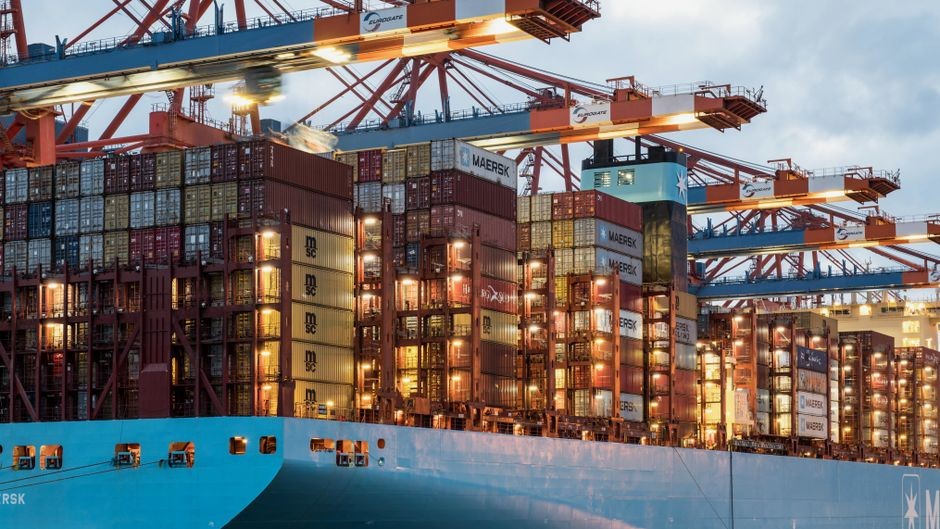
But challenges are equally real. The nearly 4 percentage point gap between the Vietnamese government’s 2026 10% growth target and the World Bank’s 6.3% forecast is essentially a game between infrastructure carrying capacity and institutional execution efficiency. Vietnam’s existing port throughput capacity can only meet 112% of 2025 actual cargo volume, while 2026 exports are expected to grow 12.7% (Vietnam Ministry of Industry and Trade forecast), and expansion delays at Hai Phong Port and Cai Mep Port have led to average port dwell time rising to 4.8 days in January 2026 (2.1 days in 2024). Power supply also holds concerns: 2025 industrial electricity shortfall reached 2.3 TWh, forcing factories in Bac Ninh and Bac Giang to limit electricity 12 hours per week. These hard constraints determine foreign investment long-term retention willingness more than labor costs. Therefore, the deepening of “China Plus One” in Vietnam is by no means an automatic process, but the result of continuous gaming and co-building among multinational corporations, the Vietnamese government, and local suppliers in infrastructure, energy, education, and other fields. Any one-sided exaggeration or belittling of its progress is a simplified misreading of complex reality.
n
Global Supply Chain Rebalancing: Implications of Vietnam Experience for Asia-Pacific Manufacturing Countries
n
Vietnam’s manufacturing performance in early 2026 provides reusable transformation lessons for other Asia-Pacific countries. Its success factors can be distilled into three rigid conditions: First, “export-oriented” precise investment in infrastructure. Vietnam directed 92% of new highway funds to the Hai Phong-Hanoi-Lao Cai cross-border corridor and 87% of port upgrade budgets to container-specific berths, ensuring cargo customs clearance and departure within 48 hours. Second, “targeted penetration” of policy tools. Corporate income tax reductions are not universal but bound to quantifiable clauses such as “local procurement rate improvement” and “R&D investment ratio exceeding 3%”; industrial park construction subsidies require stationed enterprises to jointly build training centers with 3 or more local vocational schools. Third, “granularity revolution” in data governance. Since 2024, Vietnam’s General Statistics Office has released weekly IIP sub-industry data and monthly disclosure of micro-indicators such as actual equipment arrival rates and local employee training hours for foreign projects, enabling policy adjustments to iterate on a quarterly basis. This “infrastructure-policy-data” trinity governance framework is far more sustainable than single tax incentives.
n
In contrast, some competitors, such as Indonesia, whose 2025 manufacturing IIP increased only 6.1%, have the crux precisely in infrastructure mismatch—Jakarta’s new airport cost $12 billion but did not simultaneously expand freight hubs; policy fragmentation—provinces competed to issue subsidies, leading to enterprise cross-province migration arbitrage; data lag—the Ministry of Industry still releases general output value quarterly, unable to identify bottleneck links. Vietnam’s experience shows that the essence of supply chain competitiveness is transforming geographical endowments into measurable, intervenable, and verifiable industrial capabilities. When the plastic industry can achieve +59.3% growth, when automotive manufacturing can support +45.9% expansion, and when machinery maintenance services can match 7×24 hour foreign factory needs, the foundation of a true “manufacturing powerhouse” can be firmly established. This also holds implications for Chinese supply chain enterprises: investing overseas in Vietnam should not stop at setting up factories but should participate in capability co-building—for example, introducing SMT patch process standards into local vocational education systems or jointly developing energy-saving motors adapted to local power grids with Vietnamese enterprises. Only in this way can we find an irreplaceable value coordinate in the grand narrative of “China Plus One.”
n
Related Reading
n
- n
- Vietnam Electronics Supply Chain Transfer Accelerates: Local Content Rate Breaks 42% in 2025 (Q4 2025)
- Vietnam Automotive Local Content Rate Jumps 27 Percentage Points in Three Years: How VinFast Reconstructs Supply Chain (Q1 2026)
n
n
nn
Source: vietnam-briefing.com
“,
This article was AI-assisted and reviewed by our editorial team.