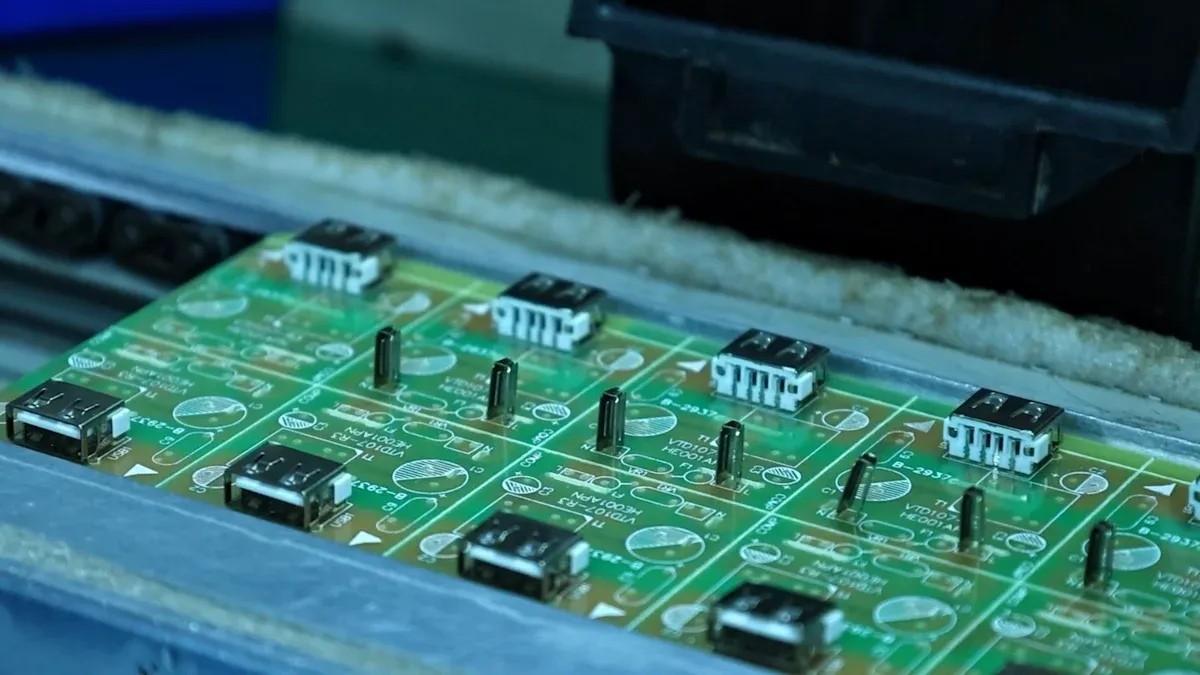
According to blog.gns-ic.com, the global electronic components market is projected to generate approximately USD 701 billion in 2025 — a figure expected to reach USD 1 trillion by 2030, reflecting a compound annual growth rate (CAGR) of 7.36%.
Disruptions and Strategic Imperatives
The semiconductor supply chain remains highly sensitive to external shocks. The source states that the COVID-19 pandemic caused an estimated $110 billion in production losses within the global automotive sector by May 2021. Geopolitical tensions — particularly the US-China trade war — introduced export restrictions and widespread stockpiling behaviors, further straining continuity. These events underscore why supply chain professionals must stay informed on real-time semiconductor supply chain updates to anticipate market shifts and optimize procurement, inventory, and sourcing strategies.
Tech Advancements Reshaping Capabilities
Breakthroughs in nanoelectronics are directly influencing component design and manufacturing resilience. According to the report, researchers are advancing new materials — including graphene and gallium nitride — to improve electrical properties and thermal management beyond traditional silicon limitations. Nanoscale fabrication techniques now enable miniaturized devices, while innovations in nanomaterials support more efficient perovskite solar cells and high-capacity, fast-charging batteries.
Photonic chips represent another critical frontier. The source highlights progress in entangled photons for quantum communication, long-distance quantum teleportation demonstrations, and development of quantum nodes — all aimed at enabling secure, low-energy, high-speed data transmission.
Regional Market Dynamics
Asia-Pacific dominates global electronic components sales, accounting for nearly 47.5% of global sales in 2024. This reflects its robust manufacturing ecosystem across China, Taiwan, Japan, and South Korea. The region’s market size was estimated at USD 176.52 billion in 2025 and is expected to reach USD 419.08 billion by 2035. Meanwhile, the Middle East and Africa are the fastest-growing regions, with a CAGR of 7.5%, driven by infrastructure expansion and industrialization.
- Automotive segment growth: 8.1% CAGR through 2030
- Passive components (e.g., resistors, capacitors): 8.3% CAGR, outpacing active components
- Active electronic components market: 9.1% CAGR from 2025 to 2032
- Electronic parts management solutions market: set to exceed 15% CAGR due to rising complexity and AI-driven demand
AI integration is accelerating demand for specialized semiconductors across smart devices, healthcare diagnostics, IoT, and 5G infrastructure — reinforcing the need for agile, visibility-rich supply chains capable of supporting rapid R&D cycles and heterogeneous component sourcing.
Practitioner Implications
For supply chain professionals, these developments signal three non-negotiable priorities: First, geographic diversification of wafer fabrication, packaging, and testing capacity is no longer optional — it is foundational to mitigating geopolitical and logistical risk. Second, adoption of electronic parts management solutions with AI-enabled forecasting and traceability is becoming essential to handle growing SKU complexity and compliance requirements. Third, collaboration with suppliers across tiers — especially those engaged in nanomaterials or photonic chip development — enables earlier access to next-generation components and reduces time-to-market for advanced electronics. As passive components outpace active ones in growth, procurement teams must reassess vendor concentration and lead-time buffers for capacitors and resistors — historically treated as commoditized, but now subject to similar bottlenecks as ICs.
Source: blog.gns-ic.com
Compiled from international media by the SCI.AI editorial team.