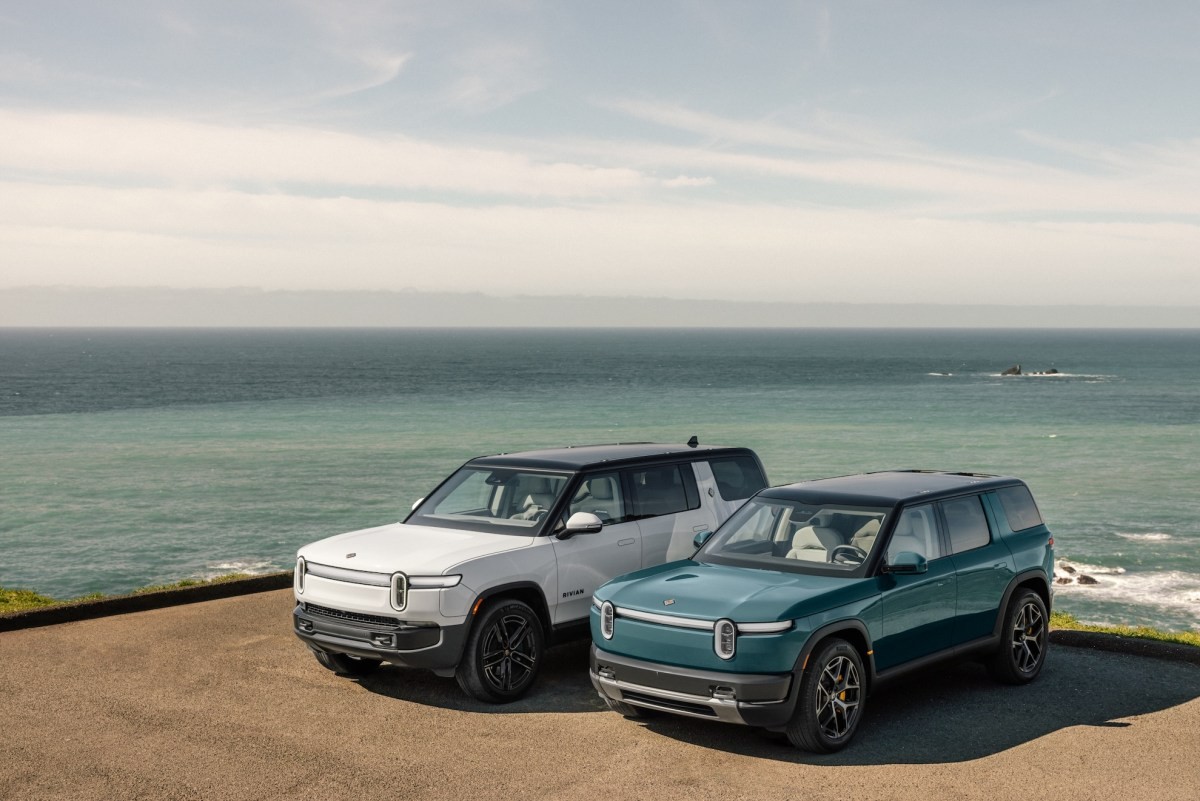
According to techcrunch.com, Rivian has begun production of its R2 SUV at its Normal, Illinois factory — just days after an EF-1 tornado tore part of the roof off the facility and caused structural damage to the south end of the plant.
Resilience Under Pressure
The incident required around-the-clock response efforts over the past 72 hours, yet Rivian founder and CEO RJ Scaringe confirmed on Bloomberg Television that the company expects no delays to the R2’s rollout — a milestone critical to Rivian’s financial survival. Scaringe explained that while Rivian had to adjust material intake logistics — changing how and where some components enter the factory — it is holding firm to its original production roadmap: “we’re not making any changes to the plan.”
“The tornado went through the south end of the plant, and ripped the roof off the building, and knocked down some of the plant as well, and so the last 72 hours have been around the clock.” — RJ Scaringe, Founder and CEO, Rivian
R2’s Strategic Role in Rivian’s Supply Chain
The R2 represents Rivian’s first vehicle designed for mass-market reach, with a significantly lower price point than its current R1 series. While Rivian previously promoted a $45,000 base price, the launch edition R2 starts at $57,990; a $53,990 variant is expected by year-end. A model under $50,000 won’t be available until the first half of 2027, and the true $45,000 base model is slated for late 2027 — if it arrives at all. As noted in the source, Rivian revised its language from “at $45,000” (used as recently as February) to “around $45,000” in its March pricing announcement.
Rivian told investors earlier in 2026 that it expects to deliver 20,000–25,000 R2 units by end-of-year 2026. Achieving that target would make the R2 one of the fastest-scaling new EVs ever launched in the U.S., second only to Tesla’s Model Y.
Supply Chain Implications for Practitioners
For global supply chain professionals, Rivian’s experience underscores the operational reality of maintaining continuity amid acute physical disruptions — especially in single-site manufacturing hubs. The company’s ability to rapidly reroute inbound logistics and maintain schedule integrity reflects disciplined contingency planning, real-time coordination across procurement, warehousing, and assembly, and tight integration between engineering and operations teams. Notably, Rivian’s Normal plant serves as both final assembly and key component staging location; the tornado’s impact on roofing and structure highlights vulnerabilities in facility hardening — a growing concern for OEMs operating in climate-vulnerable regions like the U.S. Midwest. Industry-wide, automakers including Ford and GM have invested in multi-regional supplier diversification and modular logistics protocols to mitigate such single-point failures — practices now validated by Rivian’s accelerated recovery.
Source: TechCrunch
Compiled from international media by the SCI.AI editorial team.