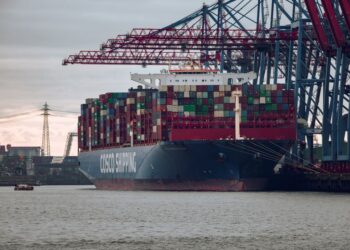
According to www.maersk.com, five major customs and regulatory changes will reshape European supply chains in 2026 — with direct implications for import compliance, cost structures, data governance, and logistics infrastructure planning.
End of the €150 De Minimis Exemption
From 1st July 2026, the EU will eliminate its long-standing €150 customs duty exemption for low-value imports. Accelerated from the originally scheduled 2028 date, this change means every commercial shipment entering the EU will be subject to duties. A flat-rate duty of €3 per item type will apply. The source states this marks the end of simplified treatment for low-value goods and brings these flows fully under standard customs controls. As a result, the number of shipments requiring full customs processing will increase significantly — heightening pressure on border processes and demanding greater accuracy in shipment data. While €3 per item may appear modest, it represents a meaningful cost for low-value items and must be factored into pricing, checkout processes, or delivery fees. Drawing on experience from similar U.S. changes in 2025, Maersk notes many companies shifted from direct-to-consumer parcel shipping to bulk imports and EU-based warehousing — a trend likely to accelerate across Europe, increasing demand for consolidation hubs and regional distribution centres.
EUDR Enforcement Delayed — But Preparation Is Urgent
The European Union Deforestation Regulation (EUDR) has been deferred to 30th December 2026 for medium and large enterprises, and to 30th June 2027 for micro and small enterprises. According to the report, EUDR applies to commodities including cattle, cocoa, coffee, palm oil, soy, rubber, and wood — as well as derived products such as chocolate, furniture, and paper. Companies must demonstrate that goods were not produced on land deforested after 31st December 2020 and comply with local laws, using a formal due diligence process that includes collecting precise geographic production data, assessing deforestation risk, and submitting a digital Due Diligence Statement (DDS) before import or export. Crucially, importers will only clear goods through EU customs if a valid DDS reference is provided — making sustainability compliance a prerequisite for customs clearance. The source states the entire year of 2026 will be a critical preparation period, urging companies to map supply chains, identify high-risk origins, and engage suppliers early. Retail giant Primark, cited in the article, welcomed the delay but confirmed it is “not taking its foot off the gas” — referencing an interview with Ronnie Bennett, Head of Customs at Primark.
CBAM Enters Full Enforcement
The EU’s Carbon Border Adjustment Mechanism (CBAM) officially came into force on 1st January 2026, becoming an enforceable financial obligation for importers. According to the report, CBAM targets iron and steel, aluminium, cement, fertilisers, electricity, and hydrogen — with scope expected to expand to selected downstream products over time. Importers must measure and report embedded emissions and purchase CBAM certificates to cover those emissions. Only authorised CBAM declarants can import covered goods, and every shipment begins accumulating an emissions cost immediately in 2026 — though payments for 2026 imports will be settled in 2027. The source states importers must obtain reliable emissions data from non-EU suppliers; where data is missing, conservative default values may apply and increase costs. This introduces new procurement incentives toward lower-emission producers, recycled inputs, or suppliers operating under equivalent emissions pricing regimes — potentially reshaping trade flows. CBAM also adds complexity to customs operations, requiring integration of emissions reporting, certificate management, and annual declarations into import processes.
ICS2 Compliance Deadlines Tighten
The EU’s Import Control System 2 (ICS2) — an enhanced advance cargo information system — became fully operational across air, sea, road, and rail on 1st September 2025. However, temporary derogations granted to several EU states and participating countries extended into early 2026. Per the source, key deadlines now include 3rd February 2026, when legacy message formats are switched off and all Entry Summary Declaration (ENS) filings must use ICS2 version 3. By 1st June 2026, enforcement extends to all land-based modes — meaning road and rail operators must lodge complete ENS data well before reaching the EU border. ICS2 requires carriers or their representatives to submit detailed advance cargo information prior to entry or transit, strengthening border security through earlier, more granular data submission.
Strategic Imperatives for Supply Chain Professionals
For global supply chain professionals, these changes collectively signal a structural shift: customs is no longer a back-office function but a core driver of resilience, cost control, and market access. Accurate, timely, and verifiable data — from item-level duty classification to plot-level geolocation for EUDR and emissions data for CBAM — is now foundational. Practitioners must audit data collection points across tiers of suppliers, invest in systems capable of managing multi-regulatory reporting (e.g., DDS, CBAM declarations, ICS2 ENS), and reassess inventory strategies — particularly for e-commerce players weighing the trade-offs between direct-to-consumer parcels and EU-based inventory models. As Lars Karlsson, Maersk Head of Global Trade and Customs Consulting, observes:
“Customs has never been more important than today, but it will be more important tomorrow.”
Source: www.maersk.com
Compiled from international media by the SCI.AI editorial team.