According to mexicobusiness.news, global investors and policymakers at the FII Priority Summit’s Latin America forum confronted a pivotal question: can infrastructure in Latin America deliver the stable, scalable conditions long-term capital requires? The answer was a qualified yes — contingent on governments and private sectors overcoming self-imposed obstacles.
LatAm’s $Trillion Infrastructure Imperative
The Inter-American Development Bank estimates the region must invest 3–5% of GDP annually just to close its existing infrastructure gap and sustain long-term competitiveness. This shortfall underpins growing investor scrutiny — especially as nearshoring accelerates. As Juan Carlos Zepeda, Partner at MIP Real Assets and CEO of Quantum Energía, stated:
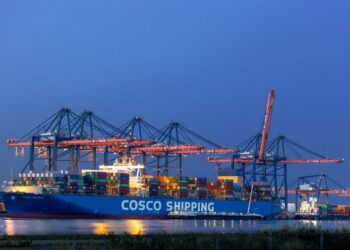
“Since 2023, Mexico has become the main source of US imports, and together with Canada we are the main destination of US exports.” — Juan Carlos Zepeda, Partner, MIP Real Assets, and CEO of Quantum Energía
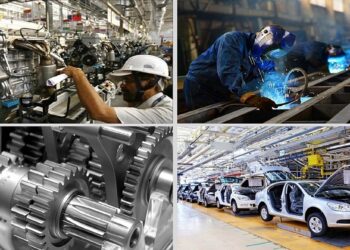
That shift reflects a concrete, operational reality — not speculation — with industrial park development now actively underway across Mexico.
Energy & Water: The Dual Bottlenecks
Thor Equities Group Chairman and CEO Joe Sitt identified two non-negotiable constraints for on-the-ground execution: power and water. “The first challenge is always power,” he said, noting that while Mexico’s national grid is expanding, private sector demand is outpacing it. As a result, investors increasingly deploy behind-the-meter solutions — on-site distributed generation that bypasses the grid entirely. He added:
“What ends up happening is we go behind the meter to power projects.” — Joe Sitt, Chairman and CEO, Thor Equities Group
Water availability, he stressed, is the second consistent limiting factor in industrial site selection.
Mexico’s natural gas dependency underscores the scale of energy infrastructure required: pipeline gas imports from the U.S. reached a record 6.638 Bcf/d in 2025, reinforcing Zepeda’s warning: “Never forget about natural gas. Gas brings you productivity.”
PPP Models and National Case Studies
Public-private partnerships (PPPs) emerged as a critical enabler. Zepeda highlighted FIEMEX — a sovereign infrastructure fund co-managed by MIP (65% equity), a Mexican sovereign fund, and pension capital — which now powers approximately 15% of Mexico’s electricity. FIEMEX issues bonds in international markets, blending global capital access with public-interest mandates.
Ecuador’s Vice President María José Pinto pointed to dollarization — adopted in 2000 — as a foundational source of macroeconomic trust that continues to bolster investor confidence decades later. In contrast, Venezuela’s oil opportunity remains structurally constrained: while panelists called it an “absolutely right opportunity” for oil production, Zepeda emphasized that institutional and legal preconditions must materialize before capital can realistically flow.
Practitioner Implications for Global Supply Chains
For supply chain professionals, this is not abstract policy discussion. Nearshoring into Mexico is already generating tangible demand for industrial real estate, reliable power, and water-stable sites — forcing procurement and site-selection teams to evaluate infrastructure readiness beyond traditional cost or labor metrics. Behind-the-meter energy solutions are no longer niche alternatives but operational necessities in regions with grid lag. Meanwhile, Ecuador’s dollarized stability and Mexico’s PPP-driven scale signal where regulatory predictability and financing models align — critical inputs when mapping multi-year supplier diversification or regional distribution hubs. As World Travel and Tourism Council Chairman Manfredi Lefebvre d’Ovidio bluntly observed:
“The only problem standing in the way is Mexico and Latin America themselves.” — Manfredi Lefebvre d’Ovidio, Chairman, World Travel and Tourism Council
The implication for practitioners is clear: supply chain resilience in LATAM hinges less on geopolitical tailwinds than on verifiable progress in grid expansion, water security, permitting speed, and contract enforcement.
Source: mexicobusiness.news
Compiled from international media by the SCI.AI editorial team.