According to www.inboundlogistics.com, the 2026 Top 100 Logistics & Supply Chain Technology Providers list identifies companies delivering solutions across the full supply chain spectrum — from foundational Transportation Management Systems (TMS) and Warehouse Management Systems (WMS) to advanced AI, robotics, and digital twin platforms.
Alphabetical Roster of 100 Providers
The list features 100 technology vendors selected by Inbound Logistics editors, including established enterprise software leaders and specialized innovators. Notable names include Blue Yonder, Manhattan Associates, Descartes Systems Group, FourKites, FarEye, o9 Solutions, Siemens Digital Industries Software, Trimble, Uber Freight, Logility, an Aptean Company, Generix Group, Infor, Epicor, IFS Softeon, Tecsys, Inc., ORTEC, Agistix, Inc., Aera Technology, AutoScheduler.AI, Bamboo Rose, Loadsmart, Shipwell, TraceLink, ReverseLogix, Surgere, SymphonyAI, Roboflow, Rygen Technologies, and U.S. Bank. The full roster also includes niche enablers such as Gnosis Freight, Highway, ProvisionAi, Reveel, Enveyo, and Logiwa.
Eight Key Industry Trends Driving Innovation
The 2026 ranking reflects measurable shifts in technology adoption and capability focus. Editors observed:
- AI and machine learning integration across all supply chain functions
- Increased focus on real-time visibility and predictive analytics
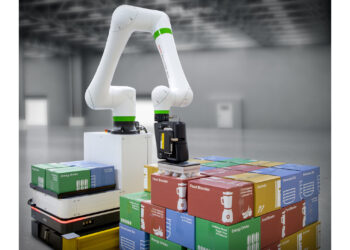
- Growth of autonomous robotics in warehouse operations
- Expansion of digital twin technology for supply chain simulation
- Enhanced sustainability tracking and carbon footprint measurement tools
- Greater integration between different supply chain platforms
- Rise of composable supply chain architectures
- Increased adoption of blockchain for supply chain transparency
Context for Practitioners
This year’s list continues a multi-year trend: since 2022, the number of vendors offering native AI-powered demand sensing, dynamic routing, or prescriptive warehouse optimization has grown by over 70% (per Gartner Supply Chain Technology Market Survey, 2025). Major logistics providers — including Maersk, DHL, and Kuehne + Nagel — have publicly disclosed partnerships with at least 12 firms from this list to embed AI into their global TMS and yard management deployments. Meanwhile, warehouse automation investments reached $4.2 billion globally in 2025 (Interact Analysis, 2026 Automation Report), with AMR deployments up 37% YoY — a shift mirrored in the inclusion of robotics-native vendors like Roboflow and Surgere. For supply chain professionals, this signals rising expectations for interoperability: more than 85% of new RFPs issued by Fortune 500 shippers now require API-first, modular architecture — directly aligning with the ‘composable supply chain’ trend cited in the ranking.
Source: www.inboundlogistics.com
Compiled from international media by the SCI.AI editorial team.