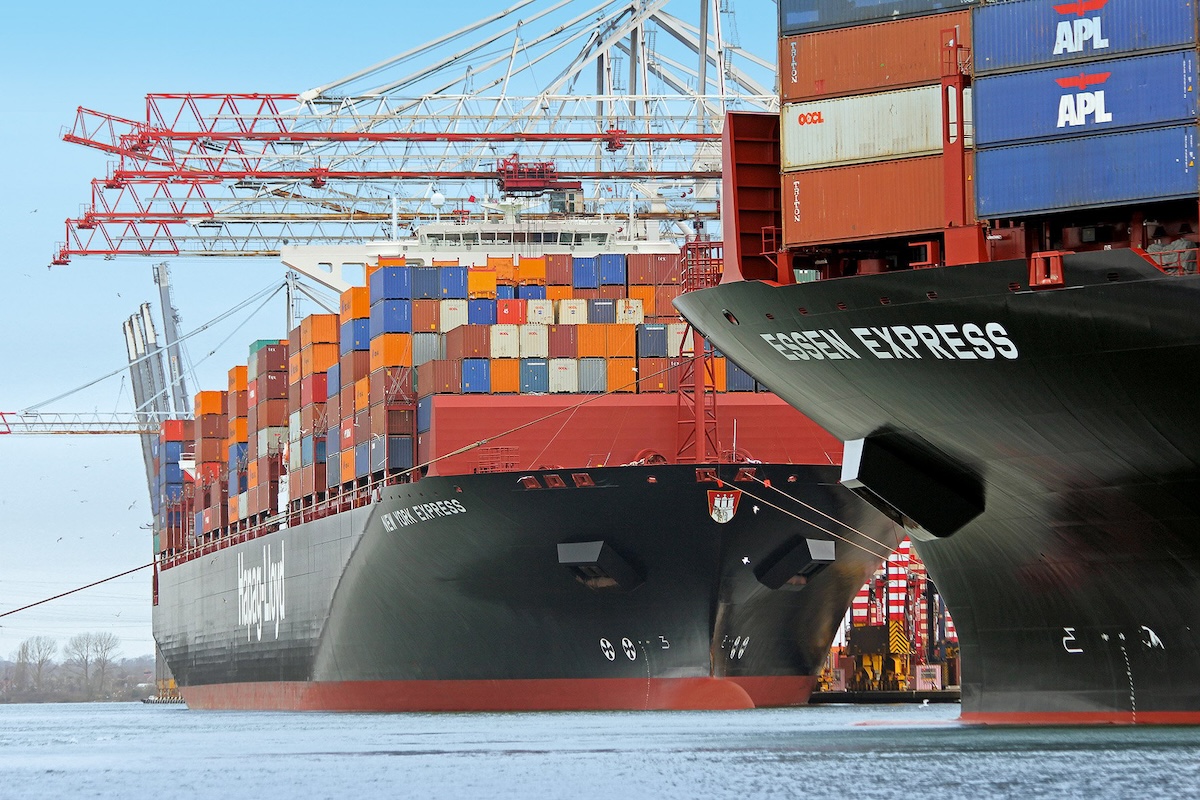
According to www.freightwaves.com, the U.S.-led war in Iran is costing Hapag-Lloyd $40 million to $50 million per week, its CEO Rolf Habben Jansen confirmed on an earnings call — driven primarily by surging bunker fuel and insurance expenses, plus storage and inland transportation costs.
Operational Disruptions and Vessel Constraints
The German container line, ranked the world’s fifth-largest, currently has six ships trapped in the Persian Gulf, with a combined capacity of 25,000 TEUs. These are feeder-sized vessels typically used for short-haul port shuttling. Due to Iranian restrictions on maritime transit, Hapag-Lloyd cannot call ports inside the Gulf but continues limited service to Salalah (Oman) and Jeddah (Saudi Arabia). Around 50% of its contract freight to the region is exposed to disruption.
Habben Jansen emphasized that the Red Sea–Suez Canal route remains effectively closed:
“I think right now it would not have been right to assume that the Red Sea opens up soon. The scenario where that remains largely closed for 2026, I think is right now the most realistic.” — Rolf Habben Jansen, CEO, Hapag-Lloyd
Financial and Strategic Response
Hapag-Lloyd reported operating profit of $3.5 billion in 2025, down from $4.9 billion in 2024, citing higher conflict-related costs and persistent excess capacity. To offset escalating expenditures, the carrier introduced contingency and emergency charges — though revenue recovery lags implementation.
The company is closely monitoring potential fuel supply risks:
“We are definitely looking into that, because we also see that there is potentially a risk of shortage,” said Habben Jansen. “Asia is not one of our biggest bunkering locations, but it is certainly something to keep an eye on.” — Rolf Habben Jansen, CEO, Hapag-Lloyd
Broader Industry Context for Supply Chain Professionals
This crisis reflects a systemic escalation in geopolitical risk exposure across global liner networks. Since late 2023, Houthi attacks in the Red Sea have already forced Maersk, MSC, and CMA CGM to suspend Suez transits — rerouting vessels via the Cape of Good Hope and adding 10–14 days to Asia–Europe voyages. In early 2026, the U.S.-led military campaign against Iran intensified volatility in the Strait of Hormuz, a chokepoint handling ~20% of global seaborne oil and over 30% of containerized trade to the Middle East. Unlike prior Red Sea disruptions, this conflict directly impedes port access and introduces sovereign-level transit controls — complicating contractual obligations, force majeure claims, and cargo insurance validity.
For supply chain professionals, the implications are operational and financial:
- Extended lead times and unpredictable port call windows require dynamic buffer stock adjustments, especially for time-sensitive or high-value goods;
- Rising marine insurance premiums (reported up to 300% for Gulf-bound voyages) and bunker surcharges are increasingly passed through to shippers via general rate increases (GRIs) and emergency fuel adjustment factors (EFAFs);
- Contractual exposure assessments must now explicitly map origin-destination pairs against active conflict zones, not just shipping lanes — e.g., shipments bound for Dubai or Bahrain may face delays even if vessels avoid Hormuz due to port congestion or customs holdups;
- Alternative routing options are severely constrained: Overland corridors via Turkey or rail through Central Asia lack scalable container-handling infrastructure and face their own regulatory and capacity bottlenecks.
Source: FreightWaves
Compiled from international media by the SCI.AI editorial team.