Skip to content

Coverage desk

South Asia

97 published stories

India launches PLI scheme for polysilicon to cut China imports
Manufacturing

India launches PLI scheme for polysilicon to cut China imports

India is launching a Production-Linked Incentive (PLI) scheme for domestic polysilicon manufacturing to eliminate its 100% dependence on Chinese imports. Announced by Santosh Kumar Sarangi, Secretary of the Ministry of New and Renewable Energy, the scheme targets over 10 GW of capacity and supports India’s goal of 500 GW of non-fossil power by 2030. It builds on existing PLI investments totaling ₹240 billion ($2.52 billion) and complements current domestic capacity — including 200+ GW of solar panels and 32+ GW of cells — with plans for 80 GW of ingot and wafer capacity by June 2028.

India accelerates water reforms to power AI, manufacturing, agriculture
Manufacturing

India accelerates water reforms to power AI, manufacturing, agriculture

India must accelerate water governance reforms to sustain growth in AI infrastructure, manufacturing, and agriculture. UBS economist Tanvee Gupta Jain warns that despite rising infrastructure investment, policy lags threaten $24 billion in AI projects and $100 billion in PLI manufacturing incentives. A 17% national water deficit — projected to reach 21% by 2030 — already disrupts semiconductor fabs in Chennai and delays cold chain development in Gujarat. Rural economic shifts toward high-water-value agri-businesses further strain outdated allocation systems.

India launches polysilicon incentive scheme targeting 10 GW capacity
South Asia Supply Chain

India launches polysilicon incentive scheme targeting 10 GW capacity

India is launching a new production-linked incentive scheme targeting more than 10 GW of domestic polysilicon capacity to break its 100% reliance on Chinese imports. The move extends ₹240 billion ($2.52 billion) in existing solar manufacturing incentives upstream, complementing over 200 GW of module capacity and a June 2028 target of 80 GW for ingots and wafers. With polysilicon also vital for semiconductors, the policy supports dual industrial goals. However, capital intensity and Chinese scale dominance pose major competitiveness hurdles.

India Needs $1 Trillion Manufacturing Investment to Create 40M Jobs
Manufacturing

India Needs $1 Trillion Manufacturing Investment to Create 40M Jobs

Ashish Dhawan, founder of ChrysCapital, argues India must attract $1 trillion in manufacturing investment over the next decade to generate 40–50 million jobs and lift exports from $450 billion to $2 trillion. He highlights critically low manufacturing FDI — just $20–$22 billion annually — versus headline $90 billion FDI figures skewed by short-term private equity. With improved infrastructure, active industrial policy, and geopolitical tailwinds from EU-China trade tensions and new FTAs with the US, EU, and UK, Dhawan asserts India's 'enabling conditions' are stronger than in the past 10–15 years.

India’s B2B Logistics Lags as Quick Commerce Hits 5,000 Dark Stores
Last Mile

India’s B2B Logistics Lags as Quick Commerce Hits 5,000 Dark Stores

India’s last-mile delivery infrastructure has matured, but primary and secondary B2B logistics remain manual and fragmented — hindering scalability despite rapid quick commerce growth. The combined dark store network of Blinkit, Instamart, and Zepto reached over 5,000 locations by May 2026, up nearly 48% year-on-year, while India’s quick commerce market grew 40%. New GST rules mandating e-way bill closure within one day of delivery highlight systemic digital gaps. ClickPost CEO Naman Vijay emphasizes that B2B logistics — processing 50 million+ shipments monthly across 30+ countries — is the decisive layer for supply chain speed and working capital efficiency.

Intra-Asia Freight Rates Fall 4%, Carriers Add Capacity
Manufacturing

Intra-Asia Freight Rates Fall 4%, Carriers Add Capacity

Intra-Asia container freight rates declined by 4% across multiple key lanes in late July 2026, including Shanghai–Nhava Sheva ($1,667/40ft), Shanghai–Jakarta ($1,475/40ft), and Shanghai–Kaohsiung ($1,433/40ft). Despite weakening demand, COSCO expanded its North-east Asia network via Yang Ming’s JTS service, while Sinotrans launched the CIW2 corridor linking China and India. Analysts attribute the softening to the end of an exceptionally busy H1 2026 for Chinese exports, with May marking an all-time export high overall — though South-east Asia shipments peaked in April. The traditional July–October peak season is losing momentum, even as carriers add capacity on high-demand routes like East Asia–Australia.

Mahindra to IPO Last Mile Mobility in H2 2027, merges truck unit with SML
Digital Platforms

Mahindra to IPO Last Mile Mobility in H2 2027, merges truck unit with SML

Mahindra & Mahindra confirmed its Last Mile Mobility electric three-wheeler business remains on track for an IPO in H2 2027. Simultaneously, it merged its Truck and Bus Division into SML Mahindra via a slump sale set for completion in FY27, retaining 59% of the combined entity. Group CEO Anish Shah described the move as part of a 'platform over exit' strategy, aiming to build scalable, listed businesses. Executive Rajesh Jejurikar noted the integration will enhance competitiveness against Tata Motors and Ashok Leyland. The company already operates multiple listed subsidiaries, including Mahindra Logistics and Mahindra Holidays.

Japan’s 7.1-magnitude quake halts Toyota, Renesas, TSMC plants in Kumamoto
South Asia Supply Chain

Japan’s 7.1-magnitude quake halts Toyota, Renesas, TSMC plants in Kumamoto

A 7.1-magnitude earthquake hit Kumamoto Prefecture in Japan on July 28, 2026, forcing Toyota to halt production at three Kyushu plants — Miyata, Kanda, and Kokura — through July 31. The Miyata plant alone produces 430,000 vehicles annually. Renesas suspended operations at two Kumamoto fabs due to structural damage, while TSMC evacuated staff at its JASM facility before confirming structural safety and beginning gradual restart. Honda extended its Kumamoto motorcycle plant suspension to July 31; Sony halted semiconductor operations in Kumamoto but found no major damage in Nagasaki, Oita, or Kagoshima. Nissan kept its Fukuoka plant running but is closely monitoring supplier networks. Kyushu accounts for ~12% of Japan’s auto component output and >30% of domestic semiconductor wafer production.

India Launches ₹10,000-Crore Container Manufacturing Scheme
Manufacturing

India Launches ₹10,000-Crore Container Manufacturing Scheme

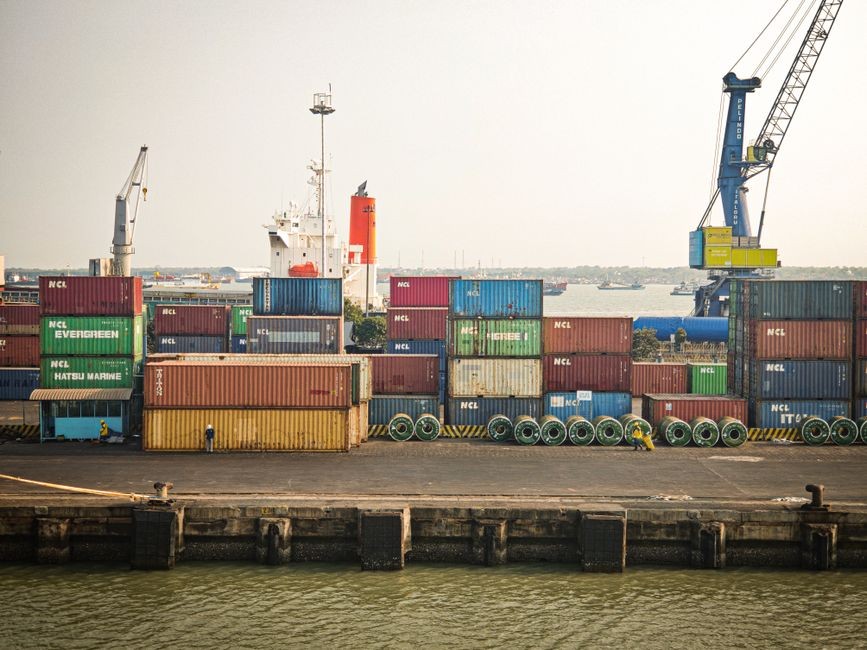
India has launched a ₹10,000 crore national scheme to develop domestic container manufacturing, following a landmark 1,000-unit order from a global shipping line. The first ISO- and CSC-certified prototype was unveiled in Dadri, Uttar Pradesh on 3 July 2026. The initiative aligns with completion of 75 port infrastructure projects worth ₹31,967 crore, lifting Major Ports’ capacity to 1,728 MTPA. India currently imports over 95% of its containers, spending ₹2,400 crore annually — a dependency the new policy seeks to reverse through certified domestic production and integrated manufacturing clusters.

India’s Real-Time Power Prices Fall to 10 Paise Amid Renewable Glut
ESG & Regulation

India’s Real-Time Power Prices Fall to 10 Paise Amid Renewable Glut

Real-time electricity prices on India’s Indian Energy Exchange fell to 9 paise per unit on 28 July 2026 — part of 31 sub-₹0.05 events in Q1 FY2026–27. Despite record peak demand of 270.8 GW on 21 May and projected growth to 300 GW by FY28, solar and wind generation (90.09 GW at 1 p.m.) now meets 39% of demand, flooding the grid midday and driving prices toward zero. Discoms are offloading surplus green power well below procurement costs (₹2–₹3+/unit), threatening returns for merchant-exposed projects. Experts cite storage as critical: on 21 May, 1 p.m. power cleared at ₹1.56 versus ₹10.00 at 6:30 p.m. Government and discom BESS tenders are scaling in response.

India-US ink $20B critical minerals pact amid China dominance concerns
South Asia Supply Chain

India-US ink $20B critical minerals pact amid China dominance concerns

India and the U.S. signed a critical minerals framework on May 26, 2026, paving the way for a $20 billion Quad-led investment initiative. While India holds vast reserves—including the world’s third-largest ilmenite deposits—it processes less than 5% of its rare earth output domestically. Analysts stress India is unlikely to challenge China’s dominance—accounting for over 60% of global rare earth processing—anytime soon due to infrastructure gaps and regulatory delays averaging 7–10 years for new mining approvals.

India industrial output rises 7.3% in June, manufacturing up 7.8%
Manufacturing

India industrial output rises 7.3% in June, manufacturing up 7.8%

India’s industrial output rose 7.3% year-on-year in June 2026, accelerating from 5.1% in May, according to MoSPI’s Quick Estimates of the Index of Industrial Production (IIP). Manufacturing expanded 7.8%, electricity and gas supply surged 10.6%, and capital goods grew 14.2% — the highest among use-based categories. For April–June 2026–27, IIP growth was 5.8%, though mining contracted 1.4%. The June data reflects an 86.7% response rate; July’s figures are due August 28, 2026.

Welcome Back!

Login to your account below

Create New Account!

Fill the forms below to register

Retrieve your password

Please enter your username or email address to reset your password.

Add New Playlist