Skip to content

Coverage desk

United States

856 published stories

Hugging Face harbors 100 malicious AI models exposing supply chain risks
Disruptions

Hugging Face harbors 100 malicious AI models exposing supply chain risks

According to AI Insider, organizations sourcing artificial intelligence models from public repositories face severe data poisoning risks, as attackers manipulate training data to compromise deployed systems. In February 2024, security researchers identified approximately 100 malicious models hiding within Hugging Face, exposing critical vulnerabilities in enterprise AI supply chains. These compromised models were designed to execute arbitrary code immediately upon loading by developers, bypassing existing security scans. Most organizations downloading these models lacked additional verification processes, accepting them based solely on functional performance. The broader risk stems from modern AI deployment practices, where firms download pre-trained models or fine-tune them using third-party data, inheriting invisible risks. Data poisoning represents one of the most technologically rooted supply chain threats, making it exceptionally difficult to identify through standard operational checks.

PepsiCo cuts 184 jobs in Tulsa, Okla. warehouse
Manufacturing

PepsiCo cuts 184 jobs in Tulsa, Okla. warehouse

PepsiCo is discontinuing its warehousing activities at its Pepsi Beverages Company facility in Tulsa, Oklahoma. The company plans to relocate these logistics duties to a new site in the immediate Tulsa region. While the manufacturing processes will remain in the current building, the company is shutting down the warehousing division. The facility houses 184 employees in its warehousing division. All of these workers will be permanently laid off. The final day of employment is scheduled for November 15, 2026. PepsiCo filed a Worker Adjustment and Retraining Notification (WARN) Act notice on July 14, 2026. The notice lists the number of impacted employees as of July 6, 2026. The layoffs affect various roles within the warehouse. Forklift operators make up the largest group with 57 employees. Warehouse personnel account for 63 jobs. General laborers include 41 positions. Inventory control specialists number 13. Lead persons account for 12 roles. Other impacted positions include training coordinators with 3 employees. Manufacturing senior coordinators include 2 staff. SC operations associate supervisors number 6. Truck jockeys account for 5 jobs. Manufacturing leaders include 1 position. SC operations associate leaders number 1. SC operations senior resources include 1 position. PepsiCo is actively working to place these employees in other roles. The company is looking at positions at the current Tulsa site. They are also exploring opportunities at nearby facilities. A spokesperson stated that the company is committed to treating impacted employees with care. Production processes will continue at the current facility. The company is shifting duties to a new site in the Tulsa area. The spokesperson confirmed that all employees have been notified. They are being provided information about other job openings.

Trump imposes up to 100% tariff on drones
Geopolitics

Trump imposes up to 100% tariff on drones

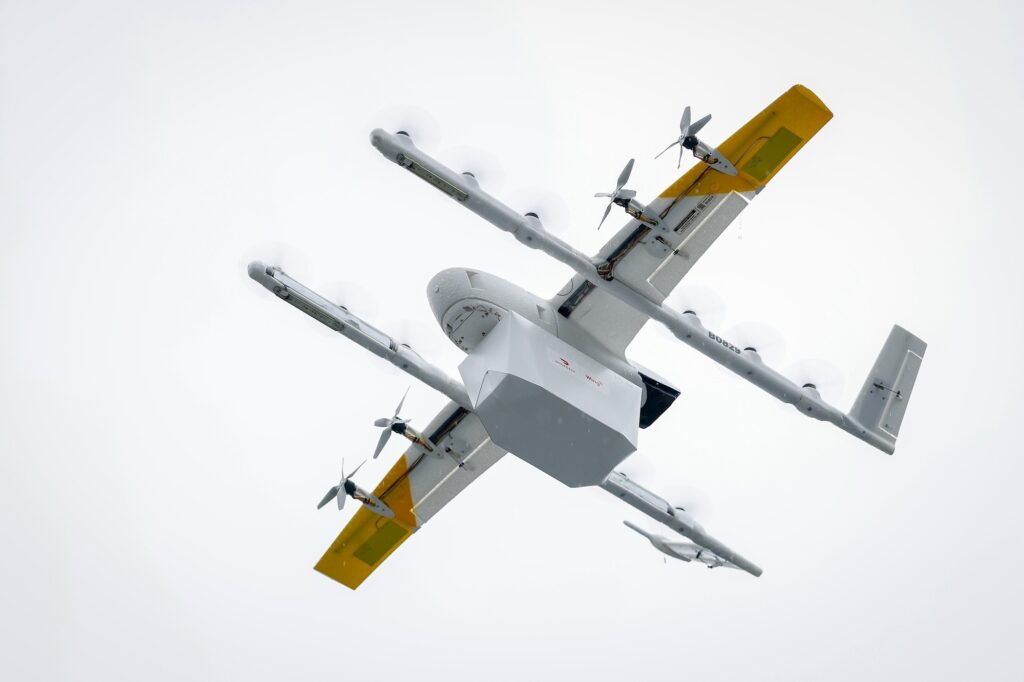
US President Donald Trump has signed a proclamation imposing tariffs of up to 100% on imported drones and specific drone components, citing national security risks and the need to boost domestic manufacturing. The new tariff regime targets large and thermal-imaging drones heavily, while lower duties apply to smaller drones and less sensitive components. The White House stated that the 100% ad valorem tariff applies to drones with a maximum takeoff weight of more than 25 kg, as well as drones with thermal imaging capabilities, their docking stations, and certain critical components. For smaller drones that lack capabilities considered particularly sensitive to national security, the proclamation imposes a 25% ad valorem tariff. This lower rate also applies to other drone components that are not deemed critical for national security purposes. The administration has structured the tariffs to favor specific allies, provided that the hardware, software, and technology originate from within those countries and the United States. Drones and components from the European Union, Japan, Liechtenstein, the Republic of Korea, Switzerland, and Taiwan will attract a reduced tariff rate of 15%. The United Kingdom will face an even lower tariff rate of 10%, contingent upon the same origin requirements for hardware and software. The new tariffs will take effect 21 days after the proclamation was signed. However, tariffs on non-sensitive drone components will take effect after a longer window of 180 days. Products and components approved by the Department of War for exemption from the Federal Communications Commission's Covered List within 20 days of signing will also face tariffs after the 180-day period. The proclamation authorizes the Commerce Secretary to establish an onshoring programme for companies making new investments in US drone and component manufacturing. The administration highlighted that commercial and military drones rely heavily on foreign sources for critical Unmanned Aircraft System (UAS) components, creating significant risks to US national security and cybersecurity vulnerabilities.

Ex Williams-Sonoma VP Pleads Guilty in $16M Fraud
Inventory & Fulfillment

Ex Williams-Sonoma VP Pleads Guilty in $16M Fraud

Former Williams-Sonoma VP Eric Marsiglia pleaded guilty to a $16 million fraud scheme involving kickbacks from warehouse vendors in New Jersey and the theft of $4.1 million in real estate broker commissions. Marsiglia, who served as VP of engineering and facilities, used a shell company called REM Group to conceal illicit transactions over a four-year period ending in 2022. He faces up to 20 years in prison and fines totaling over $1 million upon his sentencing in California on Nov. 3.

Freight rates double as Hormuz closure hits container market
Logistics & Transport

Freight rates double as Hormuz closure hits container market

According to Seatrade Maritime, the global container shipping market has experienced a volatile surge in the first half of 2026, driven by geopolitical disruptions in the Middle East that have effectively doubled freight rates on major trade lanes. Market impact of geopolitical disruption In a mid-year analysis, Seatrade Maritime Podcast spoke with Daniel Richards, an […]

US targets 40 countries in tariff evasion crackdown
AI & Automation

US targets 40 countries in tariff evasion crackdown

The United States has accused over 40 countries, including India, Mexico, and the EU, of operating a "shadow transshipment network" to evade tariffs on Chinese goods. Senior trade adviser Peter Navarro released a report estimating the impact at up to $303 billion annually. To enforce compliance, the US plans to deploy an AI system called "Detective Border" to analyze shipment data and identify illicit routing, marking a significant shift in trade enforcement strategies.

NRF: Early peak shipping season to subside in September
Logistics & Transport

NRF: Early peak shipping season to subside in September

The National Retail Federation (NRF) and Hackett Associates report that the early peak shipping season is ending, with U.S. port imports expected to decline for the rest of 2026. May was the busiest month at 2.24 million TEU. Tariff changes and supply chain disruptions drove retailers to pull forward orders. Consumer spending remains resilient. Full-year 2026 imports are projected at 25.5 million TEU, up 0.1% from 2025.

BlueGrace acquires Idaho 3PL Truk TMS to expand Pacific Northwest LTL
AI & Automation

BlueGrace acquires Idaho 3PL Truk TMS to expand Pacific Northwest LTL

BlueGrace Logistics has acquired Idaho-based third-party logistics provider Truk TMS to strengthen its presence in the Pacific Northwest. The deal brings Truk TMS—previously a BlueGrace partner—fully into the company’s ecosystem, granting its customers access to BlueGrace’s Managed Logistics platform and BlueShip technology. Financial terms remain undisclosed. BlueGrace, headquartered in Tampa, Florida, serves over 10,000 customers from nine offices across the U.S. and Mexico and operates a carrier network exceeding 250,000. As a Warburg Pincus portfolio company, BlueGrace previously acquired STB Freight Group and FreightCenter in 2025. Truk TMS CEO Mark Barnes emphasized continuity of service backed by expanded capabilities.

Supply Chain Hiring Shrinks 12%, AI Drives Restructuring Not Replacement
Europe Supply Chain

Supply Chain Hiring Shrinks 12%, AI Drives Restructuring Not Replacement

Supply chain hiring has contracted by 12% amid AI adoption, but companies are restructuring organizations and retraining staff—not replacing them. Ryder System and BJC HealthCare completed AI-integrated workforce transformation in Q3 2025, while Robust.AI allocated $4.2M of its $7.8M Series A funding to human-AI collaboration training. Mars and CVS Health launched an 18-month upskilling initiative in 2025, and the NextGen Supply Chain Conference convenes in May 2026 with keynotes from Eli Lilly, Tractor Supply, and Wayfair. Practitioners emphasize solving complex, judgment-intensive problems—like port congestion prediction and ESG validation—rather than automating routine tasks.

Toyota opens $100M Indiana forklift plant, targets 80% electric by 2035
North America Supply Chain

Toyota opens $100M Indiana forklift plant, targets 80% electric by 2035

Toyota Material Handling North America (TMHNA) opened a $100 million electric forklift plant in Columbus, Indiana, on August 6, 2026. The 295,000-square-foot facility will produce Class 1 stand-up counterbalanced forklifts for Toyota and Raymond brands, enabling its Greene, N.Y., factory to pivot to reach trucks and automation. Production starts at eight units daily, scaling to 24 by September. TMHNA reports 70% of North American lift truck sales are now electric — projected to hit 80% by 2035. Seventy-five percent of output is custom-built, with 14 seat options available. Sixty percent of parts are sourced in North America, while Japan supplies key components; a new foreign trade zone helps bypass customs bottlenecks.

SpaceX, Tesla to build $16.8B Texas chip factory with on-site gas plants, battery arrays
Manufacturing

SpaceX, Tesla to build $16.8B Texas chip factory with on-site gas plants, battery arrays

SpaceX and Tesla are developing a $16.8 billion semiconductor factory in Grimes County, Texas, with integrated natural gas power plants and large-scale battery arrays. The first phase will create 3,000 jobs and receive a $30 million Texas Enterprise Fund grant. Riley Trettel of SpaceX confirmed the companies will "bring their own power," leveraging Tesla's Megapack manufacturing and SpaceX's 13,000-acre land holdings. Intel joined in April 2026 to provide chip design and fabrication expertise. The facility will produce chips for Tesla vehicles, Optimus robots, and SpaceX missions — addressing supply chain gaps and geopolitical risks.

CBP pays $100B in IEEPA tariff refunds amid DOJ appeal
Geopolitics

CBP pays $100B in IEEPA tariff refunds amid DOJ appeal

U.S. Customs and Border Protection has paid $100 billion in IEEPA tariff refunds as of July 31, 2026 — part of a $166 billion total revenue pool targeted for return to importers. The disbursements stem from $128.68 billion accepted via CBP’s April-launched portal, though final-liquidation processing remains blocked pending a Department of Justice appeal. Major recipients include Amazon ($600 million), Walmart, and BJ’s Wholesale Club, with firms deploying funds toward customer refunds and price cuts. The unresolved appeal continues to constrain full access to remaining refunds.

Welcome Back!

Login to your account below

Create New Account!

Fill the forms below to register

Retrieve your password

Please enter your username or email address to reset your password.

Add New Playlist