# 8 Automation Technologies Reshaping the Modern Warehouse in 2026
## Introduction
The year 2026 marks a pivotal era in the evolution of the modern warehouse, where automation is not just a buzzword but a fundamental shift in the logistics and supply chain industry. Driven by the dual challenges of labor shortages and the soaring demands of e-commerce, warehouse automation has become a necessity. According to a report by Global Trade Magazine, the warehouse automation market is poised to reach nearly $30 billion in 2026, with projections suggesting a doubling of its value by 2030. This exponential growth is a testament to the transformative power of automation technologies, which are reshaping the face of warehouse operations.
## Automated Pallet Movement Systems
The heart of any modern warehouse lies in the efficient movement of goods. Automated Pallet Movement Systems (APMS) are at the forefront of this revolution. High-speed conveyors, capable of handling thousands of movements per hour, have replaced traditional manual systems, drastically reducing handling times and increasing throughput. Pallet shuttles, designed for shorter distances, offer precision and speed, ensuring goods are transported accurately and swiftly. Automated Storage and Retrieval Systems (AS/RS) have also become integral, with systems like vertical lift modules (VLMs) maximizing storage density while ensuring quick retrieval. The efficiency improvements brought about by APMS have not only increased order fulfillment speeds by 300% but also achieved accuracy rates of 99%, all while labor costs are reduced by 30%.
## Forklift-Free Warehouse Design
The adoption of Autonomous Mobile Robots (AMRs), Automated Guided Vehicles (AGVs), conveyors, and automated cranes has heralded the era of forklift-free warehouse design. This shift is not merely about reducing costs but also about enhancing safety and space utilization. AMRs and AGVs navigate the warehouse floor with precision, eliminating the risks associated with traditional forklifts. Conveyors streamline the movement of goods between different areas, while automated cranes offer flexibility in handling heavy loads. The forklift-free design has not only reduced operational errors but also led to a safer working environment, significantly reducing repetitive strain injuries among warehouse workers.
## Autonomous Material Transport Technologies
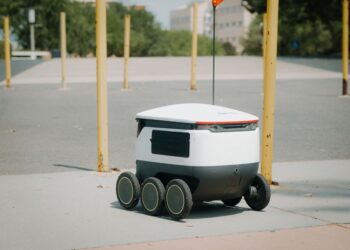
The debate between Autonomous Guided Vehicles (AGVs) and Autonomous Mobile Robots (AMRs) continues to be a focal point in the automation of material transport. While AGVs operate on fixed paths, providing predictable and efficient movement, AMRs offer flexible navigation, adapting to dynamic warehouse environments. In terms of application scenarios, AGVs are ideal for predictable environments, such as manufacturing facilities, while AMRs excel in dynamic environments, such as e-commerce warehouses. Path planning and real-time adaptability are critical features for both, ensuring the smooth flow of goods even in the face of unexpected disruptions.
## Goods-to-Person Automation
Goods-to-Person (G2P) automation is transforming the way goods are picked and fulfilled. These systems are designed to bring goods to the picker, rather than the picker going to the goods, thereby improving picking efficiency and accuracy. Vertical lift modules (VLMs) and robotic shuttle systems are popular in G2P systems. VLMs can store a large number of SKUs in a compact space, while robotic shuttles move goods directly to the picker’s station. The efficiency gains from G2P systems are substantial, with some warehouses reporting a 60% reduction in picking time.
## Robotic Piece-Picking and Manipulation
The precision of robotic piece-picking and manipulation is revolutionizing how warehouses handle diverse SKUs. Advanced machine vision systems and artificial intelligence (AI) algorithms enable robots to identify and handle various types of items with precision. Gripper technologies have also evolved, allowing robots to handle delicate items with care. The 24/7 operation capabilities of these robots not only increase productivity but also reduce labor costs, as they can operate around the clock without breaks.
## High-Speed Automated Sorting Systems
High-speed automated sorting systems, such as tilt-tray sorters and cross-belt sorters, are essential for managing the increasing volume of orders. These systems can sort thousands of items per hour, ensuring accurate routing and order consolidation. The integration of these systems with warehouse execution systems (WES) allows for real-time optimization, further improving efficiency and reducing the risk of errors.
## Warehouse Execution Systems
Warehouse Execution Systems (WES) act as the brain of automated warehouses, coordinating all hardware in real-time. These systems are crucial in preventing bottlenecks and ensuring the smooth flow of operations. By integrating various technologies, such as barcode scanners, RFID, and sensors, WES provides a comprehensive view of warehouse operations, allowing for proactive management and optimization.
## Digital Twin Technology
Digital Twin technology is revolutionizing warehouse operations by creating virtual replicas of physical warehouses. These digital models are used for risk testing and AI training, enabling warehouse managers to predict and mitigate potential issues before they occur. The operational optimization made possible by Digital Twin technology can lead to significant cost savings and improved efficiency.
## Workforce Transformation and Upskilling
The impact of automation on the workforce cannot be ignored. While some jobs may be replaced by robots, there is a growing demand for employees with skills in robotics, automation, and data analysis. Data from industry reports indicate that 68% of US employees are willing to retrain for new skills, signaling a positive outlook for workforce transformation and upskilling initiatives.
## Supply Chain Future Outlook
The return on investment (ROI) for automation investments is becoming increasingly evident. As automation technologies become more sophisticated and cost-effective, the resiliency of the supply chain is being strengthened. Looking beyond 2026, the future of warehouse automation is expected to see further integration of AI and machine learning, leading to even greater efficiency and flexibility in warehouse operations.
## Conclusion
The year 2026 is poised to be a defining moment for warehouse automation. The technologies outlined in this article represent just a glimpse of the innovations that are reshaping the logistics and supply chain industry. As the market value of warehouse automation continues to grow, the efficiency, safety, and productivity of modern warehouses will be significantly enhanced. The future is bright, and with the right strategies and investments, the supply chain industry is well on its way to a more automated, efficient, and resilient future.
*Source: Global Trade Magazine*