In March 2026, New York-based startup Didero, founded just two and a half years ago, announced the completion of a 0 million Series A funding round co-led by Chemistry and Headline, with deep participation from Microsoft’s venture fund M12. This figure not only sets a new record for single-round funding in AI-native supply chain SaaS companies over the past five years but also marks procurement’s transformation from a “back-office support role” in traditional ERP modules to a strategic hub driving global supply chain resilience reconstruction. Notably, Didero doesn’t build entirely new systems; instead, it operates as “embedded AI agents” directly within customers’ existing email systems, SAP/Oracle ERPs, and Excel workflows—taking over high-frequency operations like supplier communication, order tracking, and exception handling within just 4–6 weeks of deployment. Its first 30+ customers all come from manufacturing and distribution sectors, covering complex supply chain scenarios with stringent compliance requirements, multiple tiers, and long cycles, such as automotive components, industrial consumables, and medical devices. This “zero-system-replacement, instant-process-takeover” implementation path is quietly rewriting enterprises’ understanding of AI value boundaries: it’s no longer just intelligent analytics at the reporting layer but extends to the operational nerve endings of every email reply, every PO change, and every delivery negotiation.
AI Procurement Agents: Paradigm Shift from RPA Patches to Autonomous Decision Hubs
Over the past decade, enterprise procurement automation has long been trapped by the “glass ceiling” of RPA (Robotic Process Automation): scripts depend on fixed interfaces, cannot understand semantics, and struggle with unstructured data (like ambiguous promises in supplier emails or handwritten delivery receipts), resulting in average automation rates below 35% and maintenance costs that rise exponentially with process complexity. Didero’s breakthrough lies in deeply integrating large language models (LLMs) with procurement domain knowledge graphs to build AI agents with contextual memory, policy-constrained reasoning, and multi-system coordination capabilities. For example, when an automotive Tier-1 supplier emails about “delayed delivery of A327 bearings due to heavy rains in Mexico,” Didero’s agent can not only identify product codes, locate historical delivery data, and compare contract SLA terms but also automatically trigger a threefold response: update estimated arrival dates in ERP, retrieve alternative air freight solutions from logistics systems, and simultaneously push risk summaries and alternative supplier lists to procurement managers. This closed-loop response has reduced customers’ average order cycles by 28% and manual exception handling time by 63%. The essence isn’t replacing humans but transforming procurement personnel from “firefighters” to “rule architects”—humans focus on defining strategic boundaries (e.g., “tolerance for delivery fluctuations from Southeast Asian suppliers ≤5 days”), while AI achieves millisecond-level autonomous execution within that framework.
A deeper transformation lies in the fundamental reversal of how procurement knowledge assets are accumulated. In traditional models, critical knowledge—senior buyers’ negotiation experience, suppliers’ implicit capacity information, regional tariff exemption details—is highly fragmented across personal emails, meeting minutes, and even verbal agreements, making organizational memory fragile and non-reusable. Didero’s agents automatically construct dynamic procurement knowledge graphs through continuous interaction, converting unstructured conversations into searchable, inferable, inheritable structured assets. Footprint VP Stephen Sharr confirms: “After three senior buyers retired, our new team mastered the Vietnam factory capacity elasticity model accumulated over the past two years through the Didero platform in just three days.” This means procurement capabilities are, for the first time, truly organizational, transferable, and resistant to talent loss—particularly critical for manufacturing industries facing talent gaps. When AI agents become the “living database” of enterprise procurement knowledge, the strategic value of procurement departments shifts from “cost centers” to “supply chain cognitive hubs,” providing foundational support for high-level tasks like rapid sourcing amid geopolitical volatility, ESG compliance audits, and multi-tier supplier carbon footprint tracing.
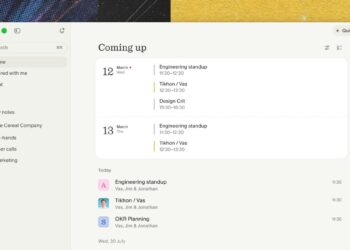
- Didero agents can simultaneously connect to ERP (SAP/Oracle), email servers (Outlook/Google Workspace), e-signature platforms (DocuSign), and logistics TMS systems without API development
- Customer tests show: procurement teams reduce manual email processing time by 14.2 hours weekly, order status query response time drops from an average of 47 minutes to 19 seconds
- For complex orders involving 3+ countries and 5+ supplier tiers, Didero increases end-to-end visibility coverage from below 40% to 92%
The Capital Logic Behind 0M: Why Procurement Became AI’s Primary Battleground
The collective bet on Didero by capital markets is no accident. It results from the convergence of three structural trends: First, global supply chain complexity has reached a tipping point. WTO data shows intermediate goods accounted for 68.3% of global trade in 2025, with a single automaker managing an average of 12,400 direct and indirect suppliers, 62% located in countries with political risk ratings above level 4. Second, traditional digital tools are severely inadequate. Gartner research indicates 73% of manufacturing enterprises still rely on customized modules not updated for over 15 years, unable to support real-time collaboration; meanwhile, new end-to-end platform implementations average 14 months with ROI cycles exceeding 3 years. Third, procurement represents a “high-value洼地”: McKinsey estimates global manufacturing procurement spending averages 58% of revenue, yet procurement automation penetration remains below 12%, with potential efficiency gains up to .2 billion annually. Didero’s 0M funding represents capital’s precise capture of “minimum viable disruption”—it doesn’t challenge existing IT architectures but leverages minimal friction to impact the most frequent, painful, and financially leveraged operational环节.
Notably, lead investors Chemistry and Headline specialize in “hard tech industrialization,” not泛AI concept funds. This suggests industrial capital is redefining AI implementation standards: no longer focusing on technical parameters but on “customer willingness to pay” and “implementation certainty.” Didero has achieved 100% of signed customers generating measurable business value within 90 days (e.g., shortening accounts payable cycles, reducing emergency air freight costs), with an NDR (Net Dollar Retention) of 137%, far exceeding SaaS industry averages. M12’s deep involvement sends a critical signal: Microsoft is integrating Didero into its “Manufacturing Cloud” core ecosystem, where Azure AI services will pre-integrate Didero’s agent engine, enabling millions of global manufacturing enterprises using Dynamics 365 to activate AI procurement capabilities with one click. This “cloud provider + vertical AI”捆绑模式 may accelerate the end of fragmented supply chain AI创业格局, pushing the industry toward platform consolidation.
Dual Opportunities for Chinese Global Enterprises: Cost-Reduction Tool & Compliance Shield
For Chinese manufacturing enterprises, the Didero model holds special strategic value. Currently, over 83% of China’s leading manufacturers derive more than 35% of revenue from overseas markets, but their international procurement systems普遍face a “dual-track dilemma”: domestic operations use Kingdee/Yonyou, overseas use SAP, with data fragmentation causing global inventory turnover rates 22% below industry benchmarks;同时, EU CSDDD and U.S. UFLPA regulations require ESG and forced labor data穿透to third-tier suppliers, with traditional manual audit costs reaching 1.8% of order value. Didero’s cross-system agent capabilities恰好serve as a key enabler for Chinese global enterprises’ “digital infrastructure equalization”—without overhauling existing systems, unified AI agents can be deployed in overseas subsidiary ERPs to automatically aggregate regional suppliers’ carbon emission reports, labor audit certificates, origin declarations, and generate structured archives compliant with各国regulatory requirements. A pilot with a Shenzhen consumer electronics OEM showed EU market compliance document preparation time压缩from an average of 17 days to 3.5 hours, with error rates降至zero.
A more profound impact lies in重构Chinese enterprises’话语权in global supply chains. Previously, Chinese manufacturers were often viewed by欧美brands as “execution terminals” due to slow response times; empowered by Didero, procurement teams can now proactively push optimal procurement suggestions to brand clients based on real-time global material price fluctuations, port congestion indices, and currency forecast models (e.g., “建议Q3 shift orders to Vietnam production lines, reducing综合成本by 9.2% with 11-day faster delivery”). This shift from “passive order-taking” to “active collaboration” is quietly altering value chain分配逻辑. When AI agents enable Chinese enterprises’ procurement decisions to combine speed, precision, and strategic depth, their role naturally elevates to “intelligent coordination nodes” in global supply chains, not merely cost洼地. This provides a solid digital foundation for Chinese manufacturing’s leap from “Made in China” to “China Solutions.”
“Procurement has long been weighed down by repetitive, high-friction work that has proven difficult to automate at scale. Didero applies AI agents directly to that operational layer in a way that materially changes how supply chain teams work and what they can achieve.”——Kristina Shen, Managing Partner at Chemistry
From Procurement Entry: Evolution Path & Boundary Challenges for AI Supply Chain Platforms
Didero explicitly plans to extend its product matrix from procurement to sourcing and payments, revealing a clear evolution logic for AI supply chain platforms: use the highest-frequency, most standardized, data-richest procurement环节as the “landing point,” accumulate real transaction data and domain knowledge, then辐射to upstream/downstream high-value but低频次links. Sourcing环节requires processing massive unstructured tender documents and supplier qualification proofs; AI agents can automatically parse technical specifications, compare historical履约scores, and identify qualification expiration risks. Payment环节needs to融合bank APIs, foreign exchange control rules, and contract payment terms; AI can calculate optimal settlement paths in real-time (e.g., choosing CIPS channels to规避SWIFT risks). However, this path faces严峻challenges: first, data sovereignty disputes—when AI agents deeply介入supplier communications, email content ownership and training data usage boundaries urgently need legal clarification; second, system interoperability gaps—despite Didero’s emphasis on “no-code integration,” data semantic differences between ERP versions (e.g., the same material code指向different BOM levels in SAP vs. Oracle) still require大量manual mapping. Industry预测, within 2 years, “AI Procurement Agent Certification Standards” will emerge, led by international organizations like GS1 to establish data interfaces, security audits, and ethical guidelines.
Another隐形bottleneck is procurement personnel’s capability断层. When AI takes over 80% of transactional work, procurement experts need to quickly master new skills like prompt engineering, AI decision provenance analysis, and multimodal data validation. Currently, 42% of Didero’s customers have shifted procurement team KPIs from “cost savings rate” to “AI strategy optimization contribution,” requiring procurement managers to regularly evaluate agent decision biases and iterate rule libraries. This marks procurement’s deepest职业transformation since ERP普及—from process executors to AI trainers and strategy curators. Enterprises that neglect organizational capability upgrades will see even the most advanced AI agents become expensive “automation illusions.” Therefore, Didero simultaneously invests in customer success teams, assigning dedicated “AI Procurement Transformation Consultants” to each client; these services already account for 35% of renewal revenue, proving that “technology + human-AI协同design” is the true moat.
Microsoft Ecosystem Synergy: How Cloud Giants Reshape AI Supply Chain Competition
M12’s deep绑定isn’t merely financial investment but strategic infrastructure integration. Microsoft holds 76% of global manufacturing ERP users (Dynamics 365), 58% of the office collaboration market (Teams/Outlook), and compliance cloud infrastructure covering 200+ countries. Embedded in this ecosystem, Didero gains three天然advantages: first, leveraging Microsoft Graph API for real-time access to user calendars, emails, and document permissions, enabling AI agents to coordinate Southeast Asian supplier video factory inspections based on procurement staff’s upcoming travel schedules; second, using Azure OpenAI Service to调用industry-fine-tuned specialized models, achieving 94.7% accuracy in professional scenarios like customs code (HS Code) classification and trade agreement origin determination, far surpassing general-purpose LLMs; third, relying on Microsoft’s global compliance certifications (e.g., GDPR, HIPAA,等保2.0), Didero can quickly meet deployment requirements for highly regulated industries like finance and healthcare. This “cloud foundation + vertical AI”组合is squeezing生存空间for independent AI supply chain startups—without cloud provider backing, startups struggle to compete on data security, global deployment, and compliance certification.
But ecosystem synergy also harbors risks. As Didero deeply binds with Microsoft, its technology roadmap may become constrained by Azure AI’s development pace; for example, if Microsoft slows multimodal model iteration, Didero’s ability to parse image-based supplier qualification documents (e.g., factory photos, equipment nameplates) will lag. More critically, customers may face “cloud lock-in”困境: once adopting Didero+Azure solutions, switching to AWS or GCP ecosystems requires重构all AI agent logic. Industry observers note a new “AI Supply Chain Middleware”赛道will emerge within 3 years—focusing on cross-cloud AI agent orchestration layers to ensure enterprise procurement intelligence isn’t held hostage by单一cloud provider. While Didero currently holds优势地位, whether it can maintain technological openness and ecosystem neutrality will determine if it evolves from “Microsoft star partner” to真正的global AI supply chain infrastructure.
Source: roboticsandautomationnews.com
This article was AI-assisted and reviewed by our editorial team.