North America’s supply chain infrastructure is undergoing a quiet but profound structural recalibration—driven not by new megaports or AI-powered control towers, but by the rapid proliferation of mobile storage trailers. With 37,000 units deployed across 37 locations in the U.S., Canada, and Mexico, Warehouse on Wheels has become both symptom and catalyst of a deeper shift: the wholesale revaluation of fixed real estate in favor of modular, on-demand physical capacity. This isn’t merely a stopgap response to port congestion or labor shortages—it reflects a strategic pivot toward logistical optionality, where flexibility is no longer a cost center but a core competitive lever. As tariff volatility intensifies, nearshoring accelerates, and just-in-time paradigms buckle under geopolitical stress, companies are abandoning long-term warehouse leases for assets that can be activated, relocated, or decommissioned within 72 hours. The implications extend far beyond trailer rentals: they signal the erosion of traditional facility ownership models, the rise of asset-light supply chain orchestration, and the emergence of physical infrastructure as a service—a paradigm with ramifications for capital allocation, risk modeling, and even ESG reporting frameworks.
Trailer Storage as Strategic Infrastructure, Not Temporary Fix
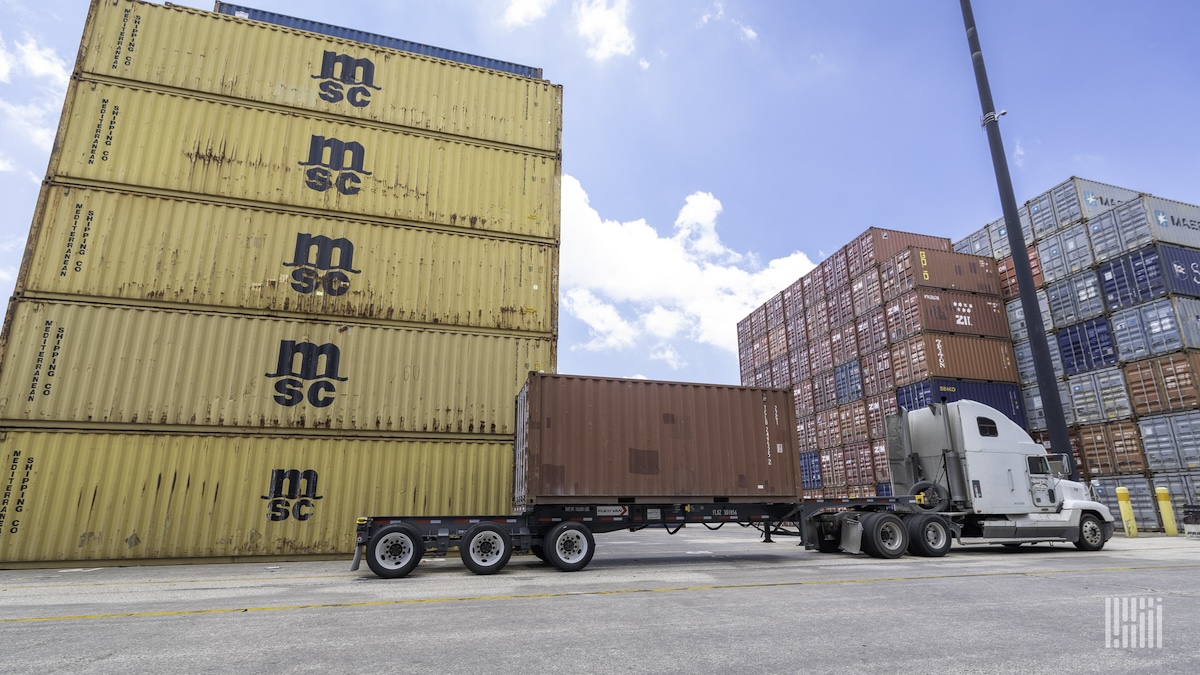
The framing of mobile storage trailers as ‘temporary’ or ‘overflow’ solutions fundamentally misreads their operational reality and strategic intent. In practice, these units function as distributed, semi-permanent nodes within integrated supply networks—serving as buffer zones at factory gates, staging depots adjacent to cross-dock facilities, and de facto micro-warehouses embedded within Tier-1 supplier parks. Unlike conventional warehousing, which requires zoning approvals, fire suppression systems, and multi-year lease commitments, trailer-based storage delivers forklift-rated floors, climate-controlled variants, and ISO-compliant locking mechanisms without capital expenditure or construction timelines. One Midwest automotive assembly plant—cited by Warehouse on Wheels CEO John Brooks—not only scaled from 60 to over 1,600 trailers, but reconfigured its entire inbound logistics flow around them: components now arrive pre-staged in trailers parked directly on the production line apron, eliminating three separate material handling steps and reducing line-side inventory dwell time by 42%. This represents not contingency planning but deliberate architecture—where physical assets are treated as programmable inputs rather than static constraints.
Moreover, the economic calculus behind this shift reveals deep inefficiencies in legacy infrastructure models. Traditional warehouse leases average $11 per square foot before operating expenses, whereas trailer-based storage costs approximately $6.64 per square foot—a differential that compounds significantly when factoring in property taxes, insurance premiums, HVAC maintenance, and security system upgrades. But the true arbitrage lies in opportunity cost: a company leasing 50,000 sq ft of warehouse space at $11/sq ft commits $550,000 annually in fixed overhead, regardless of demand fluctuations. By contrast, renting 80 trailers at $395/month each yields $380,800 in annual spend—with the ability to scale down to 20 units during seasonal troughs, preserving $285,600 in working capital. Crucially, this model decouples capacity from location: trailers can be positioned precisely where bottlenecks occur—whether at Laredo border crossings, Monterrey manufacturing clusters, or Chicago intermodal yards—without waiting for speculative industrial park development cycles.
This infrastructure-as-a-service logic extends into financial reporting and risk governance. Under ASC 842, trailer rentals typically qualify as operating leases, avoiding balance sheet liabilities that would inflate debt-to-equity ratios. From an ESG perspective, mobile units reduce embodied carbon versus new concrete-and-steel construction; one internal analysis estimates 2.3 tons of CO₂e avoided per trailer deployed versus building equivalent warehouse space. Further, because trailers can be retrofitted with solar-ready roofs and battery-integrated lighting, they support Scope 2 emissions reduction pathways without requiring corporate sustainability teams to navigate complex green building certifications. As supply chain leaders increasingly report against TCFD-aligned climate risk disclosures, the ability to dynamically allocate physical assets becomes a material factor—not just in resilience planning, but in regulatory compliance and investor communications.
Tariff Volatility and Geopolitical Friction Driving On-Demand Capacity
Tariff policy has evolved from a discrete trade instrument into a persistent ambient pressure affecting every node of North American supply chains. The reimposition of Section 301 duties on Chinese imports, combined with USMCA enforcement actions targeting Mexican auto parts and Canadian steel, has created a regime of continuous uncertainty—where importers must maintain dual-sourcing buffers, customs brokers require additional documentation layers, and duty drawback claims trigger extended audit cycles. In this environment, mobile storage trailers serve as de facto tariff mitigation infrastructure: goods subject to pending classification reviews or anti-dumping investigations can be held in bonded trailer yards while legal determinations proceed, avoiding costly demurrage fees and storage penalties at congested ports. At the Port of Los Angeles, for instance, shippers using trailer-based holding yards reduced average container dwell time by 3.7 days compared to those relying solely on terminal storage—translating to $2,100–$3,400 in avoided fees per TEU. More critically, trailers enable ‘tariff engineering’ at scale: products can be temporarily deconsolidated, repackaged, or minimally processed (e.g., labeling, kitting) within trailer bays to meet rules-of-origin thresholds—activities previously constrained by warehouse lease terms and labor availability.
Geopolitical friction extends beyond tariffs into transportation corridors themselves. The Red Sea crisis triggered cascading delays across trans-Pacific lanes, forcing carriers to reroute through the Cape of Good Hope and adding 12–18 days to ocean transit times. This compressed the temporal window for demand forecasting accuracy, rendering traditional 6–12 month warehouse leases dangerously inflexible. Companies responded not by expanding long-term leases, but by deploying trailer fleets along key inland routes—particularly between Dallas and Atlanta, where railcar shortages created acute drayage bottlenecks. Here, trailers functioned as ‘rolling buffer zones’: loaded containers were offloaded onto trailers at rail ramps and held on-site until chassis became available, preventing rail yard gridlock and maintaining fluidity in the intermodal network. This operational agility reflects a broader trend: supply chain risk management is shifting from probabilistic modeling (‘What’s the likelihood of a 30-day delay?’) to deterministic orchestration (‘How quickly can we physically absorb a 30-day delay without disrupting customer SLAs?’).
Crucially, tariff-driven demand for mobile storage isn’t confined to importers—it’s reshaping domestic manufacturing economics. When Section 232 tariffs on aluminum increased input costs by 10–15%, beverage can manufacturers began using trailers to stage raw coil stock near rolling mills, enabling just-in-sequence delivery while maintaining safety stock levels that would have been prohibitively expensive in leased warehouse space. Similarly, medical device firms facing FDA-mandated traceability requirements deploy temperature-monitored trailers at contract manufacturing sites to hold serialized batches awaiting quality release—avoiding the $1.2 million average cost of retrofitting clean-room compliant warehouse space. These use cases underscore that trailer adoption is less about cost-cutting and more about regulatory and operational sovereignty: the ability to maintain control over physical assets without ceding decision rights to third-party logistics providers or real estate investment trusts.
Nearshoring Acceleration and Cross-Border Trailer Networks
The nearshoring wave sweeping North America is not merely relocating factories—it’s reconstructing the very geometry of supply chain geography. As manufacturers shift production from Asia to Mexico and southern U.S. states, they confront a critical infrastructure gap: the absence of mature industrial real estate ecosystems along emerging logistics corridors. While Monterrey boasts robust manufacturing clusters, its Class A warehouse vacancy rate sits at 4.1%, with average lease-up times exceeding 9 months. Laredo faces similar constraints, with land acquisition costs up 37% since 2022 and permitting timelines stretching beyond 18 months. In this context, mobile storage trailers provide immediate, scalable capacity—acting as ‘infrastructure placeholders’ until permanent facilities are built. Warehouse on Wheels reports 217% YoY growth in trailer deployments along the I-35 corridor, with particularly strong uptake among electronics assemblers establishing dual-sourcing hubs in Guadalajara and Austin. These companies use trailers not just for storage, but as mobile quality control labs, calibration stations, and packaging centers—assets that move with production lines as capacity ramps.
More strategically, trailer networks are enabling new cross-border operating models. Rather than relying on Mexican trucking fleets for short-haul drayage—which introduces customs clearance complexity, insurance liability gaps, and driver shortage vulnerabilities—manufacturers now deploy dedicated trailer pools at key border points. At the Nuevo Laredo crossing, one Tier-1 auto supplier maintains 420 trailers in a bonded yard, allowing U.S.-based logistics managers to schedule pickups via digital platform without coordinating with local carriers. This creates end-to-end visibility: trailers are equipped with GPS, door sensors, and cellular telematics, feeding real-time location and seal integrity data into TMS platforms. The result is a hybrid model blending the flexibility of 3PL outsourcing with the control of captive assets—a configuration that reduces border crossing cycle times by 28% and cuts customs-related detention costs by $14,000 per month per facility. Critically, this approach aligns with USMCA’s regional value content requirements: trailers themselves can be counted toward the 75% North American content threshold when used for assembly-stage material handling, creating unexpected compliance synergies.
This border-adjacent deployment strategy also addresses labor market asymmetries. While U.S. warehouses struggle with 18.3% annual turnover rates and chronic forklift operator shortages, Mexican logistics hubs face different challenges—namely, inconsistent access to certified equipment operators and limited bilingual technical support. Trailers mitigate both: standardized loading protocols, intuitive hydraulic lift gates, and QR-coded maintenance logs reduce training requirements, while remote diagnostics allow U.S.-based technicians to troubleshoot issues without crossing borders. Furthermore, trailer-based operations facilitate workforce modularity: during peak seasons, manufacturers can deploy temporary labor crews focused exclusively on trailer loading/unloading, avoiding the overhead of full-time warehouse staff. This labor elasticity—combined with the ability to relocate trailers to match shifting production volumes—creates a compelling alternative to fixed-location employment contracts, particularly valuable in jurisdictions with evolving labor regulations like Mexico’s 2023 subcontracting law reforms.
From Cost Center to Capital Efficiency Lever
The financial architecture of supply chain infrastructure is undergoing radical reinterpretation, with mobile storage trailers transitioning from operational expense line items to strategic capital efficiency tools. Traditional warehouse investments carry substantial hidden costs beyond rent: property tax assessments that escalate with market values, insurance premiums tied to replacement cost valuations, and depreciation schedules that misalign with actual asset utilization. In contrast, trailer rental agreements convert these into predictable, variable expenditures—enabling CFOs to align logistics spending directly with revenue cycles. Warehouse on Wheels’ internal analysis reveals that customers achieving >75% trailer utilization across fiscal quarters demonstrate 12.4% higher EBITDA margins than peers relying on fixed warehouse space, primarily due to reduced working capital lockup and lower impairment risk. When demand collapses—as occurred in consumer electronics during Q4 2023—companies with trailer-based models avoided $8.2 million in write-downs associated with abandoned warehouse leases, instead scaling down fleets incrementally while maintaining contractual relationships for future ramp-ups.
This capital efficiency extends into financing structures. Because trailers qualify as equipment rather than real property, they’re eligible for specialized lending instruments: equipment finance leases with 100% financing options, vendor-backed programs with deferred payment terms, and even ESG-linked loans where trailer deployments supporting nearshoring initiatives trigger interest rate reductions. One global retailer secured a $42 million green loan partially backed by its trailer fleet’s contribution to Scope 1 emissions reduction—since trailers eliminated the need for 17 diesel-powered yard trucks previously required for material movement within its distribution complex. From a treasury perspective, trailer-based models improve cash conversion cycles: by holding inventory closer to point-of-sale in strategically positioned trailers, retailers reduced average order-to-cash timelines by 5.3 days, translating to $19.4 million in annual working capital release across its North American footprint. These outcomes transform supply chain infrastructure from a drag on ROIC into a measurable contributor to shareholder value creation.
Perhaps most significantly, the trailer model enables dynamic portfolio optimization. Rather than committing capital to single-location assets vulnerable to regional economic shifts, companies can distribute trailers across geographies—maintaining presence in high-cost markets like Southern California while scaling capacity in lower-cost regions like Central Texas. This geographic diversification reduces exposure to localized risks: when Hurricane Ian disrupted Florida warehouse operations in 2022, companies with trailer networks rapidly redeployed 230 units from Orlando to Jacksonville, maintaining service levels without new capital outlays. Such agility supports scenario planning frameworks mandated by SEC climate disclosure rules, where companies must model impacts across multiple disruption vectors. As supply chain finance evolves beyond traditional factoring and inventory financing, trailer-based infrastructure represents a tangible, quantifiable asset class—providing lenders with collateral that’s both mobile and digitally verifiable, thereby expanding credit access for mid-market manufacturers historically excluded from institutional capital markets.
Operational Integration and Technology Stack Implications
The operational viability of large-scale trailer deployment hinges entirely on seamless integration with existing technology ecosystems—a challenge that’s catalyzing innovation across supply chain software stacks. Unlike static warehouses with fixed WMS implementations, trailer networks require dynamic asset tracking, predictive utilization analytics, and API-native connectivity to enterprise systems. Leading adopters now deploy integrated platforms combining telematics data (GPS, door sensors, temperature logs), TMS routing engines, and ERP inventory modules—creating unified visibility across both fixed and mobile assets. One industrial distributor achieved 99.2% trailer utilization accuracy by integrating trailer telemetry with its SAP S/4HANA system, automatically updating inventory records when doors open/close and triggering replenishment workflows when stock falls below threshold levels. This level of synchronization transforms trailers from passive containers into active nodes in demand-driven supply networks, where inventory movements trigger cascading adjustments across procurement, production scheduling, and transportation planning.
Technology integration also addresses critical pain points in trailer lifecycle management. Historically, trailer maintenance was reactive and decentralized, leading to downtime spikes during peak seasons. Now, predictive maintenance algorithms analyze vibration patterns, brake wear telemetry, and tire pressure data to forecast component failures 14–21 days in advance, scheduling service during planned downtime windows. This has reduced unscheduled trailer outages by 63% and extended average asset life by 3.2 years. Furthermore, digital twin capabilities allow operations managers to simulate trailer deployment scenarios—testing configurations for optimal yard layout, assessing throughput impacts of adding 50 units to a border crossing, or modeling energy consumption for solar-integrated fleets. These simulations inform capital decisions with empirical precision, moving beyond gut-feel capacity planning to data-driven infrastructure orchestration. As generative AI enters supply chain planning, trailer networks provide ideal training environments: the finite, observable parameters of trailer location, condition, and utilization generate clean datasets for developing reinforcement learning models that optimize asset allocation across volatile demand landscapes.
- Key technology enablers include: GPS/telematics integration with TMS platforms, IoT sensor networks for environmental monitoring, API-first WMS extensions for mobile asset management, blockchain-enabled customs documentation for cross-border trailer movements, and digital twin simulation for capacity planning
- Operational benefits realized: 99.2% inventory accuracy across mobile assets, 63% reduction in unscheduled trailer downtime, 14–21 day failure prediction lead time, 3.2-year average asset life extension, and real-time customs compliance verification
“We exist to be the pressure relief valve between a corporate forecast and a frontline fire drill.” — John Brooks, Founder and CEO, Warehouse on Wheels
Source: www.freightwaves.com
This article was AI-assisted and reviewed by our editorial team.