Introduction: The Strategic Transformation of a Shipping Giant
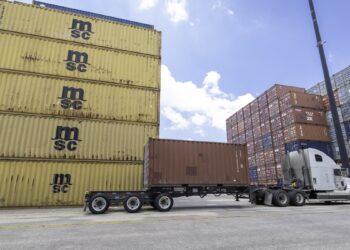
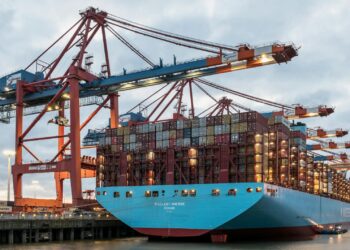
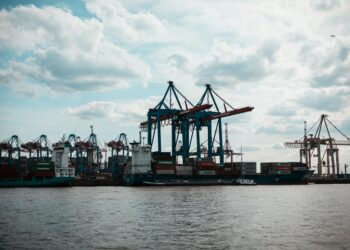
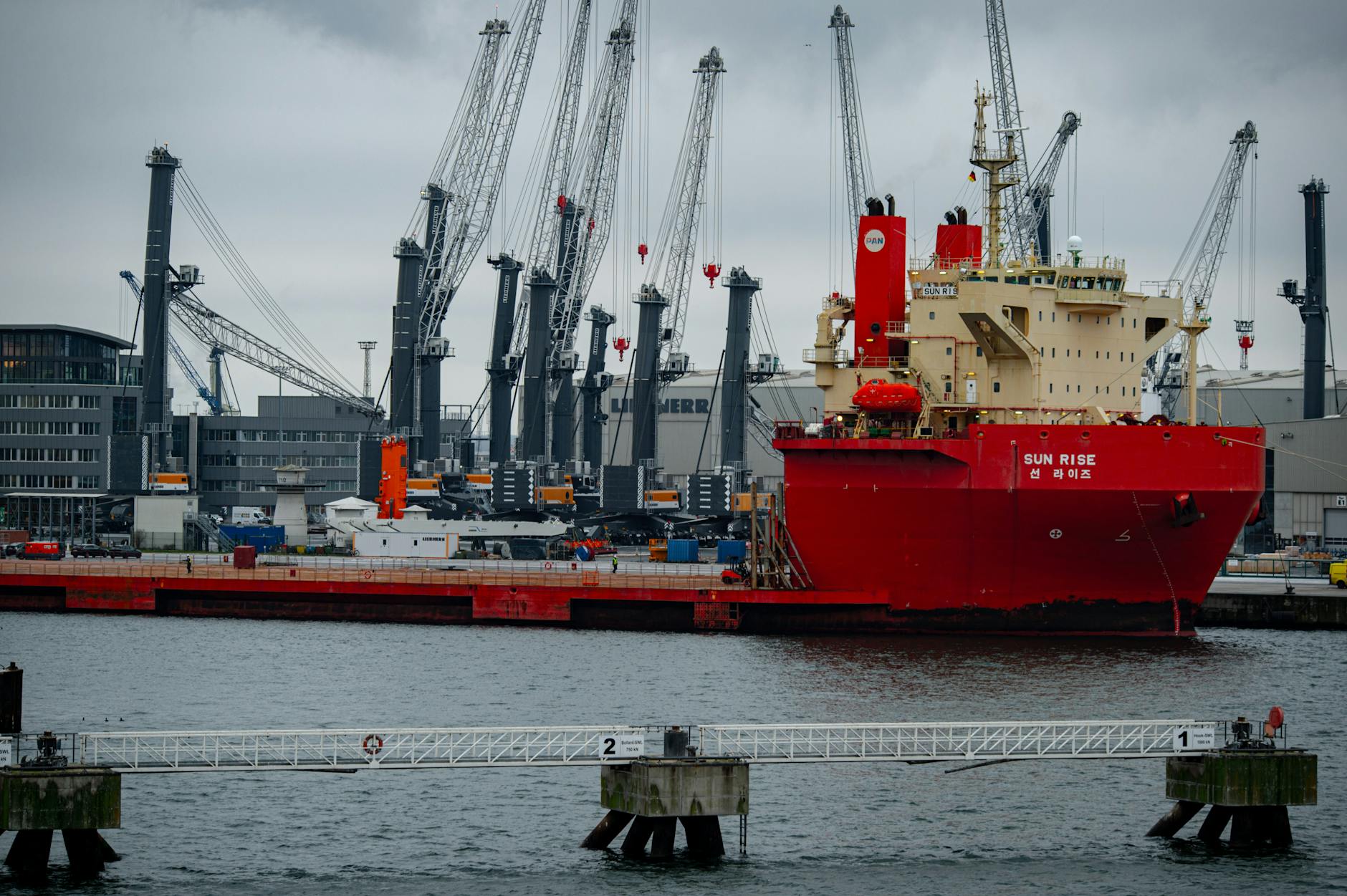
In the global logistics landscape, the name Maersk is virtually synonymous with container shipping. As the world’s largest container transportation company, Maersk operates a fleet of over 700 vessels, moving more than 12 million TEUs (twenty-foot equivalent units) annually and commanding approximately 17% of the global container shipping market. Yet this 119-year-old Danish shipping giant is undergoing a profound strategic transformation—from ocean to land, from ports to doorsteps, from B2B bulk transportation to B2C parcel delivery.
This transformation is not a whim but stems from a simple yet profound insight: Maersk was already completing 75% of the logistics work for e-commerce customers. When Maersk’s containers transport goods from Asian factories to U.S. West Coast ports, then via rail and truck to regional distribution centers, only the “last mile” remains to the consumer. Sam Coiro, Head of E-commerce Commercial Business Development at Maersk, explained in an interview with FreightWaves: “Maersk is going across the world with its containers, picking things up, sailing across the ocean, moving them into warehouses, and then literally doing the fulfillment for big, big shippers. But that’s where Maersk stopped. Maersk said, ‘Wait a minute. If we’re already bringing it 75 percent of the way, doesn’t it make sense for us to do the last piece as well?'”
“Maersk is going across the world with its containers, picking things up, sailing across the ocean, moving them into warehouses, and then literally doing the fulfillment for big, big shippers. But that’s where Maersk stopped. Maersk said, ‘Wait a minute. If we’re already bringing it 75 percent of the way, doesn’t it make sense for us to do the last piece as well?'” — Sam Coiro, Head of E-commerce Commercial Business Development at Maersk
This realization sparked a series of strategic acquisitions and business restructuring. In 2023, Maersk acquired Visible Supply Chain Management, a large parcel reseller with e-fulfillment centers across the United States. That same year, Maersk also purchased B2C Europe, a major multi-carrier shipping platform. The goal was clear: bridge the gap between warehouse and consumer, building end-to-end logistics solutions.
The Birth of Maersk Parcel Platform
The culmination of these strategic moves is the Maersk Parcel platform—an integrated platform that provides shippers with a single label, single invoice, single rate card, and single tracking experience. Behind the scenes, Maersk combines its own assets with partner carriers’ capabilities to enable nationwide package movement. “You can move packages from east to west, west to east, up and down, down to up,” Coiro described the platform’s coverage capability.
The core value of the Maersk Parcel platform lies in simplifying complexity. Traditionally, e-commerce businesses needed to deal with multiple logistics providers: ocean carriers for international transport, trucking companies for domestic line-haul, and last-mile delivery handled by UPS, FedEx, or regional carriers. Each segment had separate contracts, invoices, and tracking systems, creating immense management complexity. Maersk’s platform integrates these segments into a seamless experience where customers interface with just Maersk to obtain complete logistics services from factory to consumer doorstep.
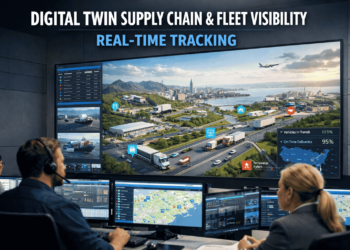
This integration not only simplifies operational processes but also delivers significant efficiency gains. Through data sharing and system integration, Maersk can optimize the entire logistics chain, reducing transit times and improving delivery accuracy. More importantly, Maersk can leverage its global network and scale advantages to secure more competitive rates for customers. For small and medium-sized e-commerce businesses, this means access to logistics service quality and pricing previously available only to large enterprises.
AI-Driven Demand Forecasting: Coping with Unpredictable Volatility
The real challenge in parcel logistics isn’t predicting known events like Black Friday. Black Friday is always the Friday after Thanksgiving, Mother’s Day is always the second Sunday in May, and Christmas is always December 25th. As Coiro noted: “I can tell you today that in 10 months from now we’re going to have volume spikes—Black Friday, Cyber Monday. I can tell you today that on Mother’s Day there’s going to be volume spikes. I can tell you today that on Christmas there’s going to be volume spikes.”
The true challenge comes from unpredictable consumer behavior. “What I can’t tell you is that unpredictable consumer demand that happens—whether it’s a social influencer that’s driving some crazy widget,” Coiro explained. “When major brands run large release events, demand can surge rapidly, creating significant volume spikes for logistics providers. If you’re the supply chain provider behind the scenes having to fulfill that—well, man, you’re in a world of hurt.”
Maersk tackles this challenge through data modeling. The company tracks how accurately each customer forecasts their own volume, and over time, patterns emerge. “Today we’re using agents to say, look, if this customer has given me 50 forecasts in the last 50 weeks and every time the customer’s off by X percent, model out potential forecast ranges to help plan resources more effectively,” Coiro described.
This buffer is crucial when managing hundreds of accounts. “Maersk is not operating with one customer. We have hundreds of customers,” Coiro emphasized. “But if we’re able to look at that through that lens from a data perspective and predict, then I can start making my planning decisions now. How many trucks do I need? How many lanes do I need? How many employees do I need? How many sort lanes to run? I can do it today instead of last minute.”
The data also helps Maersk decide when to bring in extra workers or add a third shift on busy weekends. Through machine learning algorithms, Maersk can identify subtle patterns, such as seasonal demand variations for specific product categories in particular regions, or the logistics impact of specific marketing campaigns. This predictive capability enables Maersk to prepare before demand materializes, rather than reacting passively.
Multi-Carrier Network: The Strategic Advantage of Flexibility
Most parcel operators rely on a single network to move packages. Maersk chose a different path. It built a multi-carrier system that mixes national giants with regional specialists. “Our multi-carrier network allows us to flex capacity significantly. I don’t need to load and plan for that because I know I can move it,” Coiro said. “If we relied on a single asset, that would create constraints.”
At the top of this network sit national giants like UPS, FedEx, and USPS. Below them are regional carriers covering specific parts of the country. “Our regional carriers provide strong service options and bring deep expertise in their specific geographies,” Coiro explained. “So we’ve got very strong regional carriers in the Northeast, Southeast, Central, West.”
These smaller carriers bring something the giants cannot: flexibility. “From a regional standpoint, it’s much more flexible because they’re eager for volume,” Coiro noted. “Our strategy allows us to complement our partners and deliver optimized, end-to-end solutions.”
Maersk also operates its own trucks where it makes sense. The company owns a ground freight network and uses those assets when routes align. This hybrid approach enables Maersk to select the optimal transportation solution based on specific circumstances: regional carriers may be more efficient for high-density urban areas; national carriers may be more suitable for long-distance transport; Maersk’s own fleet may be most cost-effective for specific routes.
Every new customer begins with an in-depth analytics dive. Maersk requests six to twelve months of shipping history, then runs the numbers through its modeling systems. “We run customer shipment data through advanced modeling to design an optimized carrier mix,” Coiro described. The goal is finding the right carrier blend based on three factors: what the customer sells, how fast they promised delivery, and how much they want to spend.
Resilient Logistics: Coping Strategies When Problems Arise
Carriers can fail. Weather can disrupt operations. Trucks can break down. Maersk built its system to handle these problems. When a shipper connects to Maersk’s system, they make one call to the company’s application programming interface (API). Maersk returns a label with a pre-negotiated rate. That label carries two barcodes—one for tracking, one that identifies which carrier will move the package.
“So now I’ve already determined that this package is going to be carried by carrier one,” Coiro said. But what happens when carrier one hits trouble? “If a carrier experiences a service disruption, our system may reroute shipments through alternative providers where commercially and operationally feasible,” Coiro explained. “You as the customer, you know what you have to do? Nothing. I do it.”
The tracking number stays the same. If the delivery date changes, Maersk updates that information so the end consumer knows their package is running a day late. “What I then do is if I have to change the service level agreement (SLA), then I’m going to update the tracking information,” Coiro said. “So the customer is now going to know, ‘Oh, okay. They just told me that it’s not going to be here on Thursday, it’s going to be Friday.'”
Regional carriers give Maersk more flexibility in these situations than the big nationals. “From a regional standpoint, we can, which is awesome,” Coiro said. “So if I got to get you a box in three days and if a carrier fails to perform—then our system can update routing scans automatically within supported parts of the network.”
This resilience extends beyond domestic transport. In international shipping, Maersk’s global network provides additional redundancy. If a port closes due to strikes or weather, Maersk can quickly reroute cargo to alternative ports. If an air freight partner faces capacity issues, Maersk can switch to other airlines. This multi-layered, multi-option network design enables Maersk to deliver unprecedented reliability to customers.
Implications for Shippers: Reducing Concentration Risk
The multi-carrier approach addresses a fundamental problem in parcel shipping: concentration risk. Companies dependent on a single national carrier get stuck when demand spikes or service fails. They have no backup plan and no negotiating leverage. Coiro says Maersk offers something different. By mixing its own ground freight with national and regional partners, it creates options without adding complexity for the shipper.
“When you join the Maersk family, you start to get access,” Coiro said. This access extends beyond parcels. Shippers can tap into Maersk’s ground freight network, air services, ocean shipping, and customs clearance operations. “From a customer standpoint, especially a customer that’s going to grow, they can start small if they want from a parcel standpoint, and as they grow and they start to need these services and they need to start sourcing from different countries,” Coiro explained.
Small shippers get the benefit of Maersk’s scale when negotiating with carriers. As they grow, they can add services without hunting for new providers at each stage. “We work with customers of all sizes and aim to support them consistently as their needs scale,” Coiro said.
The model also supports cross-border e-commerce. Shippers can hold inventory overseas and fulfill orders directly, or bring goods into the country in bulk for faster local delivery—all while staying within customs and regulatory rules. “Maersk supports this kind of cross-border e-commerce flow in full alignment with customs, duties, and all regulatory requirements,” Coiro said. “It’s a compliant, seamless way to connect origin-based inventory with customers without sacrificing transparency or service quality.”
Industry Impact and Future Outlook
Maersk’s entry into the last-mile delivery market marks a significant turning point for the logistics industry. Traditionally, ocean shipping, air freight, ground transportation, and last-mile delivery were separate domains dominated by different specialized companies. Maersk’s integrated model challenges this division, proposing a more unified, more efficient logistics paradigm.
For the e-commerce industry, Maersk’s entry means more choices and better services. Particularly in the current context of fragmented supply chains and rising costs, logistics providers capable of offering end-to-end solutions will have significant advantages. Maersk’s global network, technological capabilities, and financial strength enable it to invest in innovative technologies like automated warehouses, electric delivery vehicles, and drone delivery—investments that will ultimately benefit the entire industry.
For traditional logistics companies, Maersk’s expansion serves as a warning. If the largest container shipping company can successfully enter the parcel delivery market, other major logistics firms may consider similar vertical integration. This could lead to further industry consolidation, creating a few giants capable of providing global end-to-end logistics services.
Looking ahead, Maersk’s success will depend on its ability to truly achieve seamless integration across different logistics segments. Technology will be key—not only advanced data analytics and prediction systems but also unified platforms capable of connecting different carriers, different transportation modes, and different countries’ customs systems. If Maersk can overcome these technological challenges, it may redefine the 21st-century logistics industry, providing more efficient, reliable, and sustainable infrastructure for global trade and e-commerce.
From a broader perspective, Maersk’s transformation reflects the profound impact of the digital economy on traditional industries. Just as Amazon evolved from an online bookstore to a logistics giant, Maersk’s expansion from container shipping to last-mile delivery demonstrates how industry boundaries are blurring in the digital age, with integration and cross-boundary competition becoming the new normal. For all logistics enterprises, adapting to this change is not just about survival but about securing advantageous positions in the future logistics ecosystem.
Source: From containers to doorsteps: Maersk’s push Into parcel logistics – FreightWaves
This article was AI-assisted and reviewed by our editorial team.