## Supply Chain Short Takes: The Game-Changing Role of Autonomous Mobile Robots with Robotic Arms and AI
Autonomous Mobile Robots (AMRs) equipped with robotic arms and powered by artificial intelligence are revolutionizing warehouse and distribution center operations. These advanced systems represent the next generation of supply chain automation, offering unprecedented levels of efficiency, flexibility, and intelligence.
## Current Applications of Autonomous Mobile Robots (AMRs) in Warehouses and Distribution Centers
The advent of Autonomous Mobile Robots (AMRs) has revolutionized the logistics and supply chain industries. AMRs are now an integral part of many warehouses and distribution centers, where they perform a variety of tasks, from inventory management to order fulfillment. These robots have been instrumental in streamlining operations, reducing costs, and increasing efficiency. Some common applications of AMRs include:
– **Inventory Management**: AMRs equipped with scanning technology can quickly and accurately identify products within the warehouse, ensuring that inventory records are up-to-date.
– **Order Picking**: AMRs can autonomously navigate through aisles to retrieve items from shelves and deliver them to packing stations.
– **Delivery**: In distribution centers, AMRs can transport finished goods to loading docks or delivery trucks, reducing the need for manual handling.
– **Inspection and Quality Control**: AMRs can inspect products for defects and ensure that they meet quality standards before being shipped.
## The Advantages of AMRs Equipped with Robotic Arms Compared to Traditional AMRs
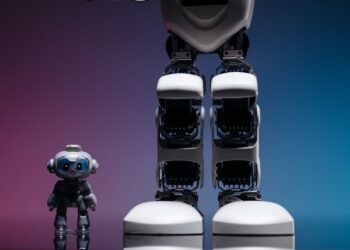
While traditional AMRs are capable of performing many tasks, those equipped with robotic arms offer several distinct advantages. These advanced robots can handle more complex tasks that require precision and versatility. Some of the key benefits include:
– **Enhanced Dexterity**: Robotic arms allow AMRs to perform tasks that require delicate handling, such as sorting items based on size or weight.
– **Increased Flexibility**: With robotic arms, AMRs can adapt to a wider range of tasks and environments, making them more versatile than traditional AMRs.
– **Improved Productivity**: Robotic arms can perform tasks more quickly and accurately than humans, leading to increased productivity and reduced labor costs.
“AMRs with robotic arms and AI are the future of supply chain automation,” says Doug Schuchart, industry expert. “These robots are capable of performing complex tasks with precision and efficiency, making them a valuable asset for any organization looking to improve its supply chain operations.”
## How AI Technology Enhances AMR Capabilities
Artificial Intelligence (AI) technology has significantly enhanced the capabilities of AMRs, making them even more valuable to supply chain operations. Some of the ways in which AI has improved AMRs include:
– **Improved Navigation**: AI algorithms enable AMRs to navigate complex environments more efficiently, avoiding obstacles and optimizing routes.
– **Enhanced Object Recognition**: AI-powered cameras and sensors enable AMRs to recognize and interact with various objects, making them more versatile.
– **Predictive Analytics**: AI can analyze data from various sources to predict future trends, enabling AMRs to optimize their operations proactively.
## Insights and Perspectives from Industry Expert Doug Schuchart
Doug Schuchart, a leading expert in the field of AMRs, offers valuable insights into the impact of these technologies on the supply chain industry. Schuchart believes that AMRs equipped with robotic arms and AI will play a crucial role in the future of logistics and supply chain operations:
“The integration of robotic arms with AMRs represents a significant leap forward in warehouse automation,” explains Schuchart. “These systems can now not only move materials but also manipulate them, opening up entirely new possibilities for automated workflows.”
Schuchart emphasizes that the combination of AI with these robotic systems enables adaptive learning and continuous improvement, allowing AMRs to become more efficient over time through machine learning algorithms.
## Impact of AMR Technology on Supply Chain Efficiency
The integration of AMRs with robotic arms and AI has had a significant impact on supply chain efficiency. Some of the key benefits include:
– **Reduced Labor Costs**: AMRs can perform tasks that were previously done by humans, reducing labor costs and freeing up workers to focus on more complex tasks.
– **Increased Productivity**: AMRs can operate 24/7, leading to increased productivity and reduced downtime.
– **Improved Accuracy**: AMRs are less prone to errors than humans, leading to improved accuracy in inventory management and order fulfillment.
## Future Trends and Challenges
The future of AMRs with robotic arms and AI is bright, but it is not without challenges. Some of the key trends and challenges include:
– **Increased Adoption**: As the technology becomes more advanced and affordable, we can expect to see a significant increase in the adoption of AMRs in warehouses and distribution centers.
– **Integration with Other Technologies**: AMRs will need to be integrated with other technologies, such as IoT devices and 5G networks, to fully realize their potential.
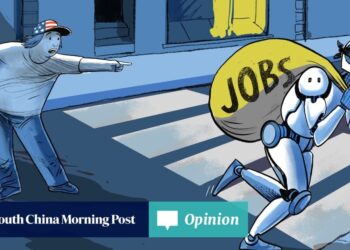
– **Regulatory and Ethical Considerations**: The rise of AMRs raises important regulatory and ethical considerations, such as the impact on employment and data privacy.
This article was AI-assisted and reviewed by our editorial team.