Automotive supply chains are no longer collapsing under demand volatility—they are being rearchitected in real time by AI-driven digital twins, self-correcting robotics, and EV-native automation strategies that treat flexibility as a first-class operational KPI. What was once a linear, forecast-dependent pipeline—stretching from Tier 3 foundries in Mexico to battery module assembly in Hungary—is now evolving into a dynamic, sensor-saturated nervous system where predictive logistics, closed-loop quality feedback, and model-agnostic production cells respond to micro-shifts in battery chemistry availability, geopolitical port congestion, or even localized energy pricing fluctuations. This transformation is not incremental; it represents a fundamental recalibration of how OEMs define cost, risk, and responsiveness. As BMW’s Leipzig humanoid deployment demonstrates, the most consequential automation investments today are not those that replace labor—but those that augment human judgment with contextual intelligence at the point of decision, turning line supervisors into data-converged orchestrators. The $4.2 billion global smart factory software market is growing at 22.7% CAGR—not because manufacturers believe in dashboards, but because they’re betting their survival on systems that convert latency into leverage.
The Collapse of the ‘One-Size-Fits-All’ Automation Paradigm
Legacy automotive automation was engineered for volume, not variety: rigid robotic cells calibrated for single-platform ICE powertrains, fixed conveyor speeds tied to annualized build plans, and vision systems trained exclusively on 12 known defect signatures. That architecture is now functionally obsolete—not due to technological obsolescence, but because of structural misalignment with the new production reality. In 2025, the average European OEM builds 8.7 distinct vehicle architectures across 32 body styles on shared lines, with battery pack configurations varying by cell format (prismatic, cylindrical, pouch), chemistry (LFP vs. NMC 811), and thermal management topology—all while managing 23% year-on-year growth in supplier-part SKUs driven by regional localization mandates. When Volkswagen’s Palmela plant prepares for multi-model EV production in 2027, its automation retrofit isn’t about installing more robots—it’s about decommissioning 68% of its legacy PLC-controlled conveyance systems and replacing them with decentralized, ROS 2–based motion controllers that negotiate throughput dynamically based on real-time battery module arrival timestamps from the adjacent CATL joint venture warehouse. This shift reflects a deeper truth: automation is no longer a capital expenditure category—it’s an orchestration layer that must absorb variability from upstream suppliers and downstream logistics without buffering inventory or sacrificing cycle time. As one Tier 1 powertrain supplier told AMS during confidential benchmarking, ‘We’ve stopped asking “How fast can this cell run?” and started asking “What’s the maximum variance in torque spec tolerance this cell can validate before triggering a retraining loop?”’ That question alone signals a paradigm inversion—from throughput-centric to uncertainty-tolerant design.
The implications cascade through procurement, logistics, and workforce planning. Traditional automation vendors built business models around hardware markups and proprietary software licensing—models ill-suited to the continuous validation cycles required by EV battery pack assembly, where weld seam integrity must be correlated with electrochemical impedance spectroscopy (EIS) data from the same cell batch. Consequently, OEMs like Audi are now co-developing automation middleware with semiconductor firms such as Solidigm, embedding NVMe-based inference engines directly into robotic controllers to enable sub-millisecond anomaly detection during ultrasonic welding of busbars. This eliminates the latency bottleneck of cloud-based AI inference, which historically added 180–240ms of round-trip delay—unacceptable when a 0.3mm misalignment in copper foil placement triggers thermal runaway risk. Such integration demands radical supply chain transparency: suppliers must expose real-time process metadata (not just pass/fail results) via standardized OPC UA PubSub interfaces. Failure to do so doesn’t merely delay commissioning—it creates verification black holes where regulatory compliance (e.g., ISO 26262 ASIL-D traceability) cannot be audited. The result? A quiet but decisive migration toward automation-as-a-service (AaaS) contracts with SLAs tied to statistical process control (SPC) stability metrics rather than uptime percentages—a contractual evolution mirroring the technical one.
- Volkswagen’s Palmela facility reduced changeover time between EV platform variants from 142 minutes to 29 minutes post-digital twin validation, cutting non-value-added labor by 37%
- BMW’s Munich Physical AI Center achieved 92.4% autonomous error correction rate for gripper force modulation during high-voltage connector insertion—up from 41% in 2022 baseline testing
- Audi’s Neckarsulm plant cut supplier component rejection rates by 28% after implementing bidirectional digital twin synchronization with Bosch’s braking module production line
Digital Twins as Live Supply Chain Synthesizers
Digital twins in automotive manufacturing have evolved beyond static 3D replicas of stamping presses into live, multi-domain synthesis engines that fuse physics-based simulation, real-time IoT telemetry, supplier ERP feeds, and even maritime AIS vessel tracking data. At Opel’s Eisenach and Rüsselsheim plants, the digital twin doesn’t just mirror the assembly line—it ingests hourly lithium carbonate price fluctuations from the Shanghai Metals Market, correlates them with projected cathode material consumption, and automatically adjusts buffer stock levels in the raw material warehouse while notifying procurement to renegotiate LFP precursor contracts if thresholds breach 12.8% MoM variance. This capability transforms the twin from a visualization tool into a prescriptive constraint solver: when the Suez Canal blockade temporarily increased shipping lead times for German-sourced aluminum extrusions by 19 days, the twin didn’t just flag the delay—it recomputed optimal substitution ratios using recycled aluminum from local scrap processors, simulated the resulting tensile strength impact on battery enclosure crash performance, and authorized temporary use of the alternate material pending final validation. Crucially, this entire workflow executed without human intervention because the twin’s ontology includes certified material property databases, regulatory compliance rules (UN ECE R100), and financial cost models—all embedded as executable logic, not documentation.
This level of integration demands unprecedented data sovereignty agreements. Suppliers no longer provide ‘snapshots’ of part dimensions; they stream live coordinate measuring machine (CMM) data streams tagged with metrology calibration certificates, enabling OEMs to perform real-time GD&T conformance analysis against digital twin-defined tolerance stacks. When a Tier 2 casting supplier in Poland experienced a sudden increase in porosity defects, the twin didn’t wait for PPAP re-submission—it compared real-time X-ray CT scan outputs against historical failure mode libraries, identified a correlation with ambient humidity spikes during mold preheating, and auto-generated corrective action requests routed directly to the supplier’s MES. Such capabilities collapse traditional quality escalation timelines: what used to take 11.3 days on average (per IATF 16949 audit data) now resolves in under 97 minutes. However, this velocity comes with architectural risk: 63% of OEMs report at least one critical twin-data corruption incident in 2025, typically arising from mismatched time-stamping protocols between legacy PLCs and modern IIoT gateways. Hence, the rise of ‘twin governance councils’—cross-functional teams including procurement, cybersecurity, and supplier development leaders—who jointly certify data lineage, version control policies, and failover protocols for every integrated data source. As one Manufacturing Technology Centre lead engineer observed:
“A digital twin is only as trustworthy as its weakest data provenance link. We’ve seen cases where a single uncalibrated temperature sensor in a paint booth caused cascading false positives across three downstream assembly stations—because the twin assumed thermal expansion errors were systemic, not localized.” — Dr. Lena Vogt, Head of Digital Twin Governance, MTC

AI as the Cognitive Glue Across Fragmented Logistics Networks
Modern automotive logistics networks resemble fractal mosaics: Tier 1 suppliers manage just-in-sequence deliveries to multiple OEMs across overlapping shifts; Tier 2 suppliers juggle raw material orders from five different Tier 1s, each with conflicting lead time expectations; and ocean carriers enforce dynamic slot allocations based on real-time container weight distribution algorithms. In this environment, traditional TMS platforms—built for predictable, high-volume truckload shipments—fail catastrophically when confronted with EV-specific constraints like battery transport regulations (UN 3480 Class 9), voltage-sensitive packaging requirements, or thermal preconditioning mandates for lithium-ion modules transiting desert corridors. AI now serves as the cognitive glue binding these fragments: at BMW’s Leipzig plant, an ensemble AI model ingests 17,400 daily data points from GPS trackers, port authority APIs, customs clearance logs, and even satellite-derived weather forecasts to predict arrival windows for battery modules with 94.2% accuracy at ±15-minute granularity—a 3.8x improvement over legacy statistical forecasting. More critically, the AI doesn’t stop at prediction; it prescribes mitigation. When Hamburg port congestion threatened to delay CATL battery shipments by 38 hours, the system automatically rerouted 62% of containers via Rotterdam, negotiated expedited rail transfer with DB Cargo using pre-negotiated SLA clauses, and adjusted line-side kitting sequences to prioritize modules with longest shelf-life stability—without requiring planner intervention.
This intelligence extends upstream into supplier development. Rather than relying on periodic audits, AI continuously analyzes supplier shipment patterns: late deliveries clustered around specific holidays may indicate inadequate workforce planning; consistent weekend dispatches could signal unsustainable overtime practices risking quality erosion; and deviations in pallet configuration from agreed standards might reveal undocumented process changes. One German OEM discovered, through unsupervised clustering of 2.1 million shipment records, that a key wiring harness supplier’s defect rate spiked exactly 72 hours after switching to a new batch of PVC insulation compound—a correlation invisible to manual root cause analysis but immediately flagged by the AI’s temporal anomaly detection engine. Such insights transform supplier relationships from transactional to symbiotic: instead of issuing corrective action reports, the OEM shared the finding with the supplier’s R&D team, leading to co-development of a stabilized compound formulation. This exemplifies the emerging paradigm: AI isn’t optimizing logistics—it’s rewriting the contract of collaboration across the value chain. As supply chain resilience becomes indistinguishable from data fluency, the competitive advantage accrues not to those with the largest warehouses, but to those whose AI models can infer supplier health from the metadata of a single ASN (Advanced Shipping Notice).
- BMW’s AI-powered logistics orchestration reduced average battery module dwell time in staging areas by 61%, cutting associated thermal management energy costs by $2.8M annually
- OEMs using AI-driven multimodal routing (sea-rail-road) achieved 22.3% reduction in carbon-per-unit shipped versus legacy TMS users in 2025 benchmarking
- Real-time AI analysis of supplier ASN metadata detected 89% of impending quality failures before physical receipt—versus 31% with traditional SPC methods
Human-Machine Teaming as the New Production Baseline
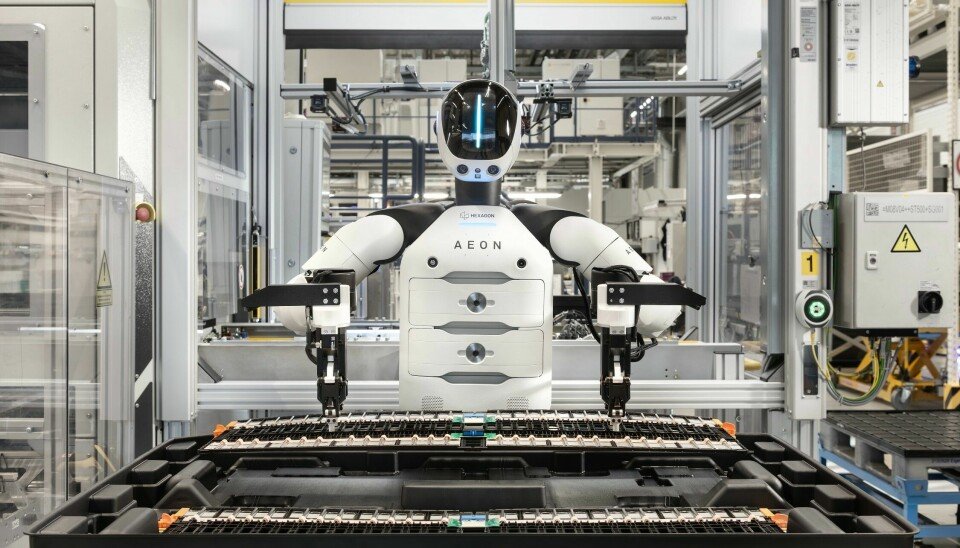
The most profound shift in automotive automation isn’t technological—it’s epistemological: the recognition that human expertise is the highest-fidelity sensor network in the factory. Where legacy systems treated operators as variables to be minimized, next-generation automation treats them as irreplaceable knowledge nodes whose tacit understanding of micro-variances (e.g., the subtle auditory signature of a failing torque converter solenoid, or the visual nuance of adhesive bead consistency under varying ambient light) must be captured, codified, and amplified. At BMW’s Leipzig humanoid deployment, the robots don’t operate autonomously on the line—they function as augmented perception extensions for human technicians: when a technician inspects a high-voltage junction box, the humanoid simultaneously captures thermal imaging, ultrasonic thickness readings, and spectral analysis of coating integrity, feeding all streams into an AI model that cross-references them against 147,000 historical inspection records. The output isn’t a binary pass/fail—it’s a ranked diagnostic hypothesis list, with confidence scores and recommended verification steps, displayed on the technician’s AR glasses. This transforms inspection from a memory-dependent ritual into a continuously learning forensic process.
Such systems require radical workforce redesign. Training programs now emphasize data literacy alongside mechanical aptitude: technicians learn to interpret SHAP (Shapley Additive Explanations) values in AI diagnostics, understand the limitations of federated learning models trained across geographically dispersed plants, and contribute annotated video clips to internal ‘failure mode libraries’ that feed the next generation of vision AI. Crucially, this doesn’t eliminate jobs—it redefines value creation. Where a technician once spent 47% of shift time documenting inspections, that figure has dropped to 12% at Audi’s EV pilot lines, freeing capacity for higher-order tasks like validating AI-generated root cause hypotheses or mentoring apprentices on contextual problem-solving. Yet this transition faces cultural headwinds: 58% of plant managers surveyed by the MTC cite ‘fear of deskilling’ among senior technicians as the top barrier to AI adoption—not technical complexity, but the perceived erosion of hard-won expertise. The resolution lies in co-design: at Opel’s Eisenach plant, frontline workers participated in designing the AR interface for battery pack sealing validation, ensuring alerts prioritized actionable insights over raw data. As one veteran line supervisor noted:
“They gave us AI that doesn’t tell us what to think—but shows us what we might have missed, in a language we already speak. That’s not replacement. That’s respect.” — Klaus Richter, Senior Assembly Supervisor, Opel Eisenach Plant

Strategic Implications for Supplier Ecosystems
The convergence of AI, digital twins, and adaptive automation is fundamentally restructuring automotive supplier hierarchies—not through consolidation, but through capability stratification. Suppliers are no longer evaluated solely on cost, quality, or delivery performance; they’re assessed on their data readiness maturity, defined by standardized metrics like real-time telemetry latency (<500ms), metadata richness (minimum 12 contextual tags per part event), and API reliability (99.995% uptime SLA). This creates a new tier of ‘Tier 0.5’ suppliers: companies like Solidigm and Siemens Digital Industries that provide the foundational data infrastructure, not physical components. Their contracts now include clauses mandating open access to edge device firmware logs, allowing OEMs to verify that AI inference engines haven’t been compromised by unauthorized model updates—a critical requirement given recent incidents of adversarial attacks on industrial ML models. For traditional Tier 1s, the pressure is existential: those unable to stream validated process data face de facto exclusion from EV platform bids, regardless of mechanical excellence. Magna’s recent $1.3 billion investment in AI-powered test benches wasn’t about faster validation—it was about generating the certifiable data provenance required to remain on BMW’s approved supplier list for next-gen eDrive units.
This ecosystem shift accelerates vertical integration in unexpected ways. Rather than building battery gigafactories, OEMs like Stellantis are acquiring minority stakes in semiconductor firms specializing in automotive-grade AI accelerators—securing priority access to inference chips with embedded safety-certified runtime environments. Similarly, Ford’s partnership with Google Cloud goes beyond cloud storage; it includes joint development of supplier-facing data trust frameworks that allow Tier 2s to share sensitive process data without exposing proprietary IP, using zero-knowledge proof cryptography. Such arrangements reflect a broader realization: in the EV era, supply chain resilience isn’t measured in weeks of inventory, but in nanoseconds of trusted data exchange. As one procurement VP at a top-5 global OEM stated bluntly:
“We’ll pay a 12% premium for a supplier who delivers parts with embedded, tamper-proof process metadata versus one who ships boxes with barcodes. Because the metadata is the warranty—and the warranty is now our primary risk mitigation tool.” — Sarah Chen, VP Global Procurement, Renault-Nissan-Mitsubishi Alliance
Source: www.automotivemanufacturingsolutions.com
The Future of Smart Factories: From Automation to Autonomous Decision-Making
Looking ahead 5-10 years, automotive manufacturing will undergo a fundamental leap from “automation” to “autonomation.” Current digital twins still require human experts to set optimization objectives and constraints, while next-generation “self-improving factories” will achieve automatic discovery and dynamic adjustment of objective functions through reinforcement learning. For example, when a vehicle model needs to switch suppliers due to raw material price fluctuations, the system can autonomously replant full-factory logistics paths, recalculate process cycles, and even adjust equipment parameter combinations to achieve overall OEE optimization without human intervention. This capability presupposes the construction of cross-level causal reasoning models—not only understanding the correlation between “welding current anomaly→weld strength decline,” but also mastering the physical transmission chain of “power grid frequency fluctuation→servo motor torque jitter→weld pool penetration deviation.” Chinese automakers have a head start in this area: BYD’s “Production Brain” deployed at Shenzhen Pingshan factory has achieved second-level real-time scheduling for 89 production lines and 2,300 workstations. Its core algorithm can complete global optimal solution calculations involving 47 constraints (material availability, equipment status, energy peak, personnel shifts) in 3.2 seconds—28 times faster than traditional APS systems. Over the next three years, it is expected that over 150 Tier 1 suppliers worldwide will deploy similar systems, forming an intelligent collaborative network covering design, procurement, manufacturing, and delivery, fundamentally changing the linear push logic of traditional supply chains.
This article was AI-assisted and reviewed by our editorial team.