For four consecutive days, Maya Rani sat on the cracked pavement outside a Delhi LPG distributor’s office—her infant daughter swaddled in thin cotton, her hands clutching laminated ration documents that no longer guarantee access to flame. She is not an outlier; she is a data point in a systemic rupture—one that began not in New Delhi, but in the narrow, 34-kilometre-wide Strait of Hormuz, where Iranian naval activity and retaliatory mine-laying operations have effectively suspended commercial transit for over 17 days. This is not merely a fuel shortage; it is the violent unspooling of a globally optimized, locally brittle supply chain that delivers 92% of India’s household cooking gas via seaborne imports—and does so with less than 12 days of strategic LPG inventory held at national terminals. The crisis has laid bare how decades of cost-driven logistics rationalization, geopolitical risk underestimation, and policy fragmentation have converged to create what energy infrastructure analysts now term ‘the last-mile fragility paradox’: maximum efficiency upstream, catastrophic vulnerability downstream.
The Hormuz Imperative: Why 34 Kilometres Control India’s Kitchen Flame
The Strait of Hormuz is neither a metaphor nor a historical footnote—it is the world’s most consequential maritime chokepoint, through which 21 million barrels per day of oil and liquefied petroleum gas (LPG) flowed in Q4 2025, accounting for approximately 20% of global seaborne energy trade. For India, the dependency is asymmetric and acute: over 68% of its imported LPG originates in the Persian Gulf region, with Qatar, Saudi Arabia, and the UAE collectively supplying $4.2 billion worth of LPG in FY2024–25. Crucially, nearly all of these shipments traverse Hormuz—not as optional routing, but as geophysical necessity. Alternative routes—such as the Suez Canal or Cape of Good Hope detours—add 12–18 days to voyage time, increase freight costs by 37–52%, and require rebooking slots amid unprecedented global tanker congestion. When Iranian forces initiated coordinated anti-ship operations on March 3, 2026—including drone strikes on two LNG carriers and the deployment of shallow-water moored mines—the immediate consequence was not just port closures, but cascading insurance cancellations. Lloyd’s of London withdrew war-risk coverage for all Hormuz-bound vessels within 48 hours, triggering automatic charter party terminations under standard BIMCO clauses. As one veteran maritime risk consultant observed, ‘This wasn’t a blockade in the traditional sense—it was a legal and financial decoupling engineered in real time.’
The operational impact was swift and non-linear. Indian importers like Indian Oil Corporation (IOC) and Bharat Petroleum (BPCL) had built their procurement schedules around 14-day vessel turnaround cycles from Ras Laffan to Mundra or Dahej terminals. With no new arrivals scheduled between March 5–22, terminal inventories plummeted from a healthy 285,000 metric tons (MT) on March 1 to just 97,000 MT on March 18—a 66% decline in 17 days. Critically, this drop occurred while domestic demand remained flat at 2.8 million MT per month, meaning daily drawdowns exceeded replenishment by 14,200 MT. What made the collapse irreversible was the absence of buffer capacity: India’s LPG storage infrastructure remains concentrated in just seven major terminals, with no underground salt cavern facilities—unlike the US or Germany—and minimal inland pipeline interconnectivity. Unlike crude oil, where refineries hold multi-week stocks, LPG cylinders are distributed through a fragmented, cash-and-carry retail network that operates on just-in-time cylinder rotation. When terminals ran low, distributors couldn’t refill—and when distributors couldn’t refill, households like Maya Rani’s faced literal flame extinction.
LPG as Social Infrastructure: From Fuel Commodity to Constitutional Entitlement
In India, LPG is not merely an energy vector—it is a foundational pillar of social contract delivery. Since the 2016 Pradhan Mantri Ujjwala Yojana (PMUY) launched, the government has connected 102.4 million below-poverty-line (BPL) households to subsidized LPG, transforming cooking practices across rural and peri-urban India. This program succeeded not because of price alone, but because it embedded LPG into the architecture of welfare: each connection carries a ₹300 subsidy per 14.2kg cylinder, administered through direct benefit transfers (DBT) linked to Aadhaar biometrics. Yet this very success created a dangerous illusion of resilience. The subsidy system assumes predictable, high-frequency cylinder availability—typically every 28–35 days per household. When supply chains fractured, the DBT mechanism became irrelevant: money cannot purchase nonexistent cylinders. Worse, the digital architecture designed to prevent leakage—real-time tracking of cylinder movements via the LPG Panchayat Portal—exacerbated bottlenecks by freezing allocations when distributors reported zero stock, thereby halting subsidy disbursements even to eligible users. As a result, the crisis exposed a structural contradiction: India built the world’s largest digital public infrastructure for energy distribution (over 280 million registered consumers) without parallel investment in physical redundancy.
The human consequences extend far beyond inconvenience. In urban slums and semi-rural clusters, families reverted to biomass fuels—firewood, cow dung cakes, and agricultural residue—triggering documented spikes in indoor air pollution (IAP) levels exceeding WHO-recommended PM2.5 thresholds by 400–600%. Pediatric hospitals in Delhi and Patna reported a 32% surge in acute respiratory infections among children under five during the first two weeks of March. Simultaneously, micro-enterprises collapsed: street food vendors, home-based caterers, and small-scale bakeries—many operated by women—saw revenues fall by 70–90% as they lacked alternatives to LPG-powered stoves. A recent survey by the Centre for Monitoring Indian Economy (CMIE) found that 1.4 million informal sector workers lost full-time income due solely to LPG unavailability. This is not cyclical unemployment—it is infrastructural unemployment, rooted in the failure of a single commodity to flow. As Dr. Ananya Mehta, Director of Public Health at AIIMS Delhi, stated:
‘We’re seeing a resurgence of conditions we thought were eradicated—chronic bronchitis in toddlers, carbon monoxide poisoning from poorly ventilated charcoal stoves, and malnutrition exacerbated by mothers skipping meals to stretch limited fuel. This isn’t a gas shortage—it’s a public health emergency disguised as a logistics problem.’ — Dr. Ananya Mehta, Director of Public Health, AIIMS Delhi
The Terminal Trap: Why India’s $24.7 Billion LPG Import Economy Has No Strategic Reserves
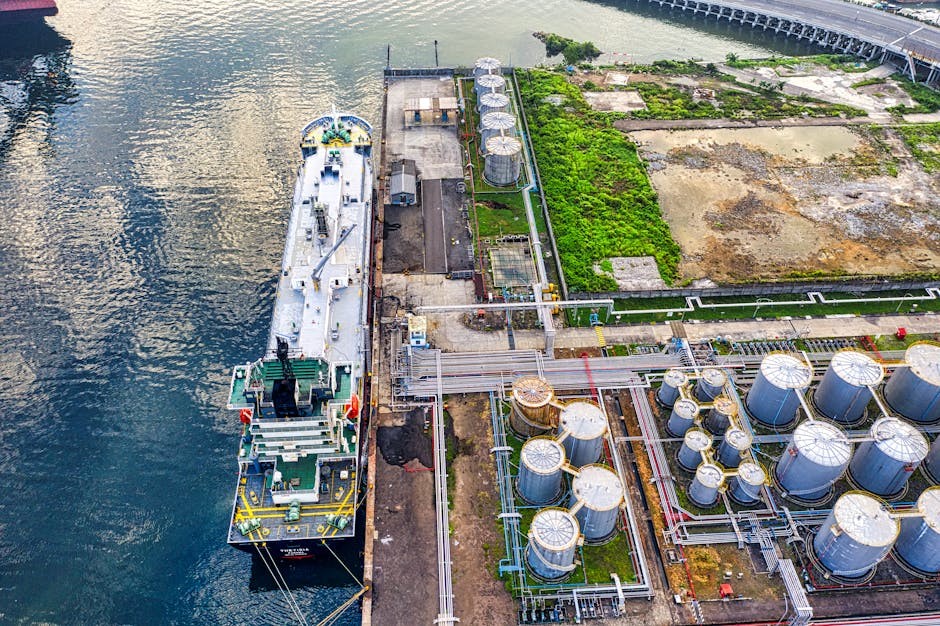
India’s LPG import economy is valued at $24.7 billion annually, yet it maintains no national strategic reserve for the commodity—a stark anomaly compared to its 75-million-barrel crude oil strategic reserve or China’s 100-day LPG reserve mandate. This omission stems from regulatory myopia: LPG was historically classified as a ‘commercial commodity’, not a ‘critical infrastructure input’. Consequently, private players—including IOC, HPCL, and Reliance Industries—operate terminals under ‘build-operate-transfer’ (BOT) models with no statutory obligation to hold minimum stocks beyond commercial viability thresholds. The result? Average terminal utilization hovered at 92% pre-crisis, leaving no slack for geopolitical shocks. Even more revealing is the geographic concentration: Mundra (Gujarat), Dahej (Gujarat), and Kochi (Kerala) terminals handle 78% of all imports, with no rail or pipeline connectivity to northern or eastern consumption hubs. When Mundra’s intake fell by 83% week-on-week, Delhi’s distributors received zero refills—not because cylinders weren’t ordered, but because there was no physical pathway to move them inland. India possesses only 1,200 km of dedicated LPG pipelines, versus China’s 14,500 km and the US’s 25,000 km. The remaining 94% of cylinder movement relies on road transport, which itself depends on diesel—now also facing shortages due to concurrent refinery disruptions from diverted crude shipments.
This infrastructure deficit is compounded by financial engineering. To minimize working capital, distributors operate on net-30 payment terms with producers but collect cash upfront from consumers—a model that collapses when cylinders vanish. Banks extended ₹18,400 crore in working capital loans to LPG distributors in FY2024–25, predicated on average monthly sales of 3.2 million cylinders per distributor. With actual sales falling to 420,000 per month in March, loan defaults surged, threatening systemic stress in regional banking. Meanwhile, international traders exploited the vacuum: spot prices for LPG cargoes rose from $512/MT in early February to $987/MT by March 15—a 93% spike. Indian importers, locked into long-term contracts at fixed rates, absorbed the losses, while parallel ‘grey market’ networks emerged, selling black-market cylinders at 220% above subsidized rates. The crisis thus revealed that India’s LPG ecosystem is not just physically fragile—it is financially brittle, legally uncoordinated, and strategically unprepared. As former Petroleum Secretary Tarun Kapoor noted:
‘We treated LPG like rice or wheat—something you procure, store, and distribute. But LPG is pressurized hydrocarbon gas requiring cryogenic handling, specialized vessels, and real-time coordination across 12 jurisdictions. You cannot manage it with a grain-storage mindset.’ — Tarun Kapoor, Former Secretary, Ministry of Petroleum & Natural Gas
Geopolitical Arbitrage and the Illusion of Diversification
India’s official diversification strategy—launched after the 2019 Hormuz tanker attacks—focused on signing long-term supply agreements with non-Gulf suppliers: three 10-year deals with US exporters (Cheniere, Enterprise Products, and Sempra), plus memoranda with Angola and Nigeria. On paper, this reduced Gulf dependency from 82% to 68% by FY2025. In practice, it proved illusory. US LPG exports to India grew only 11% year-on-year in 2025, constrained by limited export terminal capacity at Sabine Pass and Corpus Christi and competition from higher-paying Asian buyers like Japan and South Korea. More critically, all US-sourced LPG still transits Hormuz—not directly, but via Gulf-based blending and re-export hubs in Fujairah (UAE) and Bahrain, where cargoes are repackaged for Indian specifications. When Hormuz closed, those hubs froze. Nigeria and Angola deals remain unimplemented: Nigeria lacks liquefaction infrastructure, and Angola’s proposed terminal at Soyo remains 42 months behind schedule. Thus, diversification became a paperwork exercise rather than a physical rerouting. What’s more, India’s refusal to join the International Energy Agency (IEA) means it has no access to IEA’s emergency sharing mechanisms, unlike South Korea—which drew 1.2 million barrels of emergency LPG from IEA stocks during the 2023 Red Sea crisis.
The deeper issue is cognitive: policymakers conflated ‘source diversification’ with ‘route diversification’. A true route alternative would require massive investment in transcontinental infrastructure—such as the proposed Iran–India gas pipeline (IIGP), shelved in 2022 over sanctions concerns, or the Chabahar–Zahedan rail corridor, which could enable overland LPG transport from Iran’s South Pars field. Neither exists. Instead, India doubled down on maritime optimization—investing in larger, more efficient Very Large Gas Carriers (VLGCs)—which ironically increased vulnerability: larger vessels mean fewer voyages, longer lead times, and less flexibility. The crisis confirmed that logistical efficiency and geopolitical resilience are inversely correlated in energy supply chains. As one Shell Global Supply strategist remarked privately: ‘You can’t arbitrage sovereignty. If a state decides to weaponize geography, your spreadsheets become irrelevant.’ The lesson is not that diversification failed—but that India defined it too narrowly, ignoring the critical distinction between where gas is sourced and how it moves.
Toward Antifragile Energy Logistics: Policy Pathways Beyond the Crisis
Recovery will require moving beyond stopgap measures—like the government’s March 17 directive to allow refill of non-subsidized cylinders at subsidized rates—and toward structural redesign. First, India must legislate mandatory strategic reserves: a minimum 21-day national LPG stockpile, held in decentralized, geographically dispersed facilities—including underground caverns in Rajasthan’s salt formations and expanded tank farms in Odisha and Tamil Nadu. Second, it must accelerate the National LPG Pipeline Grid, targeting 5,000 km of new pipelines by 2030, prioritizing links between coastal terminals and high-demand hinterlands. Third, regulatory reform is essential: replacing the current ‘cylinder-as-property’ model with a ‘cylinder-as-service’ framework, where ownership rests with producers and distributors lease usage rights—enabling dynamic redistribution during shortages. Fourth, India must formalize emergency coordination protocols with ASEAN and IORA members, establishing joint contingency stockpiles and shared tanker allocation algorithms. Finally, digital infrastructure must evolve from surveillance to orchestration: integrating the LPG Panchayat Portal with real-time terminal inventories, road transport GPS, and weather-adjusted demand forecasting to enable predictive allocation—not reactive rationing.
None of this is technologically novel—it is a matter of political will and fiscal prioritization. The $24.7 billion LPG import bill represents 0.8% of India’s GDP, yet the crisis has already cost an estimated $1.3 billion in lost economic output and public health expenditures in just three weeks. The path forward lies not in abandoning globalization, but in reengineering its nodes. As the World Bank’s 2026 Global Logistics Performance Index notes, countries scoring highest in supply chain resilience invest 3.2x more per capita in multimodal infrastructure and maintain 47% higher strategic stock ratios than median performers. India currently ranks 44th out of 139 nations on that index—proof that resilience is not inherited, but built. The queues outside Delhi’s distributor offices are not just lines for gas—they are the visible manifestation of a national infrastructure deficit. Until India treats LPG logistics with the same urgency as missile defense or semiconductor sovereignty, its kitchens will remain hostages to straits thousands of miles away.
- India holds less than 12 days of strategic LPG inventory, versus China’s mandated 100-day reserve and Japan’s 60-day stockpile
- The country’s 1,200 km of LPG pipelines cover just 3% of its landmass, while the US network spans 25,000 km across comparable terrain
- Over 94% of cylinder movement relies on road transport, creating a diesel-dependent secondary vulnerability during energy crises
- Hormuz handles 21 million barrels per day of oil and LPG—20% of global seaborne energy trade
- India’s LPG import bill stands at $24.7 billion annually, yet it maintains zero statutory strategic reserves for the commodity
- PMUY has connected 102.4 million BPL households, but only 7% have access to alternate clean cooking fuels during supply shocks
Source: www.theguardian.com
This article was AI-assisted and reviewed by our editorial team.