Indonesia’s nickel strategy faces unprecedented strain as global EV battery demand pivots toward non-nickel chemistries like LFP—now 48% of installations—while nickel-rich NMC grows at just 11% YoY. Despite commanding 73% of global NPI output and operating five HPAL plants, Indonesia produces only 3.2% Class 1 nickel and just two nickel sulfate refineries, limiting its share of the $92 billion battery cathode market. Geopolitical fragmentation, IRA/CRMA compliance gaps, and energy-intensive HPAL operations compound the challenge. Success now hinges on diversifying into recycling, superalloys, and sovereign R&D—not doubling down on nickel alone.
Indonesia stands at a defining inflection point—not merely as the world’s largest nickel producer, but as the first major resource-rich nation to attempt full vertical integration from tropical laterite ore to electric vehicle (EV) battery cathodes. With 22% of global nickel reserves, over 49 operational RKEF smelters, and five active HPAL plants processing limonite ore by 2025, the archipelago has executed one of the most aggressive downstream industrial policies in modern commodity history. Yet this ambition now collides with accelerating technological divergence in battery chemistry: lithium iron phosphate (LFP) batteries now account for over 48% of global EV battery installations (BloombergNEF, Q4 2025), while nickel-rich NMC and NCA chemistries—Indonesia’s strategic focus—are growing at just 11% year-on-year, down from 27% in 2022. The core tension is no longer about access to capital or infrastructure, but about whether Indonesia’s state-led, nickel-centric value chain can adapt fast enough to structural shifts in demand, recycling economics, and geopolitical recalibrations that are redefining what ‘strategic’ means in clean energy supply chains.
The Downstream Leap: From Ore Export Ban to Integrated Smelting Dominance
Indonesia’s 2020 nickel ore export ban was not an isolated trade measure—it was the opening gambit in a deliberate, multi-decade industrial transformation designed to convert geological endowment into sovereign manufacturing capacity. Prior to the ban, Indonesia exported over 30 million metric tons of raw nickel ore annually, mostly to China, earning less than $1 billion in foreign exchange while forfeiting an estimated $12–15 billion in potential downstream value. The policy triggered an unprecedented wave of foreign direct investment: between 2020 and 2025, $32.7 billion flowed into Indonesian nickel processing, with Chinese firms—including Tsingshan Holding Group, Huayou Cobalt, and Jinchuan Group—accounting for nearly 68% of total committed capital. This capital financed not only RKEF smelters but also integrated stainless steel mills, ferroalloy refineries, and precursor material facilities. Crucially, Indonesia did not merely replicate China’s early-stage model; it leapfrogged by co-locating smelting, refining, and alloy production on islands like Obi and Morowali, slashing logistics costs and enabling real-time process optimization across the value chain. As of late 2025, Indonesia produced 1.42 million metric tons of nickel pig iron (NPI)—up from virtually zero in 2019—and accounted for 73% of global NPI output, surpassing China for the first time.
The implications extend far beyond metallurgy. This integrated model has catalyzed the emergence of domestic engineering service clusters, local procurement ecosystems, and technical training institutions—most notably the Morowali Industrial Park’s Vocational Training Center, which graduated over 4,200 certified smelter technicians in 2025 alone. Yet this success also reveals structural vulnerabilities: over 91% of Indonesia’s nickel exports remain intermediate products—NPI, ferronickel, and matte—with only 3.2% classified as refined Class 1 nickel (≥99.8% Ni). That gap reflects not technical incapacity but deliberate policy sequencing: the government prioritized scale and speed over purity, betting that volume-driven cost advantages would enable future upgrades. As one senior official at the Ministry of Energy and Mineral Resources noted,
“We built the highway before designing the luxury sedan. Now we must ensure the sedan doesn’t get stranded because the road was built for trucks.” — Dr. Rizky Fauzan, Director of Mineral Processing Policy, MEMR
This metaphor captures the central paradox: Indonesia’s rapid scaling created immense competitive leverage, but also locked in infrastructure dependencies—particularly energy-intensive RKEF operations requiring stable 24/7 power—that constrain flexibility in responding to next-generation battery chemistries demanding lower-carbon, higher-purity inputs.
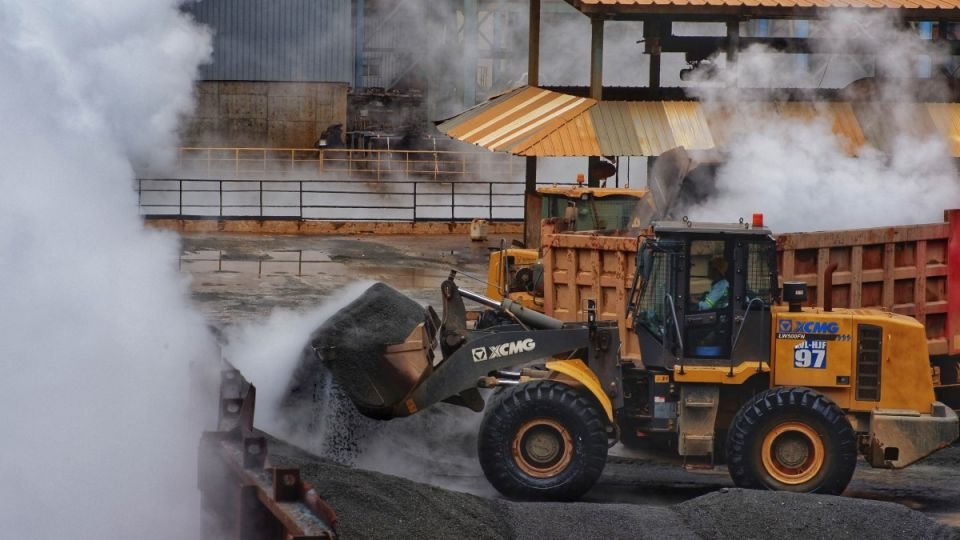
Limonite and the HPAL Gambit: Bridging to Battery-Grade Feedstock
While saprolite-based RKEF infrastructure secured Indonesia’s dominance in stainless steel feedstock, the country’s pivot toward EV batteries hinged on unlocking its vast limonite resources—estimated at 1.1 billion metric tons across Southeast Sulawesi and North Maluku. Limonite ore contains higher cobalt and lower magnesium than saprolite, making it technically suitable for high-nickel cathode precursors—but only via High Pressure Acid Leaching (HPAL), a capital- and energy-intensive hydrometallurgical process historically dominated by Australian and Canadian operators. Indonesia’s HPAL rollout has been both ambitious and fraught: by 2025, five plants were operational—including PT Vale Indonesia’s $2.3 billion Sorowako expansion and Harita Nickel’s $1.8 billion Obi Island facility—producing a combined 128,000 metric tons of Mixed Hydroxide Precipitate (MHP) annually. MHP is a critical intermediate: it contains ~35–45% nickel, ~0.8–1.2% cobalt, and minimal impurities, serving as the primary feedstock for nickel sulfate production—the essential precursor for NMC 622, 811, and NCA cathodes. However, Indonesia’s current HPAL output represents just 14% of projected global MHP demand by 2030, according to CRU Group projections, highlighting the scale of required investment to meet its own stated target of 500,000 tons of MHP by 2027.
This bottleneck is not merely quantitative—it is qualitative and logistical. Unlike RKEF, which produces solid metal alloys, HPAL yields slurry-like intermediates requiring complex solvent extraction (SX) and electrowinning (EW) circuits to upgrade to battery-grade nickel sulfate. As of early 2026, Indonesia hosts only two operational nickel sulfate refineries—PT QMB New Energy Materials’ facility in Morowali and a joint venture between Huayou and CATL in Weda Bay—with a combined annual capacity of 42,000 tons, barely sufficient for 120 GWh of NMC battery production (enough for ~1.5 million mid-range EVs). Crucially, these facilities rely heavily on imported reagents—especially high-purity sulfuric acid and organic extractants—creating new import dependencies that undermine the very value-capture logic of downstreaming. Moreover, HPAL’s environmental footprint remains contentious: each ton of MHP generated consumes 18–22 cubic meters of freshwater and produces 1.7–2.3 tons of gypsum waste, raising sustainability concerns among EU importers subject to the EU Battery Regulation’s mandatory carbon footprint declarations. Industry analysts warn that without accelerated deployment of closed-loop water systems and gypsum valorization technologies, Indonesia’s limonite pathway risks regulatory headwinds that could delay market access for battery-grade nickel beyond 2028.
The Chemistry Crossroads: Why Nickel-Rich Batteries Are Losing Ground
The fundamental challenge confronting Indonesia’s EV battery strategy is not execution risk—it is demand erosion rooted in electrochemical economics. While nickel-rich cathodes (NMC 811, NCA) deliver superior energy density—critical for premium long-range EVs—they suffer from three converging disadvantages: thermal instability requiring expensive battery management systems, cobalt dependency amplifying ethical sourcing scrutiny, and declining cost competitiveness against LFP alternatives. Since 2022, LFP battery pack prices have fallen 52% to $78/kWh (Benchmark Mineral Intelligence, Q1 2026), while NMC 811 packs hover at $112/kWh, a 44% premium. This gap is widening, not narrowing, due to falling lithium carbonate prices and rising nickel volatility: nickel spot prices swung ±37% in 2025 alone, driven by speculative trading and LME inventory fluctuations, whereas lithium iron phosphate’s raw materials—lithium, iron, and phosphorus—exhibit markedly lower price elasticity. Consequently, automakers are rapidly diversifying: BYD now deploys LFP in 89% of its global EV fleet; Tesla uses LFP for standard-range Model 3 and Y variants across China, Europe, and North America; and Volkswagen’s PowerCo division announced in January 2026 that 65% of its 2030 cathode procurement will be LFP-based, citing “total cost of ownership, safety certification timelines, and supply chain resilience” as decisive factors.
This shift carries profound implications for Indonesia’s value proposition. Consider the cathode material intensity: an LFP cell requires zero grams of nickel per kWh, whereas an NMC 811 cell demands 720 grams of nickel. Even with Indonesia’s aggressive MHP expansion, its entire projected 2027 output would support only 700 GWh of NMC battery production—less than 15% of global EV battery demand forecast for that year. Worse, the growth in nickel demand is increasingly concentrated in non-EV applications: aerospace superalloys (12% CAGR since 2023), hydrogen electrolyzer components (210% increase in nickel use per MW since 2021), and sodium-ion battery cathodes (which utilize nickel-manganese-iron oxides). These sectors value nickel for corrosion resistance and thermal stability—not energy density—making them less sensitive to battery chemistry shifts but also less aligned with Indonesia’s current HPAL-MHP-sulfate infrastructure. As one battery materials strategist at Umicore observed,
“Indonesia built a Ferrari engine factory while the market shifted to electric scooters. They can repurpose the plant, but the retooling costs, retraining timelines, and lost opportunity cost during transition may exceed the original investment.” — Elena Rossi, Head of Cathode Technology Strategy, Umicore
This insight underscores a deeper truth: Indonesia’s nickel strategy assumed linear technological progression, whereas the battery industry is evolving through parallel, competing pathways—each with distinct material requirements and geopolitical alignments.
Geopolitics and the Fragmentation of Battery Sovereignty
Indonesia’s nickel ambitions cannot be divorced from the accelerating fragmentation of global battery supply chains along geopolitical fault lines. The U.S. Inflation Reduction Act (IRA) and EU Critical Raw Materials Act (CRMA) explicitly prioritize “friend-shoring” and impose strict battery component localization thresholds: by 2029, 75% of battery minerals in IRA-eligible EVs must originate from U.S. free-trade partners, excluding Indonesia. Similarly, the EU’s new battery passport system mandates traceability back to mine level and imposes carbon intensity caps that disadvantage energy-intensive HPAL unless powered by verified renewables—a condition few Indonesian HPAL plants currently meet. Meanwhile, China’s dominance in battery manufacturing—78% of global cathode production capacity in 2025—means that even Indonesian MHP exports to Chinese refiners face increasing scrutiny under Beijing’s own “green mining” guidelines, which require third-party ESG verification for all overseas mineral investments. This triangulation creates a strategic squeeze: Indonesia lacks FTAs with key Western markets, its domestic renewable energy grid penetration remains at 14.3% (2025), and its primary foreign investors operate under tightening home-country regulations on overseas ESG compliance.
The result is a de facto bifurcation of Indonesia’s nickel exports. On one track, Chinese-backed ventures dominate the HPAL-to-sulfate-to-cathode corridor, feeding Chinese battery gigafactories with minimal Western oversight. On the other, Indonesian state-owned enterprises—including Antam and PT Aneka Tambang—are pursuing joint ventures with Korean and Japanese firms (e.g., POSCO Holdings’ $4.2 billion HPAL project in Central Sulawesi) specifically designed to meet IRA and CRMA standards through integrated solar microgrids and blockchain-traced material flows. Yet these partnerships remain fragile: POSCO’s project faces delays due to land acquisition disputes and community consent challenges, while Korea’s LG Energy Solution terminated discussions with two Indonesian HPAL operators in late 2025 citing “unresolved carbon accounting methodologies.” This fragmentation reveals a deeper asymmetry: Indonesia controls the ore, but foreign partners control the standards, certifications, and market access mechanisms. Without sovereign capacity in battery chemistry R&D, recycling infrastructure, or independent ESG verification bodies, Indonesia risks becoming a high-volume, low-margin toll road for foreign battery value chains rather than a co-architect of them. As highlighted by recent industry data:
- Indonesia’s nickel exports to China grew 29% YoY in 2025, while exports to the EU fell 17% and to the U.S. declined 41%
- Of the 49 RKEF smelters, only 7 have achieved ISO 14067 carbon footprint certification, and none meet the EU’s 2027 battery passport Phase II requirements
- Indonesian battery-grade nickel sulfate commands a 12–15% price discount versus Australian or Canadian equivalents in spot markets, reflecting perceived ESG and traceability premiums
Pathways Forward: Beyond Nickel-Centric Industrial Policy
Escaping the nickel trap requires Indonesia to move beyond viewing nickel as a monolithic strategic asset and instead treat it as one node within a diversified advanced materials ecosystem. First, the country must accelerate investment in nickel recycling infrastructure: current domestic recycling rates stand at less than 2%, despite possessing the world’s second-largest stock of end-of-life EV batteries (after China). Establishing urban mining hubs in Jakarta and Surabaya—paired with incentives for battery collection logistics—could yield 45,000 tons of recovered nickel annually by 2030, reducing pressure on primary HPAL expansion while enhancing circularity credentials. Second, Indonesia should pivot RKEF capacity toward high-value non-battery applications: nickel-manganese-cobalt (NMC) superalloys for jet engines already represent a $3.8 billion global market, projected to grow 19% annually through 2035, and require precisely the same high-purity nickel intermediates Indonesia is now mastering. Third, the government must institutionalize technology sovereignty: establishing the Indonesian Battery Research Institute (IBRI) with mandates spanning cathode doping optimization, solid-state electrolyte compatibility testing, and AI-driven process control for HPAL—tasks currently outsourced to foreign engineering firms. Such initiatives would transform Indonesia from a supplier of feedstock to a co-developer of next-generation battery architectures.
Critical to this transition is reframing policy success metrics. Rather than measuring progress solely by smelter count or MHP tonnage, Indonesia should adopt outcome-based KPIs: % of domestic nickel output upgraded to Class 1 status, carbon intensity per kg of nickel sulfate (kg CO₂e/kg), and share of battery-grade exports meeting IRA/CRMA compliance. These metrics align with global market realities and incentivize quality over quantity. Equally vital is recalibrating the role of state intervention: while export bans proved effective for initial industrial takeoff, they now risk distorting investment signals. A phased, transparent roadmap for nickel ore export liberalization—tied to verifiable downstream value-add thresholds—could attract diversified investment without undermining existing commitments. As noted in a confidential 2026 World Bank assessment shared with MEMR:
“The greatest risk to Indonesia’s nickel strategy is not competition or technology change—it is policy rigidity. Industrial policy must evolve as fast as the industries it seeks to govern.” — Dr. Arifin Tasrif, Former Minister of Energy and Mineral Resources, World Bank Senior Advisor
Ultimately, Indonesia’s crossroads is not about choosing between nickel and non-nickel futures—it is about building the adaptive institutional, technological, and human capital infrastructure that allows it to thrive across multiple electrochemical frontiers simultaneously.
Source: asianews.network
This article was AI-assisted and reviewed by our editorial team.