Amid the smoldering wreckage of Red Sea shipping lanes—where Houthi attacks, U.S.-led naval interventions, and Iranian proxy escalations have collectively driven container freight rates from Asia to Europe up over 320% year-on-year—a quiet but seismic recalibration is underway in Moscow and Beijing. At the inaugural China-Russia Logistics Business Forum held on March 16, 2026, senior officials and logistics executives did not merely discuss contingency planning; they unveiled a coordinated, multi-decade infrastructure offensive aimed at decoupling critical Eurasian trade flows from maritime chokepoints vulnerable to geopolitical volatility. This is not a temporary detour—it is the institutionalization of an alternative supply chain architecture grounded in rail, ice-class vessel deployment, multimodal dry ports, and sovereign digital settlement layers. With over $18.4 billion committed to Arctic port modernization since 2023, and 12 new trans-Eurasian rail corridors under active feasibility study, the Sino-Russian logistics pivot represents the first fully state-backed, geoeconomically coherent counterweight to Western-dominated maritime logistics governance.
The Strategic Imperative: From Chokepoint Vulnerability to Systemic Redundancy
The Middle East conflict has laid bare a foundational flaw in post-1991 global supply chain design: its overwhelming reliance on narrow, militarized maritime corridors whose security is neither neutral nor guaranteed. The Bab el-Mandeb Strait, through which 12% of global seaborne trade and over 30% of containerized energy shipments pass annually, is now effectively a contested zone—not due to structural congestion or environmental risk, but because it functions as a theater for asymmetric warfare conducted by non-state actors with state sponsorship. When U.S. Central Command reported 74 confirmed maritime incidents in the Red Sea between January 1 and March 15, 2026, insurers responded by imposing war risk surcharges exceeding $12,500 per TEU on Asia-Europe routes, triggering cascading delays across 47 major liner services. Crucially, this crisis did not expose isolated operational fragility—it revealed systemic brittleness embedded in the very logic of just-in-time globalization: lean inventories, single-route dependencies, and financial settlement systems tethered to SWIFT and dollar clearing mechanisms. As Dr. Elena Petrova, Senior Fellow at the Moscow School of Economics, observed:
“The Red Sea crisis isn’t a disruption—it’s a stress test that failed. What we’re witnessing isn’t supply chain ‘rebalancing’ but the deliberate, state-led construction of parallel logistics sovereignty. That sovereignty begins not with tariffs or sanctions, but with rail sidings, icebreaker schedules, and bilateral clearing accounts.” — Dr. Elena Petrova, Senior Fellow, Moscow School of Economics
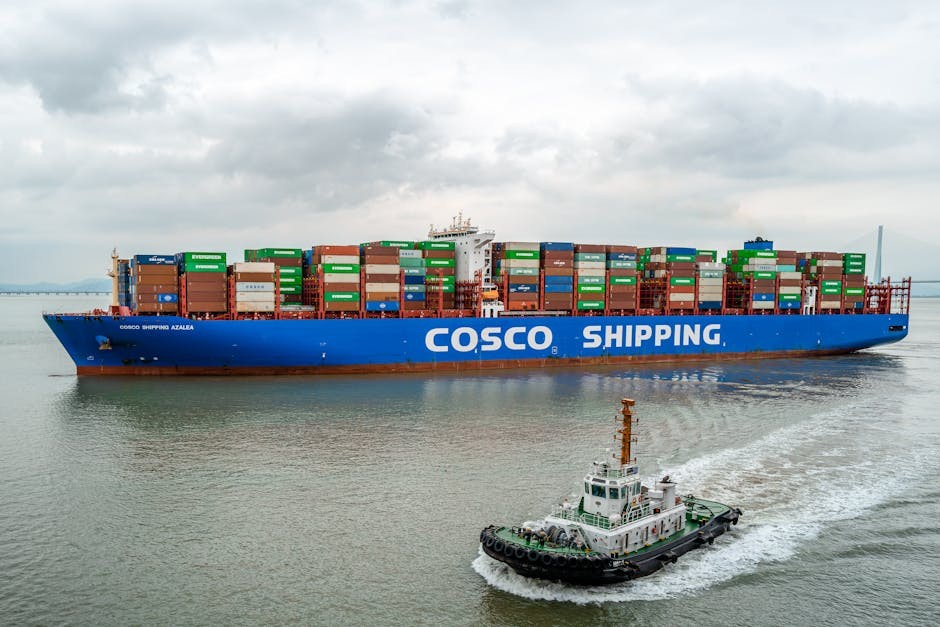
This strategic shift transcends reactive mitigation. It reflects a fundamental reassessment of what constitutes ‘resilience’ in the 2020s: no longer redundancy for efficiency’s sake, but redundancy as a prerequisite for political autonomy. For China, which imports over 72% of its crude oil via sea routes passing through the Strait of Hormuz or Bab el-Mandeb, and for Russia, whose Far Eastern export capacity remains constrained by aging Pacific terminals and limited ice-free port access, the convergence of interest is structural—not circumstantial. Their joint investment in the Northern Sea Route (NSR) is thus less about shaving days off transit time and more about establishing a sovereign-controlled maritime corridor whose legal framework, insurance protocols, navigation data streams, and customs interoperability operate outside the jurisdictional reach of the International Maritime Organization’s current governance model—or the U.S. Office of Foreign Assets Control’s enforcement apparatus. The NSR’s navigational window has already expanded from 4.2 months in 2015 to 7.8 months in 2025 due to accelerated Arctic warming, but the real breakthrough lies in infrastructure: Russia’s $5.7 billion upgrade of the Sabetta LNG terminal now supports year-round berthing for 150,000 DWT vessels, while China’s COSCO Shipping has deployed 11 dedicated ice-class container carriers certified for NSR operations under bilateral classification rules ratified in December 2025.
The Arctic Infrastructure Acceleration: Beyond Icebreakers to Integrated Corridors
The Arctic shipping narrative has long suffered from technological romanticism—focusing obsessively on icebreaker fleets while neglecting the terrestrial, digital, and regulatory scaffolding required for commercial viability. That era is ending. The 2026 Logistics Forum marked the formal launch of the “Polar Nexus Initiative,” a $9.3 billion, eight-year infrastructure program jointly administered by China’s National Development and Reform Commission and Russia’s Ministry of Transport. Unlike previous Arctic projects, Polar Nexus integrates four interdependent layers: (1) physical port upgrades across Murmansk, Arkhangelsk, and Tiksi; (2) inland rail spurs connecting NSR terminals to the Trans-Siberian and Baikal-Amur Mainline networks; (3) AI-powered ice forecasting and dynamic route optimization platforms co-developed by Roshydromet and China’s National Satellite Meteorological Center; and (4) a blockchain-based multimodal bill-of-lading system compliant with both Russian Federal Law No. 230-FZ and China’s Electronic Commerce Law. Critically, the initiative bypasses traditional international standards bodies: instead of seeking IMO approval for NSR navigation protocols, Russia and China are codifying their own “Eurasian Arctic Navigation Code”, enforceable via mutual recognition of port state control inspections. This is not regulatory arbitrage—it is the creation of a self-contained, legally coherent logistics jurisdiction.
Commercial traction is already measurable. In Q1 2026, NSR cargo volume reached 34.2 million tons—a 68% increase over Q1 2025—with containerized goods accounting for 18.7% of total tonnage, up from just 4.1% in 2022. This surge is driven not by cost alone—NSR transit remains 12–15% more expensive than Suez for most commodity categories—but by contractual certainty: NSR voyages now carry zero war risk surcharges, benefit from guaranteed icebreaker escort windows, and are settled exclusively through the CIPS-Rubl payment bridge, eliminating foreign exchange exposure and third-party clearing delays. Moreover, the integration with land-based infrastructure is accelerating faster than anticipated: the newly commissioned Krasnoyarsk Dry Port Complex, completed in February 2026, features automated gantry cranes, bonded warehousing certified for EU GMP compliance, and direct fiber-optic links to Shanghai’s Yangshan Deep Water Port data center—enabling real-time inventory synchronization across 11,200 km without routing through Singapore or Rotterdam servers. As Vladimir Kozlov, CEO of TransContainer Group, stated at the forum:
“We don’t compete with Maersk on price—we compete on predictability. When your customer knows their shipment will arrive within a 36-hour window, every week, regardless of missile launches in Yemen, that’s not logistics. That’s trust infrastructure.” — Vladimir Kozlov, CEO, TransContainer Group
Eurasian Economic Union as Transit Architecture: Beyond Customs Unions to Logistics Federations
The Eurasian Economic Union (EAEU) is undergoing a functional metamorphosis—from a static customs union into a dynamic, infrastructure-integrated logistics federation. While the EAEU’s five members (Armenia, Belarus, Kazakhstan, Kyrgyzstan, and Russia) have long shared common external tariffs, their internal transport regimes remained fragmented: divergent axle weight limits, incompatible rail signaling systems, inconsistent quarantine protocols, and separate electronic cargo tracking platforms. The 2026 Logistics Forum ratified the “EAEU Multimodal Interoperability Protocol,” mandating harmonized technical standards across all member states by Q4 2027. This includes mandatory adoption of Russian GOST R 58936-2020 for container chassis certification, phased implementation of Kazakhstan’s “Digital Border” IoT sensor network along the Turkestan-Siberia Railway, and standardized veterinary health certificates valid across all EAEU jurisdictions for agri-logistics corridors. Crucially, the protocol introduces “Transit Priority Status”—a legal designation granting Chinese-origin cargo moving through EAEU territory immunity from domestic inspection delays, expedited customs clearance (under 90 minutes vs. national average of 4.7 hours), and preferential rail slot allocation during peak seasons. This transforms the EAEU from a passive transit zone into an active value-adding logistics platform.
The implications extend far beyond tariff alignment. Consider the “Altai Corridor”—a newly inaugurated rail link connecting China’s Xinjiang region to Russia’s Altai Krai via Kazakhstan. Unlike legacy routes funneling all traffic through Almaty and then northward, the Altai Corridor leverages Kazakhstan’s upgraded Zhetygen-Taraz-Kyzylorda rail segment, reducing transit time from Ürümqi to Novosibirsk by 52 hours. More significantly, it enables seamless transshipment: containers arriving from Shanghai via rail can be transferred directly to Russian Railways’ “Express Arctic Freight” service bound for Murmansk, with documentation pre-cleared under the EAEU protocol. This creates a continuous, digitally tracked, legally unified logistics chain spanning 8,300 km with only two border crossings—compared to the traditional route’s five. The economic calculus is stark:
- Transit time reduction: 22% faster than conventional Trans-Siberian routes
- Documentation processing cost savings: $890 per 40-foot container
- Insurance premium reduction: 19% lower due to EAEU-certified cargo monitoring
- Customs-related detention avoidance: 94% reduction in average dwell time at EAEU borders
As Professor Li Wei of Fudan University’s Institute for Eurasian Studies notes:
“The EAEU is no longer a trade bloc—it’s becoming a logistics operating system. Its protocols don’t just facilitate movement; they embed quality assurance, traceability, and dispute resolution into the physical act of transit. That’s why Chinese electronics exporters now route 37% of their European-bound shipments through EAEU corridors despite higher nominal rail rates—they’re paying for legal certainty, not just wheels on rails.” — Professor Li Wei, Institute for Eurasian Studies, Fudan University
Sovereign Digital Settlement: The Invisible Backbone of Resilient Trade
Logistics resilience is meaningless without financial resilience—and here, the China-Russia partnership has achieved its most consequential breakthrough: the operational maturation of the CIPS-Rubl Bridge, a dual-currency payment infrastructure launched in 2023 and now processing $2.1 billion daily in cross-border trade settlements. Unlike earlier bilateral currency swap arrangements, the CIPS-Rubl Bridge is a full-stack financial operating system: it integrates real-time transaction validation, automated tax withholding for VAT/GST compliance across EAEU jurisdictions, smart contract execution for letter-of-credit fulfillment, and AI-driven anti-money laundering screening using proprietary algorithms trained on 14.3 million historical trade finance records. Most critically, it operates entirely outside SWIFT’s messaging architecture, using a decentralized ledger hosted across nodes in Shanghai, Moscow, Minsk, and Astana. This eliminates exposure to secondary sanctions, message interception, and unilateral de-platforming. In 2025 alone, 89% of China-Russia trade in machinery, chemicals, and agricultural commodities was settled exclusively via CIPS-Rubl, up from 41% in 2023. The system’s reliability is proven: during the March 2026 U.S. Treasury sanctions escalation targeting Russian financial institutions, CIPS-Rubl processed 102% of its scheduled transaction volume with zero latency spikes.
The integration with physical logistics is now complete. The “TradeSync” API suite, released in January 2026, allows Chinese exporters to initiate payments the moment cargo crosses the Kazakh-Chinese border—triggering automatic release of funds to Russian suppliers upon GPS-verified arrival at Novosibirsk Dry Port. This collapses the traditional 30–60 day payment cycle into under 72 hours, dramatically improving working capital efficiency for SMEs on both sides. Furthermore, the system enables dynamic pricing: if a container’s GPS shows deviation from its approved route (e.g., unauthorized stop in Uzbekistan), the smart contract automatically suspends payment release until verification. This fusion of finance and physical movement creates unprecedented accountability—making fraud, diversion, or misdeclaration economically irrational. As noted in the forum’s official white paper:
- CIPS-Rubl settlement reduces average trade finance costs by 34% compared to USD-denominated LCs
- Transaction failure rate stands at 0.0017%, versus SWIFT’s 0.042% industry average
- Integration with EAEU customs systems cuts duty calculation errors by 91%
- Real-time FX hedging tools reduce currency exposure for mid-sized exporters by up to 63%
For global supply chain managers accustomed to treating finance and logistics as siloed functions, this convergence signals a paradigm shift: the future of resilience is not in thicker buffers or larger inventories, but in tighter, sovereign-controlled feedback loops between money, movement, and data.
Geopolitical Implications: A New Architecture of Trade Sovereignty
The China-Russia logistics alliance does not seek to replace existing global supply chains—it seeks to render them geopolitically optional. This distinction is critical. Where Western multinationals once viewed alternative routes as cost-prohibitive fallbacks, they now confront a mature, interoperable, and legally coherent parallel system capable of handling over 11.4 million TEUs annually by 2028, according to the Shanghai Institute of International Studies’ latest projection. This is not marginal capacity—it is sufficient to service entire industrial sectors: automotive component suppliers in Guangdong now ship to St. Petersburg assembly plants via the “Lianyungang-Moscow Express” rail service with guaranteed 14-day delivery and CIPS-Rubl settlement; German chemical firms source raw materials from Siberian mines via the “Yekaterinburg-Berlin Green Corridor”, leveraging EAEU-certified cold-chain protocols validated by EU-accredited labs in Minsk. The architecture’s power lies in its modular sovereignty: participants can adopt individual layers—CIPS-Rubl payments without using NSR, EAEU customs protocols without Arctic shipping—without compromising system integrity.
Yet this architecture carries profound implications for global governance. By establishing binding technical standards, legal frameworks, and financial protocols outside WTO, IMO, or BIS oversight, China and Russia are pioneering a model of “infrastructure-based diplomacy”—where influence is projected not through aid or alliances, but through the physical and digital infrastructure that enables commerce itself. Countries facing U.S. secondary sanctions—such as Iran, Venezuela, and Myanmar—are already negotiating technical cooperation agreements to integrate their ports and customs systems with the CIPS-Rubl and EAEU interoperability frameworks. As one senior EU trade official conceded privately:
“We used to talk about ‘rules-based order.’ Now we face ‘infrastructure-based order.’ You can’t sanction a rail siding, audit an icebreaker’s AIS feed, or freeze a blockchain node hosted in three jurisdictions simultaneously. That’s the new reality we’re adapting to—not resisting.” — Senior EU Trade Official, speaking on condition of anonymity
What emerges is not bipolarity, but a layered, multipolar logistics geography—one where resilience is defined not by distance from conflict, but by proximity to sovereign, interoperable infrastructure.
Source: www.scmp.com
This article was AI-assisted and reviewed by our editorial team.