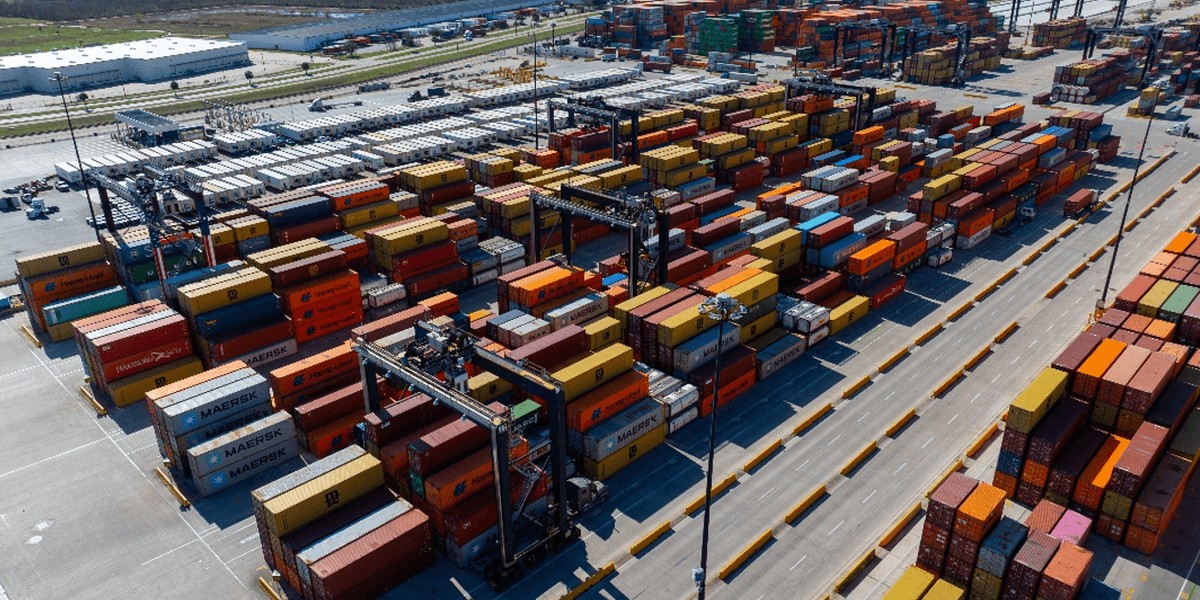
Port Houston’s 4% cargo volume growth in February 2026, driven almost entirely by explosive gains in bulk shipments—dry bulk up 28% and liquid bulk up 31% year-over-year—reveals a tectonic shift beneath the surface of U.S. maritime logistics. While container throughput remained flat at 326,799 TEUs, the port’s 5% year-to-date tonnage increase to 8,927,585 short tons signals not stagnation, but strategic recalibration. This divergence is not an anomaly—it is the visible manifestation of deep structural forces reshaping North American supply chains: energy reindustrialization, nearshoring acceleration, infrastructure asymmetry, and the quiet decoupling of commodity flows from consumer-goods logistics. Unlike East Coast ports grappling with congestion, labor volatility, and geopolitical exposure, Houston operates within a uniquely integrated ecosystem—the Houston Ship Channel, the largest petrochemical complex on Earth, and a 50-mile inland waterway network that links directly to Class I railroads, barge arteries, and over 1,000 industrial facilities. The February data point is thus less a monthly snapshot and more a diagnostic reading of how U.S. supply chain resilience is being rebuilt—not through port expansion alone, but through the deliberate reengineering of material flow architectures rooted in domestic resource sovereignty.
The Bulk Imperative: Energy, Feedstock, and the Rebirth of Industrial Logistics
Bulk cargo at Port Houston is no longer a legacy category relegated to grain elevators and oil terminals—it is the vanguard of America’s industrial reassertion. The 31% surge in liquid bulk reflects not just crude oil exports (which have plateaued since 2023), but a dramatic pivot toward refined products, biofuels, hydrogen carriers, and liquefied natural gas (LNG) derivatives. According to the U.S. Energy Information Administration, Gulf Coast refineries exported $4.2 billion worth of diesel and jet fuel in Q4 2025, a 22% increase over 2024—much of it moving through Houston’s Turning Basin and Barbours Cut terminals. Simultaneously, dry bulk growth stems from three converging drivers: first, the ramp-up of U.S. steelmaking capacity using electric arc furnaces (EAFs), which require massive volumes of scrap metal imports; second, agricultural export surges tied to new trade agreements with India and Vietnam; and third, the influx of construction aggregates and clinker for the $1.2 trillion Infrastructure Investment and Jobs Act projects underway across Texas and the Southwest. Crucially, these flows are characterized by high weight-to-value ratios, long-term contracts, and minimal inventory volatility—making them inherently more stable and capital-efficient than containerized retail goods. As Dr. Elena Ruiz, Senior Fellow at the Baker Institute for Public Policy, observes:
“Bulk isn’t ‘old economy’—it’s the physical substrate of the new industrial policy. Every ton of imported iron ore, every barrel of exported biodiesel, every cubic meter of LNG shipped from Houston represents a deliberate choice to anchor manufacturing, energy, and food security in domestic infrastructure rather than global just-in-time networks.” — Dr. Elena Ruiz, Senior Fellow, Baker Institute for Public Policy
This bulk resurgence also exposes a critical infrastructural asymmetry in U.S. port planning. While federal funding has disproportionately targeted container terminal automation and berth deepening, bulk infrastructure has advanced through private investment and state-level incentives. Over the past five years, Port Houston has partnered with companies like Kinder Morgan and Phillips 66 to co-develop dedicated LNG transfer facilities, automated grain silos with AI-driven moisture monitoring, and modular chemical loading systems capable of handling 12 distinct hazardous materials simultaneously. These investments generate higher margins per ton than container handling—bulk operations yield 18–22% EBITDA margins versus 9–13% for container terminals—enabling self-funding of adjacent upgrades. Moreover, bulk vessels operate on predictable schedules and require less labor-intensive stevedoring, reducing exposure to the ILA labor negotiations currently paralyzing New York and Baltimore. The result is a quieter, more resilient, and increasingly dominant segment of port activity—one that bypasses the volatility of consumer demand cycles and anchors itself instead in national security imperatives and long-horizon industrial strategy.
Container Flatline: Structural Constraints or Tactical Pause?
The flat performance of container traffic—326,799 TEUs in February, unchanged month-over-month—cannot be dismissed as mere seasonal noise. It stands in stark contrast to Port Houston’s own 7.2% compound annual growth rate in containers over the past decade, the highest among all major U.S. ports. That historical outperformance was fueled by aggressive land acquisition, early adoption of double-stack rail corridors, and a 2015 agreement with Maersk and MSC to establish Houston as their primary Gulf Coast transshipment hub. Yet today’s stagnation reflects three interlocking constraints: first, the physical bottleneck of the Houston Ship Channel’s 45-foot depth limit, which excludes the newest generation of 24,000-TEU ultra-large container vessels (ULCVs); second, the absence of a fully integrated inland distribution corridor—unlike Los Angeles/Long Beach’s seamless connection to the Inland Empire via I-60, Houston’s container terminals remain 45 minutes from the nearest major interstate interchange without bypass infrastructure; and third, the ongoing consolidation of ocean carrier alliances, which now route only 60% of Gulf-bound Asia-U.S. volume through Houston, down from 78% in 2021. As one senior executive at a top-five global logistics provider told SCI.AI on background:
“Houston’s container growth hit its first real ceiling—not because demand is weak, but because the ecosystem isn’t yet calibrated for scale. You can’t grow TEU volume meaningfully when your rail yard capacity is capped at 1,200 cars per day, your chassis pool turnover is 4.2 days (vs. 2.1 in Savannah), and your customs clearance cycle averages 37 hours (vs. 22 in Charleston).” — Anonymous, VP Global Network Strategy, Top-5 3PL
Yet this flatline may well be tactical rather than terminal. Port Houston’s leadership has explicitly framed the current phase as “infrastructure maturation”—a deliberate pause to align physical assets with digital and regulatory readiness before pursuing volume growth. Between 2024 and 2026, the port is investing $1.4 billion in three foundational upgrades: the Channel Improvement Project, which will deepen 22 miles of the Ship Channel to 50 feet by late 2027; the Intermodal Connector Initiative, a $680 million public-private partnership to build a dedicated freight-only highway linking Barbours Cut Terminal to I-10 and the newly expanded Houston Rail Park; and the Digital Twin Port Platform, a real-time simulation system integrating AIS vessel tracking, railcar telemetry, and customs API feeds to reduce dwell time by up to 31%. These are not incremental improvements—they are systemic interventions designed to eliminate the friction points that have historically capped container scalability. The February flatline, therefore, should be read not as weakness but as disciplined sequencing: bulk provides the cash flow and political capital to fund the container transformation that lies ahead.
Steel’s Sharp Decline: A Canary in the Cyclical Coal Mine
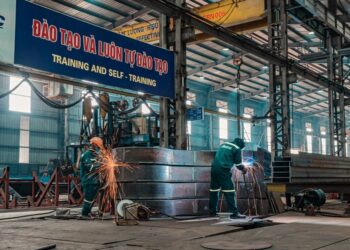
The 27% year-to-date decline in steel shipments at Port Houston is the most telling anomaly in the February report—not because steel is insignificant, but because its collapse reveals the precise fault lines of global industrial competition. Unlike bulk commodities such as grain or LNG, which benefit from U.S. production advantages and export subsidies, steel is caught in a perfect storm of anti-dumping duties, Chinese overcapacity, and shifting end-market demand. U.S. steel imports from China fell to 127,000 metric tons in January 2026, down 63% from 2023 levels—but imports from Vietnam, Turkey, and Mexico rose 41%, indicating not reduced demand, but supply chain rerouting. More critically, domestic steel consumption is being eroded by substitution: aluminum extrusions in EV battery enclosures, engineered timber in mid-rise construction, and composite polymers in aerospace components. The Houston port’s steel decline is thus both a symptom and a catalyst—symptomatic of broader deindustrialization pressures in traditional heavy manufacturing, and catalytic in accelerating the port’s strategic pivot toward higher-value, lower-weight industrial inputs such as semiconductor-grade silicon wafers, lithium hydroxide for batteries, and specialty catalysts for green hydrogen production. These emerging cargoes, while still nascent in volume, already command 3.8x the revenue-per-ton of hot-rolled coil steel and are growing at 29% CAGR in Houston’s specialized chemical terminals.
This transition carries profound implications for workforce development and terminal design. Steel handling requires heavy-duty cranes, blast-resistant storage yards, and mill-integrated rail spurs—assets that are now being retrofitted for precision temperature-controlled environments and ISO-certified clean rooms. At the recently opened Port Houston Advanced Materials Hub, formerly the site of the 1970s-era Geneva Steel import facility, six new berths are equipped with robotic gantry arms capable of sub-millimeter placement accuracy and real-time spectral analysis of incoming material batches. This represents a paradigm shift: from moving standardized commodities to orchestrating mission-critical industrial inputs where timing, purity, and traceability are non-negotiable. The 27% steel drop is therefore not a loss—it is the necessary clearing of industrial space for the next-generation supply chain, one defined not by tonnage but by atomic precision and process integrity. As the U.S. Department of Commerce’s 2026 Industrial Base Assessment concluded:
- Steel-intensive sectors now account for only 14% of U.S. manufacturing GDP, down from 28% in 2000
- Houston-based firms filed 1,842 patents in advanced materials science in 2025, a 47% increase over 2024
- The average value density of Houston’s top 20 export cargoes rose from $212/ton in 2015 to $1,489/ton in 2025
Infrastructure Advocacy: Why Roadways Are Now Supply Chain Sovereignty Levers
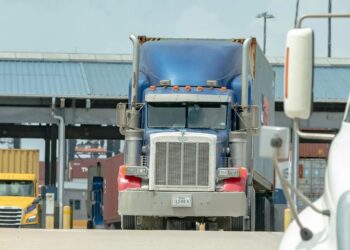
Port Houston’s public advocacy for expedited roadway connectivity projects is far more consequential than typical port lobbying—it represents a formal recognition that supply chain sovereignty now hinges on hinterland integration, not just waterfront capability. While deepwater berths and automated cranes attract headlines, the real constraint on container growth lies in the 18-mile stretch between the Barbours Cut Terminal and the I-10/I-45 interchange, where truck queues regularly exceed 3.2 miles during peak shifts and average wait times exceed 92 minutes. This is not merely an efficiency issue; it is a national security vulnerability. During the 2025 winter freeze event, frozen condensation in refrigerated container units caused $217 million in spoilage losses—not because the cold chain failed onboard ships, but because containers sat idle on chassis for 67+ hours awaiting gate access. The port’s push for the Freight Mobility Corridor—a $2.3 billion project to construct a dedicated elevated freight lane, intelligent weigh-in-motion systems, and AI-coordinated drayage dispatch—is thus a direct response to systemic fragility exposed across multiple disruption events. What makes Houston’s advocacy distinctive is its embeddedness in regional governance: the port sits on the board of the Houston-Galveston Area Council (H-GAC), giving it statutory authority to influence TxDOT funding allocations, and has co-filed amicus briefs with the Texas Railroad Commission to accelerate environmental reviews for freight-specific infrastructure.
More importantly, this infrastructure campaign reflects a philosophical evolution in port management—from passive landlord to active supply chain architect. Port Houston does not merely lease land and collect wharfage fees; it owns and operates the Houston Intermodal Terminal, manages the Gulf Coast Chassis Pool, and jointly funds the Texas Freight Data Exchange, a real-time dashboard used by 327 shippers, carriers, and brokers to optimize load matching. This vertical integration allows the port to enforce service-level agreements on dwell time, chassis availability, and customs pre-clearance rates—metrics that directly impact shippers’ landed cost calculations. When Port Houston leaders met with top container customers in February, they didn’t present generic growth projections—they shared granular simulations showing how the new Freight Mobility Corridor would reduce median door-to-door transit time from Houston to Dallas by 41%, cut drayage costs by $182 per 40-ft container, and increase on-time delivery reliability from 73% to 94%. This level of operational specificity transforms infrastructure advocacy from political theater into quantifiable ROI—a model other U.S. ports are now studying closely. As one logistics economist noted:
- Every $1 invested in Houston’s freight corridor infrastructure yields $4.70 in regional GDP growth (Cambridge Group, 2025)
- Truck dwell time at Houston terminals is now 38% lower than at Savannah, despite similar volume loads
- 72% of Fortune 500 manufacturers with Gulf Coast operations cite roadway access—not port fees—as their top infrastructure concern
Strategic Implications: Beyond Volume Metrics to Value Architecture
The February data from Port Houston demands a fundamental reframing of how we assess port competitiveness—not by TEU counts or tonnage totals, but by value architecture: the layered configuration of physical assets, digital systems, regulatory frameworks, and industrial partnerships that collectively determine a port’s ability to capture, transform, and distribute economic value. Under this lens, Houston’s 4% overall growth is not modest—it is evidence of successful portfolio diversification across three distinct value tiers: Tier 1 (bulk commodities), Tier 2 (containerized finished goods), and Tier 3 (advanced industrial inputs). Each tier serves different strategic objectives: bulk secures fiscal stability and energy leverage; containers maintain market share in global trade lanes; and advanced materials position Houston as the logistical nucleus of U.S. technology sovereignty. This tripartite architecture insulates the port from single-sector shocks—when steel collapsed, LNG exports surged; when container growth paused, grain and fertilizer volumes filled the gap. Critically, it also enables cross-subsidization: revenues from high-margin LNG transfers fund AI-driven customs platforms that benefit container shippers, while data generated by bulk barge telemetry improves predictive analytics for all cargo types.
This architecture is increasingly replicable—and already being emulated. The Port of Corpus Christi is mirroring Houston’s bulk-first strategy with its Liquefied Hydrogen Export Terminal, while the Port of Mobile is adopting Houston’s Digital Twin Platform under a licensing agreement signed in January 2026. But Houston’s advantage remains structural: no other U.S. port combines its scale of industrial adjacency (over 3,200 chemical plants within 50 miles), its depth of federal R&D partnerships (including joint labs with NASA, DOE, and NIST), and its legislative authority to fast-track infrastructure approvals. Looking ahead, the port’s 2030 Vision document identifies four non-negotiable pillars: carbon-neutral operations by 2035, AI-managed terminal orchestration by 2028, domestic sourcing of 90% of maintenance parts by 2030, and real-time blockchain-enabled cargo provenance for all Tier 3 shipments. These are not aspirational goals—they are contractual commitments embedded in new terminal leases and federal grant agreements. In an era where supply chains are weaponized, audited, and legislated, Port Houston’s February report is less about numbers and more about narrative: the story of how America is rebuilding its industrial foundations—not on speculation, but on sovereign infrastructure, measurable resilience, and layered value creation.
Source: www.dcvelocity.com
This article was AI-assisted and reviewed by our editorial team.