Industry Background and Problem Introduction: Warehouse Automation Trapped in a Dual “Capability-Cost” Dilemma
Global supply chains are undergoing unprecedented structural transformation—e-commerce fulfillment windows have compressed to the “hourly” level; return rates exceed 25%; SKU complexity grows annually by 37%; and skilled warehouse operator shortages now stand at 420,000 in North America and over 860,000 in China. Against this backdrop, warehouse automation should be the key breakthrough—but reality reveals a pronounced “return-on-investment misalignment.” According to the *2026 Warehouse Technology Report* jointly published by MHI and Deloitte, 73% of mid-sized logistics enterprises fail to meet ROI expectations within three years of deploying automation systems, with 58% attributing underperformance to systems becoming functionally obsolete upon commissioning. The root cause lies in today’s dominant paradigm: “point-optimization traps.” Autonomous Guided Vehicles (AGVs) handle only transport; Autonomous Mobile Robots (AMRs) focus solely on picking; and Automated Storage and Retrieval Systems (ASRS) serve exclusively for storage—each subsystem supplied by different vendors, with incompatible protocols, severe data silos, and fragmented operational interfaces. More critically, conventional automation remains a “hardware-first” rigid engineering process: A high-density pallet ASRS production line typically requires 18–24 months for delivery, with capital expenditures often exceeding $30 million. Worse, if warehouse inventory profiles or order patterns shift—for example, from B2B full-pallet dispatch to B2C wave-based piece-picking—the equipment risks functional obsolescence. This “heavy-asset, narrow-scenario, long-cycle” model is fundamentally incompatible with modern supply chains’ foundational demands for agility, scalability, and resilience. An architecture capable of decoupling hardware constraints while enabling intelligent evolution is urgently needed.
The Concept and Advantages of Physical AI: A Paradigm Shift from “Mechanical Actuator” to “Embodied Cognitive Agent”
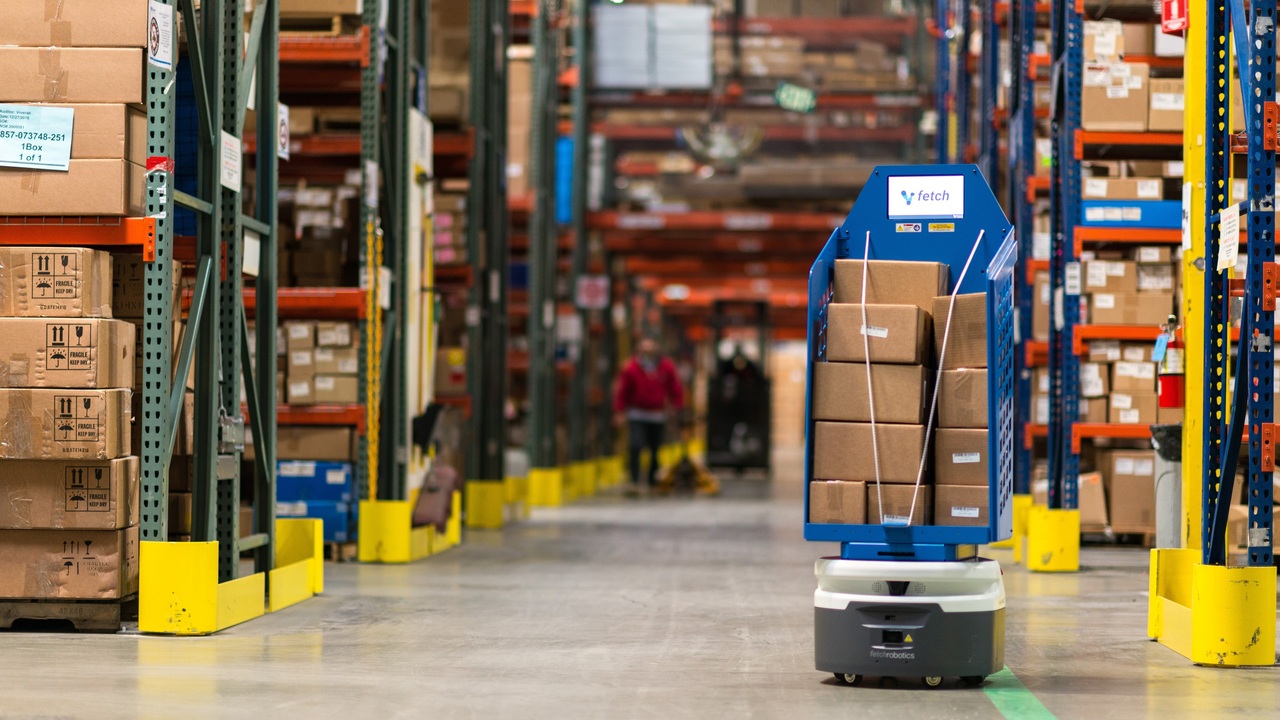
“Physical AI” is not merely loading algorithms onto robots. Rather, it constructs an embodied intelligent system featuring a closed-loop perception-decision-action architecture: integrating multimodal sensor fusion (3D vision + millimeter-wave radar + force feedback + acoustic localization), real-time spatial semantic modeling (Semantic SLAM), hierarchical task planning (HTN), and adaptive motion control—all deeply co-located on the physical platform. Compared to traditional automation, Physical AI delivers three fundamental breakthroughs: First, cognitive generalization—by learning object physics (mass distribution, friction coefficients, stacking stability) and environmental dynamics (forklift turning inertia, conveyor vibration spectra) via world models, a single mobile base can autonomously perform cross-functional tasks—including unloading, palletizing, cycle counting, and relocation—without changing end-effectors or rewriting low-level control logic. Second, deployment agility—the software-defined control stack enables OTA updates, allowing algorithmic model iterations across an entire fleet within 48 hours, compressing functional evolution cycles from “years” to “days.” Third, human-robot symbiosis—the system embeds an intention inference module that anticipates warehouse staff gestures, voice commands, or even micro-expressions, proactively yielding right-of-way, collaborating in lifting, and issuing anomaly alerts in dynamic mixed-operation environments. This marks the transition of warehouse equipment from “controlled tools” to “embodied cognitive agents” with contextual understanding and continuous learning capability—fundamentally dismantling the historical straitjacket of single-purpose hardware.
“AI was absolutely the focus of VC investment last year, but we also see a lot of activity in warehouse automation. It’s still a huge area of growth and opportunity.” — Mike Plasencia, Group Director at RyderVentures
Analysis of Capital Commitment Challenges: Unlocking the Dual Lock of CAPEX Lock-in and Technological Depreciation
The greatest financial barrier to warehouse automation is not the initial purchase price—but the hidden “Capital Commitment Trap.” This trap comprises two mutually reinforcing dimensions: First, CAPEX lock-in—traditional solutions require clients to finalize all hardware configurations, layout drawings, and process flows before project initiation, causing 30%–40% of budgets to be allocated toward “unknown requirements” (e.g., reserved redundant aisles, over-reinforced flooring, pre-installed but unused charging interfaces). These sunk costs cannot be recovered when business needs change. Second, accelerated technological depreciation—because hardware and algorithms are tightly coupled, upgrading to a new vision recognition model offering 20% higher sorting accuracy necessitates replacing laser navigation modules and main control boards across the entire AGV fleet—not just updating software weights—reducing effective economic life from a theoretical 10 years to just 3.2 years (per Logistics IQ 2026 data). Even more critical is how financing structures exacerbate the problem: 92% of automation projects rely on equipment leasing, where lessors assign residual values based on legacy depreciation models. When Physical AI renders equipment functionality infinitely extensible, traditional valuation frameworks collapse—leading to dried-up refinancing channels. RyderVentures due diligence shows that CAPEX flexibility now outweighs TCO (Total Cost of Ownership) by a factor of 2.7 in client evaluation criteria. Thus, the true inflection point lies in shifting capital expenditure from “buying hardware” to “subscribing to intelligent services”—paying per ton processed or per order fulfilled for compute and algorithm usage—aligning capital commitments precisely with business growth curves and eliminating the misalignment between technological evolution and financial cycles.
Key 2026 Trends: The Trailer Unloading Revolution and Paradigm Shift in Warehouse Design
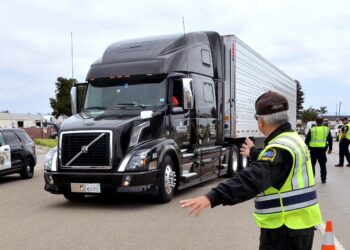
2026 will mark the watershed year when warehouse automation transitions from “localized efficiency gains” to “systemic reconfiguration,” driven by two converging trends. First is the scale-up of trailer unloading automation—the long-standing “automation blind spot.” This operation suffers from inconsistent interior lighting, chaotic cargo stacking, >65% cardboard deformation rates, and abundant non-standard packaging (woven bags, wooden crates, irregular appliances), causing traditional machine vision misidentification rates of 38%. Physical AI, however, achieves millimeter-precision pose reconstruction for arbitrary stacking configurations through multispectral imaging fusion (visible light + near-infrared + structured light) and generative pose estimation. Mytra’s pilot at Walmart reduced unloading cycle time from 12 minutes/trailer (manual) to 4.3 minutes/trailer, with abnormality response time <800ms. Even more profound is the second trend—paradigm shift in warehouse design: When equipment no longer requires fixed rails, dedicated charging zones, or climate-controlled server rooms, warehouses can revert to "function-first" design—eliminating wide aisles (from 5.2m to 2.8m), adopting modular steel structures (cutting construction time by 60%), and integrating photovoltaic roofing with energy storage. RyderVentures forecasts that by 2026, 42% of newly built intelligent warehouses will adopt "infrastructure-agnostic" design—i.e., equipment autonomously adapts to existing building conditions—reducing retrofit costs for aging facilities by 57%. This signals a fundamental reversal: warehouse space is shifting from "designed for machines" back to "designed for business."
Technology Case Study: Mytra’s Innovation—A Paradigm Disruption of Pallet-Level ASRS
Mytra secured a $42 million Series B round led by RyderVentures—its technology core directly targets the structural flaws of traditional ASRS. Conventional pallet ASRS relies on fixed-aisle stacker cranes—a rigid “space-for-time” solution: increasing throughput requires adding more aisles, consuming 35%–45% of total floor area; and all storage locations must conform to standard pallet dimensions (1200×1000mm), excluding Euro-pallets or oversized construction materials. Mytra introduces the Distributed Dynamic Storage Network (DDSN): a swarm of hundreds of heavy-duty omnidirectional mobile bases (3.5-ton payload), each equipped with adaptive gripper mechanisms and millimeter-wave penetration imaging to identify and grasp pallets of any size or orientation—including overhanging items. Its revolutionary insight is “storage-as-computation”: instead of static WMS-driven slot assignment, each base dynamically negotiates optimal storage/retrieval paths via distributed game-theoretic allocation—leveraging real-time inventory heatmaps, order priority, and equipment health metrics. At Best Express Cloud Warehouse’s Hangzhou hub, DDSN increased throughput per unit area by 210%, pallet compatibility rose from 73% to 99.8%, and capacity expansion required only adding more bases—no structural modifications. This proves Physical AI does not improve ASRS—it replaces hardware-defined rigidity with software-defined flexibility.
Industry Impact and Future Outlook: The Evolutionary Pathway from Automation to Autonomous Ecosystems
The proliferation of Physical AI will trigger cascading reconfiguration across the warehouse value chain. Short-term (2026–2027): WMS/TMS systems will lose core dispatch authority to “edge intelligence hubs” embedded in equipment, shifting enterprise IT focus from ERP integration to AI model governance. Mid-term (2028–2029): labor composition undergoes qualitative change—forklift operator roles decline by 60%, while demand surges 300% for new professions including “AI trainers,” “physical-world annotation specialists,” and “multimodal failure diagnosticians,” demanding urgent vocational education reform. Long-term (2030+): warehouses evolve into “autonomous supply chain nodes”—enabling real-time cross-enterprise inventory sharing via federated learning and digital twin simulation to automatically trigger replenishment, inter-warehouse transfers, and customs clearance, reducing bullwhip effect by 82%. As a RyderVentures partner states unequivocally: “We’re not investing in a machine—we’re investing in a company’s API to physical-world intelligence.” Over the next three years, Physical AI will shift the warehouse automation market from “hardware sales” to “Intelligence-as-a-Service” (IaaS), with contract models pivoting from CAPEX-dominant to OpEx + performance-based revenue sharing. When warehouses truly become programmable, scalable, and evolvable intelligent entities, the ultimate supply chain state—zero latency, zero inventory, zero waste—will attain engineering feasibility for the first time.
Source: FreightWaves
This article was AI-assisted and reviewed by our editorial team.