Tesla Leads Automotive Supply Chain Sustainability for Second Year Running
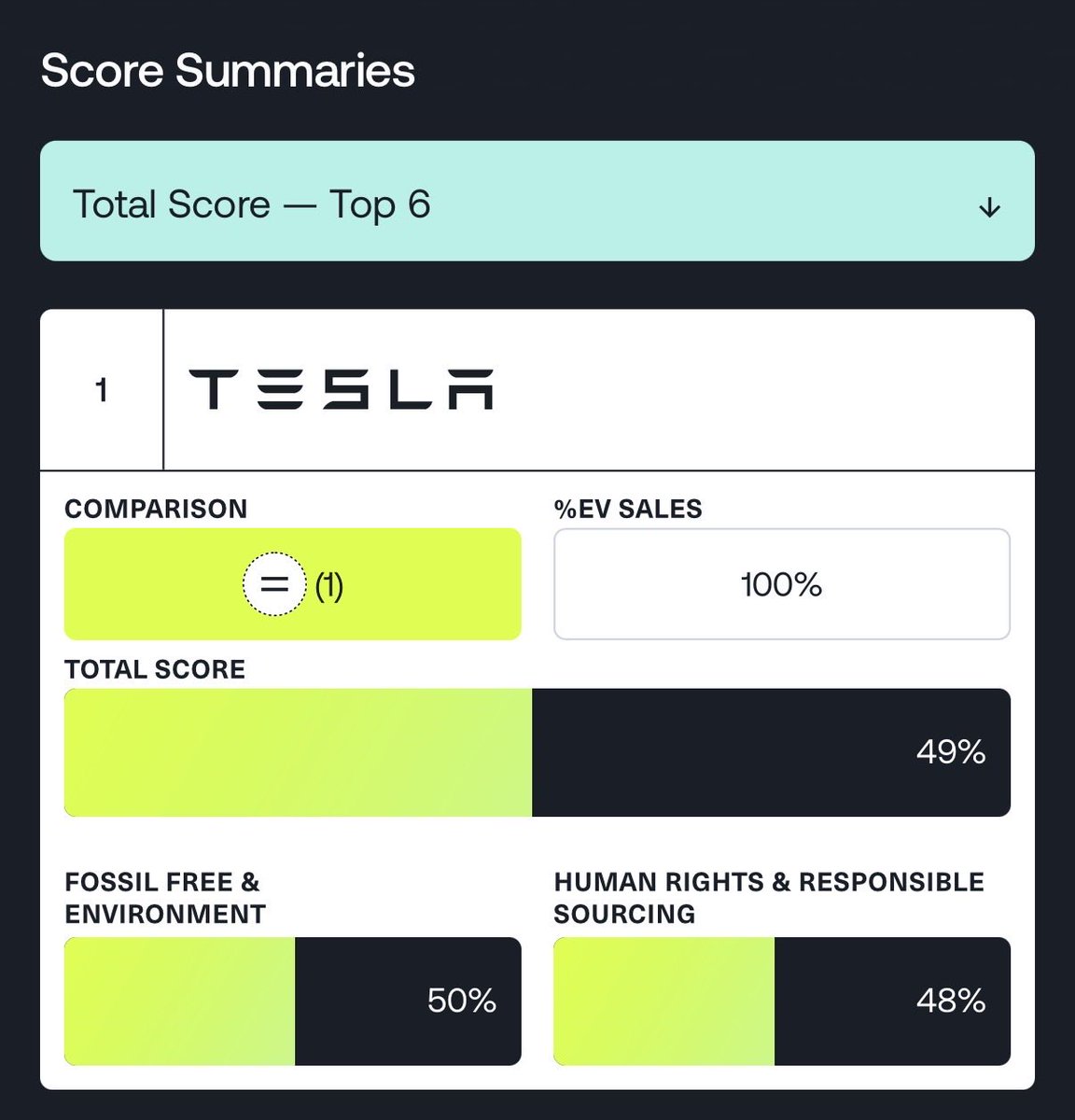
Amid growing climate challenges and increasing demands for supply chain transparency, Tesla has reaffirmed its leadership in sustainable supply chain management. According to the 2026 Lead the Charge Automotive Supply Chain Leaderboard released on March 2, Tesla secured the top position for the second consecutive year with a comprehensive score of 49%, outperforming Ford (45%), Volvo (44%), Mercedes-Benz (41%), and Volkswagen (39%). The report, published by a coalition including Transport & Environment and the Sierra Club, evaluated 18 major global automakers across more than 80 key indicators and 1,584 individual data points, representing the most comprehensive and rigorous assessment of automotive supply chain sustainability worldwide.
The Rigorous Assessment Framework and Tesla’s Expanding Lead
“The Lead the Charge methodology’s rigor lies in its comprehensiveness—no automaker comes close to perfect performance, which is exactly what we need to see in the industry.” — Supply Chain Sustainability Expert
The Lead the Charge evaluation framework demonstrates its rigor through a multi-dimensional approach. The system examines not only direct corporate carbon emissions but also tracks environmental and social impacts throughout the entire upstream supply chain, including carbon emissions from steel, aluminum, battery and critical mineral procurement, worker rights protection at mining operations, and responsible sourcing practices across the complete bill of materials. While Tesla’s 49% score might appear modest, it actually reflects the strictness of the assessment criteria—no automaker approaches 100% perfect performance.
Notably, Tesla’s leadership advantage is expanding. Compared to 2025, Tesla’s overall score improved by 6 percentage points, widening its gap over second-place Ford from 3 percentage points last year to nearly 5 percentage points. This growing margin indicates that Tesla is improving its supply chain sustainability faster than competitors, establishing an increasingly significant structural advantage that translates not only into brand reputation but also into future compliance benefits and cost advantages.
Breakthrough in Battery Supply Chain: Unprecedented Transparency
In the particularly challenging area of battery supply chains, Tesla achieved a breakthrough performance. The report shows Tesla’s battery supply chain category score improved by a remarkable 20 percentage points, making it the first automaker to exceed 50% in this category. This accomplishment establishes new industry standards for battery supply chain transparency.
Tesla became the first automaker to fully meet the battery emissions disclosure indicator, publicly disclosing individual emission contributions from key battery materials—lithium, nickel, cobalt, and graphite. This granular level of transparency is unprecedented in the automotive industry and sets a new benchmark for information disclosure. As the EU’s battery passport requirements gradually take effect, this level of transparency will become a prerequisite for market access—a standard Tesla has already met while competitors are still working to catch up.
The complexity of battery supply chains extends beyond environmental footprints to encompass intricate social and ethical considerations. From cobalt mining in the Democratic Republic of Congo to lithium extraction from South American salt flats, to nickel operations with varying environmental standards, Tesla’s ability to track and disclose emission data for these materials demonstrates supply chain visibility at industry-leading levels. This visibility represents not only technical capability but also supply chain management maturity.
Low-Carbon Material Sourcing: Structural Emission Reduction Starting with Aluminum
Beyond battery supply chain breakthroughs, Tesla has made significant progress in sustainable sourcing of traditional materials. The report specifically highlights Tesla’s low-carbon aluminum supply agreement in North America. Under this agreement, Tesla sources aluminum with an emission intensity below 2 kg CO₂e per kg of aluminum, compared to 10-20 kg CO₂e per kg for conventional primary aluminum production.
The strategic importance of this agreement cannot be overstated. Aluminum represents the second-largest material input by weight in Tesla vehicles, and securing large-scale, low-emission recycled aluminum supply will continuously reduce carbon emissions throughout vehicle lifecycles. More importantly, such upstream decisions have compounding effects—as carbon border adjustment mechanisms expand, the cost advantages of using low-carbon materials will increase over time.
Tesla’s low-emission aluminum agreement utilizes post-consumer recycled scrap, which not only reduces carbon emissions but also promotes circular economy development. By establishing stable demand for recycled materials, Tesla provides market certainty for the recycling industry, driving green transformation across the entire materials ecosystem.
Industry Competitive Landscape: Widening Gap, Not Closing
The Lead the Charge leaderboard reveals a significant trend: Tesla’s gap with competitors in supply chain sustainability is widening, not narrowing. Despite years of claims from traditional automakers about “catching up” on sustainability, the 2026 data tells a different story.
While Ford’s 45% score places it second, its gap with Tesla expanded from 3 percentage points last year to 5 percentage points. European manufacturers like Volvo, Mercedes-Benz, and Volkswagen scored between 41-44%, demonstrating the traditional European automotive industry’s sustainability strengths but still failing to challenge Tesla’s leadership position.
This widening gap reflects fundamental differences in supply chain management strategies among different companies. Tesla embedded sustainability into its business model and supply chain design from its inception, while traditional manufacturers primarily pursue incremental improvements to existing supply chains. These strategic differences become particularly evident when facing rigorous, comprehensive assessments.
Regulatory Environment and Future Trends: Sustainability as Core Competitiveness
Supply chain sustainability is evolving from corporate social responsibility initiatives into core competitive advantages and compliance requirements. In the European Union, battery passport regulations require electric vehicle manufacturers to provide detailed battery lifecycle data, including material sourcing, carbon emissions, and social impacts. In the United States, federal procurement rules and state-level regulations increasingly focus on supply chain sustainability performance.
For automakers, companies with insufficient supply chain transparency or excessive carbon emissions face growing tariff risks, regulatory friction, and reputational damage. Tesla’s leading position in the Lead the Charge leaderboard represents not merely a marketing advantage but a structural benefit that will translate into tangible business value in the evolving regulatory landscape.
Looking ahead, automotive industry supply chain competition will increasingly revolve around sustainability. As consumer awareness grows, investor pressure increases, and regulatory requirements tighten, supply chain green performance will become a decisive factor in long-term corporate competitiveness. Tesla has already positioned itself advantageously in this transition, with its established transparency standards and supply chain management practices likely to become the industry’s new benchmark.
Conclusion: The Era of Sustainable Supply Chains Has Arrived
Tesla’s consecutive top rankings in the Lead the Charge leaderboard not only demonstrate its leadership in supply chain sustainability but also signal a paradigm shift in automotive industry competition. Sustainability is no longer an optional add-on but an integral component of core business capabilities.
Tesla’s success provides important insights for the entire industry: supply chain sustainability must be embedded from the design stage, requires unprecedented transparency, demands innovative sourcing in traditional material areas, and must be viewed as a long-term competitive advantage rather than a short-term cost.
As the global economy transitions toward net-zero emissions, supply chain green performance will become critical to corporate success. Tesla has demonstrated the path and possibilities of this transformation, and the entire automotive industry must accelerate its pace to fully embrace the era of sustainable supply chains.
Source: basenor.com
This article was AI-assisted and reviewed by our editorial team.