India’s Drone Delivery Market Enters Growth Phase
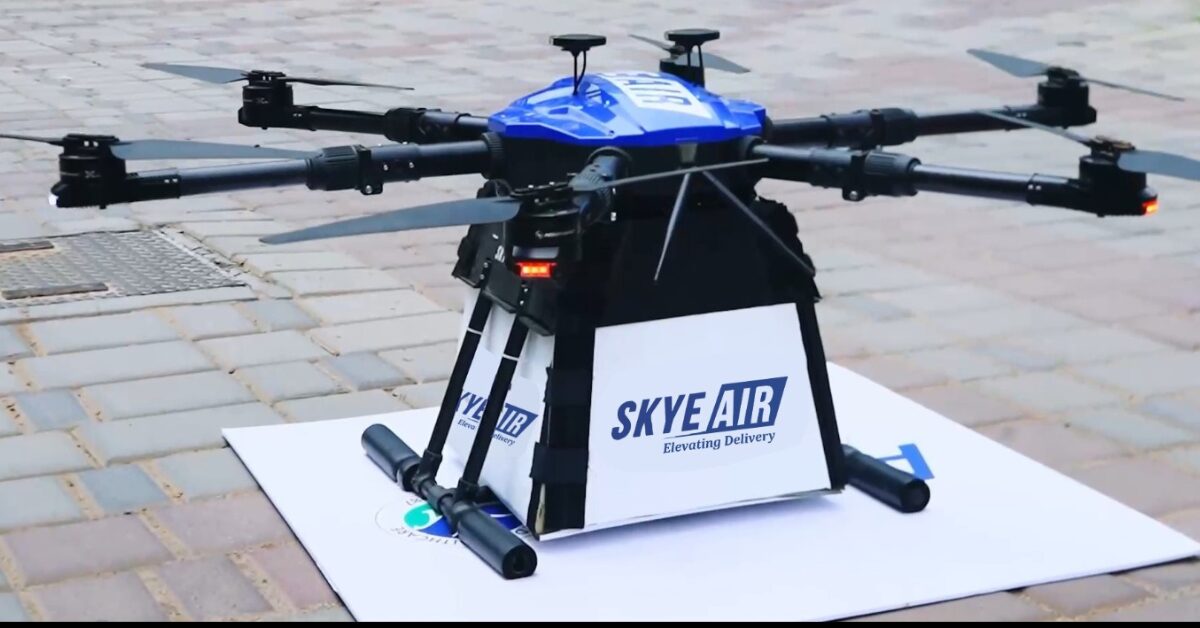
Indian drone delivery startup Skye Air Mobility has secured $9 million (approximately ₹83 crore) in a Series B funding round led by IAN Alpha Fund, with participation from AVNM Ventures, Faad Capital, Bajaj Capital, and existing investors including Chiratae Ventures, Mount Judi Ventures, and several undisclosed high-net-worth individuals. The capital will be raised in two tranches, with about $4 million expected to close this month and the remaining amount to be raised over the next three to four months. Founded in 2019, Skye Air is a drone technology company specializing in B2B last-mile delivery services, currently operating a fleet of 33 drones and managing 60 Skye Pods (drone stations) in Gurugram. This funding round marks a significant milestone for India’s drone delivery ecosystem, signaling the transition from pilot projects to scalable commercial operations.
The rapid growth of e-commerce penetration and increasing consumer demand for instant delivery have created unprecedented challenges for India’s logistics infrastructure. Traditional delivery methods struggle with efficiency in densely populated urban areas, where traffic congestion, rising labor costs, and inadequate infrastructure pose significant obstacles. Drone delivery offers an innovative solution by bypassing ground transportation constraints, enabling point-to-point direct transport that dramatically reduces delivery times. Skye Air’s business model demonstrates the viability of drone operations in the Indian market through its B2B2C approach, partnering with D2C brands, e-commerce platforms, and third-party logistics providers to offer time-definite delivery services. This model not only enhances delivery efficiency but also reduces logistics costs, providing crucial support for the sustainable development of India’s e-commerce ecosystem.
Skye Air’s Technical Architecture and Operational Model
Skye Air’s technical framework is built around an end-to-end automated system that covers the entire delivery process from order receipt to final delivery. Drones collect packages from pickup points, fly to designated drone stations for sorting, then follow optimized flight paths to deliver packages to Skye Pods located at apartment buildings. Each Skye Pod functions as an intelligent receiving point equipped with security locks and identification systems to ensure safe package storage. The final leg of delivery is completed by walkers who retrieve packages from Skye Pods and deliver them to customers’ doorsteps, completing transactions through OTP verification or cash-on-delivery methods. This hybrid “drone + walker” model leverages the long-distance transportation advantages of drones while maintaining the flexibility and reliability of human service.
Skye Air currently serves 12 corporate clients, including prominent companies like Freedo, Flipkart, The Bombay Shaving Company, Bluedart, and Shiprocket. These partners primarily entrust time-sensitive urgent orders to Skye Air, covering high-value items such as medical supplies, electronics, and fashion apparel. Founder Ankit Kumar explained that the company spent considerable time establishing a comprehensive operational system in Gurugram, testing feasibility across various scenarios before developing a replicable business model. “Once we figured out how we needed to scale, how to expand, and what kind of unit economics needed to work, we decided it was time to move beyond Gurugram and expand to multiple other cities,” Kumar added. This careful approach to testing and iteration reflects the pragmatic attitude of Indian startups operating in complex market environments.
Funding Allocation and Expansion Strategy
The new funding will be deployed across three primary areas: geographical expansion, technological enhancement, and network development. Skye Air plans to extend operations to additional cities within Delhi NCR, including Noida, Greater Noida, Faridabad, and other parts of Delhi. Simultaneously, the company will invest in physical AI technology to improve drones’ autonomous decision-making capabilities and environmental adaptability. Furthermore, Skye Air will establish new operational centers in major metropolitan areas including Bengaluru, Mumbai, Pune, Hyderabad, and Kolkata. This multi-city expansion strategy enables rapid market penetration and creates economies of scale.
From a technological perspective, physical AI represents the next frontier in drone delivery. Unlike traditional programmed control systems, physical AI enables drones to perceive environmental changes in real-time, avoid dynamic obstacles, optimize flight paths, and maintain stable operation under complex weather conditions. Skye Air intends to allocate part of the funding toward developing more intelligent drone control systems, incorporating computer vision algorithms, sensor fusion technology, and edge computing capabilities. These technological upgrades will significantly enhance delivery safety and reliability, laying the foundation for large-scale commercial deployment. Additionally, Skye Air will optimize its ground infrastructure by designing more efficient Skye Pod layouts to reduce drone waiting times and increase overall throughput capacity.
Competitive Landscape of India’s Drone Delivery Market
Although India’s drone delivery market remains in its early stages, several competitors have emerged. Beyond Skye Air, platforms like Zomato’s TechEagle, Swiggy’s Air, and Dunzo’s Fly are testing drone delivery services. However, unlike these food delivery platforms, Skye Air focuses exclusively on B2B logistics, serving e-commerce companies and logistics providers. This differentiated positioning allows Skye Air to avoid direct competition with industry giants while building specialized logistics solutions. From a regulatory standpoint, the Indian government’s 2021 drone policy simplified approval processes for commercial operations, creating favorable conditions for industry development.
According to data from India’s Directorate General of Civil Aviation (DGCA), registered commercial drones exceeded 50,000 by the end of 2025, with approximately 30% deployed for logistics delivery. The government’s “Drone Shakti” initiative aims to establish India as a global hub for drone manufacturing and operations, projecting that the drone industry will contribute $15 billion to the Indian economy by 2030. Within this policy environment, startups like Skye Air have gained unprecedented opportunities. Nevertheless, the market faces numerous challenges including airspace management, privacy protection, safety standards, and public acceptance. Skye Air’s experience demonstrates that through collaboration with local authorities, transparent operational processes, and proactive communication, these challenges can be progressively addressed.
Global Drone Delivery Trends and India’s Unique Position
Globally, drone delivery is transitioning from experimental phases to commercial applications. Amazon’s Prime Air operates across multiple U.S. states, completing approximately 16,000 deliveries by February 2026; Alphabet’s Wing manages drone delivery networks in Australia and Finland; Chinese logistics giants like SF Express and JD.com are testing urban drone delivery systems. Compared to developed markets, India possesses distinct advantages: high population density enhances the economic viability of drone delivery; infrastructure gaps create market space for innovative solutions; and strong policy support promotes digital transformation and technological innovation.
However, the Indian market presents unique challenges. Tropical climate conditions including high temperatures, monsoons, and thunderstorms threaten drone flight safety; dense urban architecture and complex power line networks increase navigation difficulties; diverse linguistic and cultural contexts require localized operational strategies. Skye Air’s solutions address these local factors through heat-resistant battery systems, obstacle avoidance algorithms adapted to dense environments, and multilingual customer support. This deep localization approach offers valuable lessons for international drone companies entering the Indian market. From a global supply chain perspective, India’s drone delivery innovations provide replicable models for other emerging markets, particularly in regions with relatively weak infrastructure but strong digital demand.
Strategic Implications for Global Logistics Players
The evolution of India’s drone delivery ecosystem carries significant implications for global logistics companies and technology providers. First, the successful scaling of drone operations in challenging environments validates the technology’s adaptability across diverse geographical contexts. Second, India’s regulatory framework development offers insights for other governments crafting drone policies, balancing innovation with safety considerations. Third, the hybrid operational model combining aerial and ground elements demonstrates practical approaches to last-mile delivery optimization.
For multinational corporations operating in India, drone delivery presents opportunities to enhance supply chain resilience and customer experience. Companies can leverage drone networks for critical inventory replenishment, emergency medical supply distribution, and high-value item delivery. The technology’s ability to bypass ground infrastructure limitations makes it particularly valuable during disruptions caused by natural disasters, political unrest, or infrastructure failures. As drone technology matures and costs decline, integration with existing logistics networks will create hybrid systems that optimize both efficiency and coverage. The Indian experience suggests that successful implementation requires not only technological capability but also deep understanding of local market dynamics, regulatory environments, and consumer behavior patterns.
Source: inc42.com
This article was AI-assisted and reviewed by our editorial team.