Mexico's 2026 nearshoring strategy centers on deepening North American integration amid pivotal USMCA negotiations. With $1.86 trillion GDP (2025), 2% annual growth, and $619 billion in 2024 exports—81% bound for the U.S.—Mexico functions as a high-complexity manufacturing hub. Autos (25.2%), machinery (19.4%), and electrical equipment (17.1%) dominate exports, while $256+ billion in U.S. imports (41.3%) and 20.3% from China reveal dual-input dependencies. Success hinges on compliance discipline, infrastructure readiness, and strategic adaptation—not cost arbitrage.
Mexico’s Structural Position in the North American Trade Architecture
Mexico’s role in continental supply chains is no longer peripheral—it is structural, systemic, and increasingly indispensable to U.S. industrial resilience. As documented by Euro-American Worldwide Logistics (EA&WL), a U.S.-based logistics firm with deep operational presence across North America, Mexico’s nominal GDP is projected to reach $1.86 trillion in 2025, underpinned by steady annual growth of approximately 2%. This macroeconomic stability—modest but consistent—provides a critical anchor for nearshoring decisions that demand predictability over volatility. Unlike high-growth emerging markets prone to fiscal swings or currency shocks, Mexico offers calibrated expansion: not explosive, but durable. Its GDP scale places it among the world’s top 15 economies—larger than South Korea or Canada—and its geographic adjacency to the United States reduces transit time, inventory carrying costs, and customs friction in ways no Asian or European alternative can replicate. Crucially, this advantage is institutionalized: the United States-Mexico-Canada Agreement (USMCA) provides tariff-free access for qualifying goods, enforceable dispute mechanisms, and labor and environmental benchmarks that elevate compliance standards beyond mere cost arbitrage.
The country’s trade profile confirms its embeddedness—not as a standalone economy, but as a production node integrated into U.S. value chains. In 2024, Mexico’s total exports amounted to ~$619 billion, with 81% destined for the United States—a figure that dwarfs all other destinations combined. Canada accounted for just 3%, China for 1.5%, and Germany for 1.2%. This asymmetry is not accidental; it reflects decades of infrastructure co-development, cross-border industrial clustering (e.g., the automotive corridor stretching from Detroit to Monterrey), and regulatory harmonization on standards ranging from food safety to electrical certification. For multinational firms evaluating regional realignment, Mexico’s export concentration signals reliability—not dependency. It means suppliers know their primary customer, logistics providers have optimized lane capacity, and customs brokers maintain deep familiarity with Harmonized System (HS) code classifications for high-volume items like automotive harnesses or medical device components.
What makes this architecture especially consequential for 2026 is timing: the USMCA includes a formal review mechanism scheduled for that year, requiring all three signatories to assess implementation and consider potential modernization. EA&WL underscores that ‘Mexico’s economic trajectory in 2026 will hinge largely on the outcome of USMCA negotiations.’ A durable agreement would solidify North America as a competitive manufacturing bloc capable of countering external pressures through collective scale and regulatory coherence. Conversely, prolonged uncertainty—or substantive renegotiation—could trigger recalibration: dual-sourcing strategies, contingency warehousing in Texas or Ontario, or accelerated investment in compliance technology to manage shifting rules of origin. The structural position, therefore, is both an asset and a vulnerability—one whose stability must be actively maintained, not assumed.
Export Composition: Autos, Machinery, and the Life Sciences Inflection Point
Mexico’s export basket reveals far more than headline trade volumes—it maps the functional anatomy of North American manufacturing. According to EA&WL’s analysis, autos constitute 25.2% of total exports, machinery (including computers) 19.4%, and electrical machinery & equipment 17.1%. Together, these three categories account for over 61% of all Mexican export value, confirming the nation’s status as a high-complexity assembly hub rather than a low-value assembler. Notably, none of these sectors operate in isolation: automotive exports depend on imported semiconductors and precision tooling; machinery exports rely on imported control systems and software licenses; electrical equipment exports integrate components sourced globally but finalized on Mexican soil under U.S.-driven quality protocols. This layered interdependence means that nearshoring is not about relocating single factories—it is about relocating coordinated ecosystems where engineering, procurement, logistics, and regulatory affairs functions must operate in concert across borders.
For life sciences companies, the data points to a quiet but accelerating inflection. While pharmaceuticals represent only 1.5% of Mexico’s imports, optical, technical & medical apparatus accounts for 5.5% of exports—and crucially, 3.1% of imports. This dual flow indicates active participation in medical device manufacturing: importing high-precision sensors, calibration tools, and diagnostic components, then exporting finished imaging systems, surgical robotics subassemblies, or disposable biotech consumables. The presence of plastics (5.3% of imports) and organic chemicals (1.7%) further supports packaging, sterilization, and formulation capabilities. These figures are small in absolute terms but highly strategic: they reflect upstream integration into global health supply chains at precisely the moment when pandemic-era fragility has elevated regional redundancy as a core business imperative. As EA&WL notes, ‘for manufacturers in pharmaceuticals, biotech, medical devices, and advanced industrial sectors, Mexico’s position within the regional trade framework presents both opportunity and complexity.’ The opportunity lies in proximity-enabled speed-to-market for FDA-cleared devices; the complexity arises from managing dual regulatory pathways (COFEPRIS in Mexico, FDA in the U.S.) and maintaining audit-ready documentation across shared facilities.
‘Nearshoring success depends on more than labor cost arbitrage. It requires disciplined trade compliance, clear documentation strategy, structured customs planning, and resilient international logistics design.’ — EA&WL, Mexico in Focus: Trade, Nearshoring, and the 2026 Outlook
Import Dependencies: The U.S. and China as Dual Anchors of Input Supply
Mexico’s import structure tells a parallel story—one of deliberate dependency on two distinct sources of industrial inputs. In 2024, total imports stood at ~$626 billion, with the United States supplying $256+ billion (41.3%) and China providing 20.3%. These figures are not interchangeable: U.S. imports skew toward high-value, high-compliance intermediate goods—electrical machinery & equipment (18.8% of total imports), machinery (including computers) (16.8%), and vehicles (11.0%). Chinese imports, by contrast, dominate in foundational components: electronics substrates, passive components, generic chemical intermediates, and standardized mechanical parts. This bifurcation creates a de facto division of labor in Mexico’s input chain: U.S. suppliers deliver engineered, certified, and often proprietary subsystems (e.g., engine control units, MRI magnet assemblies); Chinese suppliers provide commoditized, scalable, and price-sensitive elements (e.g., printed circuit boards, stainless steel fasteners, polymer resins). The result is a hybrid sourcing model that leverages U.S. reliability and Chinese scale—a configuration increasingly common among Tier 1 automotive and medical OEMs seeking to balance risk and cost.
This duality carries profound implications for 2026 supply chain strategy. First, it reinforces the centrality of U.S. infrastructure: with over $256 billion in imports flowing north-to-south annually, U.S. ports (especially Laredo, Brownsville, and San Diego), rail networks (BNSF, Union Pacific), and bonded warehouse capacity directly determine Mexican production throughput. Any congestion or regulatory tightening at U.S. land borders—such as enhanced CBP inspections or new Section 301 enforcement—has immediate, measurable impact on Mexican factory lines. Second, it exposes exposure points: while Chinese imports constitute less than one-fifth of total value, they are disproportionately concentrated in electronics and chemicals—categories where substitution is technically difficult and lead times long. EA&WL’s data shows mineral fuels (7.5% of imports) and iron & steel (2.8%) also originate significantly from non-U.S. sources, underscoring that energy and basic materials security remain external dependencies. Companies building nearshoring operations must therefore map not just final assembly locations, but the full provenance of every BOM line item—identifying which inputs come from U.S. plants versus Chinese factories versus Korean or German suppliers—and stress-testing each against geopolitical, logistical, and regulatory contingencies.
The numbers also reveal a subtle but critical trend: Mexico’s import composition mirrors its export sophistication. Electrical machinery & equipment comprises 18.8% of imports and 17.1% of exports—a near parity suggesting local value addition at the component level. Similarly, machinery imports (16.8%) closely track machinery exports (19.4%). This symmetry implies growing domestic capability in integration, testing, and final configuration—not merely screwdriver assembly. For firms assessing relocation, this means evaluating not just wage rates, but the depth of local engineering talent, availability of test labs, and maturity of local supplier development programs. A factory in Querétaro may import German sensors and U.S. software but employ Mexican firmware engineers to adapt them for North American clinical trials—a value-add that transcends traditional offshoring paradigms.
USMCA 2026: The Defining Catalyst for Regional Integration or Fragmentation
The 2026 USMCA review is not a procedural formality—it is the most consequential inflection point for North American supply chains since the agreement’s 2020 entry into force. EA&WL explicitly identifies this milestone as the hinge upon which Mexico’s economic trajectory will pivot: ‘A durable agreement would solidify North America as a competitive manufacturing bloc. Continued uncertainty, however, may require companies to maintain flexible routing, diversified sourcing, and proactive compliance oversight.’ What makes the 2026 review uniquely potent is its scope: unlike prior trade pacts, USMCA includes built-in sunset provisions, digital trade annexes, labor enforcement mechanisms with rapid-response labor panels, and detailed rules of origin for autos requiring 75% regional content (up from NAFTA’s 62.5%). These features were designed to be reviewed—and potentially strengthened—after six years, precisely to address evolving technological, environmental, and labor realities. The negotiation window opens formally in early 2026, with technical working groups expected to convene throughout the year and ministerial-level talks intensifying in Q3 ahead of the December deadline.
Three issues will dominate the agenda, each with direct supply chain consequences. First, digital trade modernization: current USMCA provisions prohibit data localization and ensure cross-border data flows, but lack granularity on AI governance, cloud sovereignty, and cybersecurity incident reporting—gaps increasingly relevant for connected medical devices and autonomous vehicle software. Second, labor enforcement: recent cases involving auto parts plants in Matamoros and Puebla have tested the rapid-response mechanism, revealing administrative bottlenecks and evidentiary thresholds that may prompt revisions to expedite remedies. Third, environmental standards: with both U.S. and Canadian climate policies accelerating, pressure will mount to align Mexico’s clean energy transition roadmap with regional decarbonization goals—potentially affecting incentives for greenfield battery or hydrogen facility investments. For manufacturers, the stakes are concrete: a strengthened labor chapter could raise minimum wages in export zones, compressing short-term margins but improving workforce retention; updated digital rules could mandate interoperable e-invoicing platforms across all three countries, reducing customs clearance time by 12–18 hours per shipment; revised environmental criteria might unlock preferential financing for solar-powered factories in Baja California.
Crucially, the 2026 process is not binary—’success’ or ‘failure’—but dimensional. Even without sweeping amendments, technical updates to Annex 4-A (customs administration) or Chapter 5 (origin procedures) could yield material efficiency gains: standardizing electronic certificates of origin, expanding pre-arrival processing windows, or harmonizing valuation methodologies for R&D-intensive goods. EA&WL’s emphasis on ‘structured customs planning’ and ‘resilient international logistics design’ reflects recognition that incremental improvements matter as much as grand bargains. Firms preparing for 2026 should therefore treat the review not as a distant political event, but as an operational planning cycle: auditing current USMCA compliance documentation, stress-testing rules-of-origin calculations against proposed changes, engaging third-party customs brokers with multijurisdictional audit experience, and developing scenario plans for outcomes ranging from seamless renewal to phased renegotiation. The goal is not to predict the outcome—but to ensure readiness for any outcome.
Logistics Infrastructure: Bridging the Physical Gap Between Theory and Execution
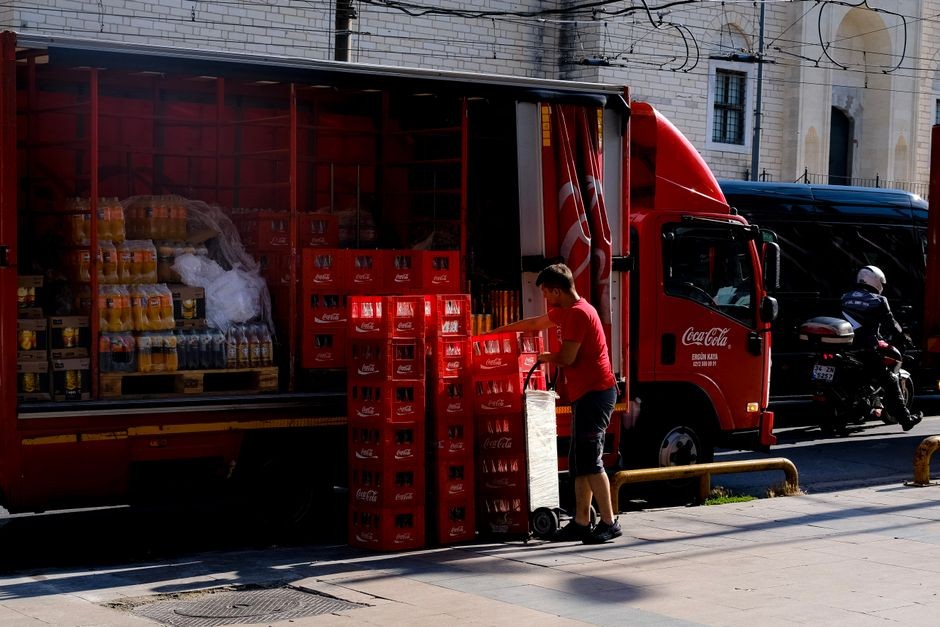
Nearshoring theory often emphasizes proximity; nearshoring execution hinges on physical connectivity. Mexico’s logistics infrastructure—while improving—is neither uniform nor fully synchronized with U.S. standards, creating friction points that compound at scale. EA&WL’s analysis implicitly frames this challenge: with 81% of exports bound for the U.S. and $256+ billion in U.S. imports, the land border crossing network bears extraordinary load. Laredo alone handles over 40% of all U.S.-Mexico truck traffic, yet its inspection capacity, weigh station throughput, and bonded warehouse density remain constrained relative to demand. Delays here ripple backward: a 24-hour hold at Nuevo Laredo can idle a Juárez electronics line producing automotive ECUs, triggering cascading late deliveries to Detroit assembly plants. Rail, while more efficient for bulk and heavy cargo, faces different constraints: limited double-stack clearance on key corridors, inconsistent intermodal terminal capacity in Guadalajara and Monterrey, and scheduling inflexibility compared to truckload services. These are not abstract deficiencies—they translate directly into landed cost premiums, inventory carrying penalties, and service-level agreement breaches that erode nearshoring ROI.
Yet infrastructure gaps coexist with targeted strengths. Mexico’s Pacific ports—Manzanillo and Lázaro Cárdenas—have undergone significant modernization, with Lázaro Cárdenas now offering direct rail connections to the U.S. Midwest via Kansas City Southern (now CPKC). This corridor reduces ocean-to-rail transit time for Asian-sourced components by up to 3 days versus West Coast alternatives, making it strategically vital for companies managing hybrid China-Mexico supply chains. Similarly, inland logistics parks in Querétaro and Aguascalientes feature Class A warehousing, on-site customs brokerage, and dedicated CBP preclearance lanes—features that lower administrative overhead and accelerate release cycles. EA&WL’s emphasis on ‘resilient international logistics design’ acknowledges this duality: success requires avoiding blanket assumptions (‘all Mexican ports are congested’) and instead conducting lane-by-lane, mode-by-mode, facility-by-facility assessments. A medical device company shipping sterile kits from Tijuana to San Diego may prioritize air freight with bonded courier services; an auto supplier moving stamped chassis parts from Ramos Arizpe to Fort Wayne may optimize for rail consistency over speed; a pharma firm importing temperature-controlled APIs may require specialized cold-chain warehouses in Monterrey with COFEPRIS-certified validation protocols.
The 2026 horizon adds urgency to infrastructure planning. As USMCA modernization discussions progress, logistics modernization is likely to be a key deliverable—particularly around digital customs interoperability (e.g., linking Mexico’s SIICEX platform with U.S. ACE and Canada’s CARM systems) and harmonized inspection protocols for trusted traders. EA&WL’s call for ‘disciplined trade compliance’ and ‘clear documentation strategy’ gains concrete meaning here: firms that invest now in EDI integration, automated tariff classification engines, and real-time shipment visibility platforms will be best positioned to capitalize on 2026 upgrades. Conversely, those relying on manual HS code lookups, paper-based certificates, or fragmented carrier relationships risk falling behind as border processes digitize. The infrastructure challenge, therefore, is not merely physical—it is digital, procedural, and human. It demands logistics leadership that speaks fluent customs law, data architecture, and cross-border operations—not just transportation management.
Strategic Imperatives for Multinationals: Beyond Cost Arbitrage to Systemic Resilience
The data compiled by EA&WL—$1.86 trillion GDP in 2025, 2% annual growth, $619 billion in 2024 exports, 81% bound for the U.S., $256+ billion in U.S. imports, and 20.3% imports from China—collectively refute the outdated notion that nearshoring is primarily about wage differentials. Instead, they reveal a sophisticated, multi-layered calculus where geography, governance, infrastructure, and institutional trust converge. For multinationals, the strategic imperative in 2026 is to move beyond tactical relocation and embrace systemic resilience: designing supply chains that absorb shocks, adapt to regulatory evolution, and generate value beyond cost reduction. This requires rethinking three foundational pillars. First, compliance must shift from a back-office function to a front-line strategic capability—embedded in product design (e.g., configuring modular components to meet shifting USMCA rules of origin), procurement (e.g., qualifying second-tier suppliers for labor/environmental audits), and logistics (e.g., maintaining real-time records for CBP’s Automated Commercial Environment). Second, sourcing must evolve from binary choices (U.S. vs. China) to multi-origin orchestration—leveraging U.S. inputs for certification-critical subsystems, Mexican engineering for integration, and Asian components for scalable base layers—all governed by dynamic risk scoring models.
Third, investment must prioritize capability over capacity. Building a larger factory in Monterrey delivers limited advantage if it lacks on-site regulatory affairs staff fluent in both FDA and COFEPRIS requirements, or if its ERP system cannot auto-generate USMCA certificates of origin with audit trails. EA&WL’s observation that ‘nearshoring success depends on more than labor cost arbitrage’ is validated by the export-import composition data: 25.2% autos, 19.4% machinery, 17.1% electrical equipment—all high-complexity, high-compliance sectors demanding integrated engineering, quality, and regulatory functions. The most successful nearshoring deployments in 2026 will therefore be those that treat Mexico not as a cheaper version of elsewhere, but as a distinct operating environment requiring localized talent, adaptive processes, and continuous regulatory engagement. This means investing in bilingual technical training programs, partnering with Mexican universities on applied R&D, and embedding compliance officers within product development teams—not just in customs departments. It means measuring success not solely by cost-per-unit, but by time-to-FDA-clearance, audit readiness score, or percentage of locally qualified Tier 2 suppliers.
Ultimately, the 2026 outlook is not predetermined—it is shaped. EA&WL’s analysis provides the empirical foundation; the strategic response belongs to firms willing to treat supply chain redesign as a holistic enterprise initiative, not a siloed procurement exercise. With USMCA’s future hanging in the balance and Mexico’s trade architecture under unprecedented scrutiny, the companies that thrive will be those that view data not as static statistics, but as diagnostic indicators—revealing where to deepen U.S. integration, where to diversify Chinese dependencies, where to upgrade infrastructure partnerships, and where to invest in human capital that turns regulatory complexity into competitive advantage. The numbers tell the story; the strategy writes the next chapter.
Related Reading:
- Mexico’s USMCA 2026 Strategy: What Manufacturers Need to Know Now
- North American Supply Chain Resilience Report: Auto, Medical, and Tech Sectors
- Mexico Logistics Infrastructure Analysis: Ports, Rail, and Border Crossings
Source: eawlogistics.com
This article was AI-assisted and reviewed by our editorial team.