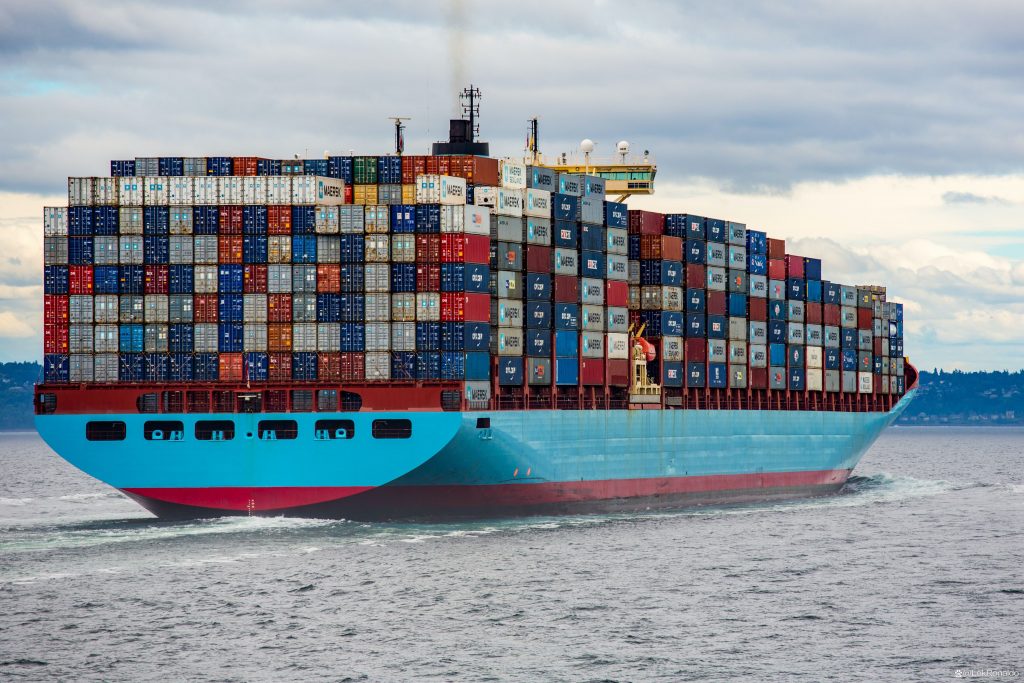
In the high-stakes arena of global perishable trade, Southeast Asia has emerged as both a tantalizing opportunity and a logistical minefield. With rising urban incomes, expanding middle-class consumption, and deepening regional integration under the ASEAN Free Trade Area (AFTA), demand for premium fresh produce—Thai mangoes, Vietnamese dragon fruit, Malaysian durians, and Chinese Yunnan roses—is surging. Yet behind this growth lies a stark contradiction: 2023 industry data shows an average cold-chain loss rate of 28% for fresh cargo shipped from China to ASEAN markets, with some commodity categories exceeding 40%. This is not merely inefficient—it is economically unsustainable. For exporters, each percentage point of spoilage erodes margins, damages brand reputation, and triggers costly disputes. For regional retailers and e-grocers, inconsistent supply undermines shelf-life planning and customer trust. And for consumers, it means higher prices and compromised quality.
The ‘Death Triangle’ of ASEAN Fresh Logistics
Unlike mature cold-chain corridors such as Europe’s or North America’s, the China–ASEAN fresh produce lane suffers from three interlocking structural vulnerabilities—what practitioners now call the ‘Death Triangle’: regulatory fragmentation, thermal discontinuity, and last-mile fragility. These are not isolated operational hiccups; they constitute systemic risk vectors that compound exponentially across the journey.
First, regulatory fragmentation remains the single largest source of avoidable delay. ASEAN nations maintain divergent, non-harmonized import protocols for agricultural goods. Indonesia mandates HALAL certification for all processed food imports—and while fresh flowers are exempt, their packaging materials, preservatives, and even transport containers may trigger compliance reviews. Thailand requires dual documentation: a Ministry of Public Health-issued health certificate and a BOI (Board of Investment)-approved VAT prepayment mechanism for duty-free warehousing. Vietnam enforces a mandatory Import Registration Certificate (IRC) that can take up to 10 working days if filed manually. According to the Southeast Asia Agricultural Cooperatives Federation (SEACOF), 62% of documented spoilage incidents in 2023 were directly traceable to customs delays—not temperature excursions, but bureaucratic bottlenecks causing ambient exposure during port dwell time.
Second, thermal discontinuity reflects the technical and infrastructural immaturity of maritime cold chain infrastructure. While reefer vessels have existed for decades, their deployment in intra-Asia trade remains suboptimal. Most container lines allocate only 10–15% of vessel capacity to refrigerated units on China–Southeast Asia routes—and those units are often shared across multiple shippers via less-than-container-load (LCL) consolidation. This creates dangerous ‘power competition’: when dry cargo shares a container slot adjacent to a reefer unit, power draw spikes can destabilize compressor performance. Even more critical is the 40% risk of refrigeration interruption during transshipment at hubs like Singapore or Hong Kong, where cold boxes are frequently disconnected from shore power for extended periods due to port congestion or manual handling protocols. A temperature deviation of just +3°C for 24 hours accelerates microbial growth in strawberries by 300%, according to research published in the Journal of Postharvest Technology.
Breaking the Triangle: The ‘Controlled Chain’ Framework
Against this backdrop, a new operational paradigm is gaining traction—not ‘cold chain,’ but ‘controlled chain’. As articulated by Shanghai-based logistics innovator Xinhan Logistics, which has executed over 217 live fresh LCL shipments between 2020 and 2024, the goal is no longer simply maintaining low temperatures, but ensuring end-to-end controllability: visibility, predictability, and intervention capability at every node. Their framework rests on three pillars—integrated customs orchestration, real-time thermal governance, and hyper-localized delivery engineering—each validated through empirical case studies and quantifiable KPIs.
The first pillar, integrated customs orchestration, transcends traditional ‘double-clearance, all-inclusive’ marketing claims. It is a country-specific, pre-validated, digitally embedded process. In Indonesia, Xinhan partners directly with BPJPH—the national halal certification body—to conduct ingredient-level pre-screening before shipment, reducing HALAL-related hold-ups from 7 days to under 72 hours. In Thailand, they leverage BOI-certified bonded warehouses at Laem Chabang Port to defer VAT payment until post-clearance release, eliminating cash-flow lockup and accelerating release cycles. Crucially, they deploy ‘bond insurance’—a $50,000 pre-funded customs bond—to absorb inspection penalties instantly, preventing cargo detention. Across 217 shipments, this reduced average customs dwell time by 68%, directly correlating with a 21-point drop in temperature-related spoilage.
The second pillar, real-time thermal governance, marries hardware precision with cloud-native responsiveness. Each reefer container is equipped with dual-mode北斗+GPS tracking and SHT30-grade sensors (±0.3°C accuracy), feeding continuous telemetry into a client-accessible dashboard. When anomalies occur—such as a compressor failure en route to Penang—the system triggers automated alerts, and the operations team coordinates within 120 minutes with pre-contracted cold storage facilities at transshipment ports. In one 2024 incident, this protocol salvaged 80% of a $22,000 vegetable consignment that would otherwise have been written off. Further upstream, Xinhan mandates pre-cooling protocols calibrated per commodity: pressure differential cooling for cut flowers, hydrocooling for tropical fruits, and vacuum pre-cooling for leafy greens—reducing field heat by >90% prior to loading.
Engineering Last-Mile Resilience Across Archipelagos and Monsoons
The final pillar—hyper-localized delivery engineering—addresses what many forwarders treat as an afterthought: the final leg of the journey. In Indonesia’s archipelagic geography, standard road freight fails utterly. Xinhan’s solution layers modal intelligence: refrigerated trucks for Java Island, air-cargo handoffs to local cold couriers like J&T Express Cold Chain for outer islands, and solar-powered refrigerated motorbikes for rural distribution in Central Luzon (Philippines, though outside ASEAN scope, illustrates the scalability). In Thailand, monsoon season floods render conventional routes unreliable; their routing algorithm prioritizes elevated highways and integrates Thai State Railway’s chilled rail wagons for northbound deliveries to Chiang Mai. In Ho Chi Minh City, where traffic congestion routinely extends last-mile delivery to >24 hours, Xinhan deploys overnight ‘pre-dawn dispatch’ windows (4–6 a.m.) supported by municipal green-lane permits—cutting average urban delivery time to 12 hours.
Crucially, these efforts are backed by material science: insulated EPP (expanded polypropylene) containers lined with aluminum foil reflectivity, integrated phase-change material (PCM) ice packs that maintain -2°C for 48 hours, and real-time temperature logging at the package level. Unlike generic ‘cold boxes,’ these units are certified to ISTA 3A standards for shock and thermal resistance. Field testing at Guangzhou’s Jiangnan Fruit & Vegetable Market confirmed that such packaging sustained internal temperatures within ±0.8°C of setpoint across 32 simulated delivery scenarios—including 45°C ambient exposure and 90-minute motorcycle transit.
From Tactical Fix to Strategic Partnership: The 5-Dimensional Due Diligence Framework
As adoption grows, buyers must move beyond price-driven selection. Xinhan proposes a rigorous 5-dimensional due diligence framework for evaluating ASEAN-focused cold-chain partners:
- Certification Rigor: Does the provider hold valid Cold Chain Logistics Operating License (China MOHURD) and do partner cold storages carry HACCP or ISO 22000 certification?
- Monitoring Transparency: Is real-time sensor data accessible via mobile app? Is sensor accuracy verified annually by third-party metrology labs (e.g., SGS or TÜV)?
- On-Ground Customs Presence: Are there licensed, in-country customs brokers with physical offices in Jakarta, Bangkok, and Ho Chi Minh City—not just subcontracted agents?
- Risk Transfer Mechanism: Is comprehensive cold-chain cargo insurance included, covering not just physical damage but also temperature deviation liability and customs delay indemnity up to 120% of declared value?
- Linguistic & Cultural Fluency: Do account managers speak native Thai/Vietnamese/Indonesian and understand regulatory nuances—e.g., that Vietnam’s IRC application requires notarized company seal impressions, not just scanned documents?
This framework transforms the forwarder relationship from transactional service to strategic co-investment. One Yunnan rose exporter, after switching providers using this checklist, reduced annual spoilage costs from $218,000 to $32,000—a 85% reduction—while increasing order frequency by 2.3x and winning exclusive shelf space at Central Group’s Tops Market in Thailand.
Conclusion: Control as Competitive Advantage
The evolution of Southeast Asia’s fresh produce logistics is emblematic of a broader shift in global supply chain philosophy: from cost-minimization to certainty-maximization. In a world where climate volatility, regulatory unpredictability, and infrastructure gaps persist, the most valuable asset is not the lowest quote—but the highest degree of control. As demonstrated across 217 shipments, the convergence of pre-emptive compliance, granular thermal intelligence, and adaptive local execution can compress spoilage rates from 28% to under 5%, unlocking previously unviable market segments—from premium flower subscriptions in Jakarta to same-week durian deliveries in Manila. For brands competing on freshness, speed alone is obsolete; stability, transparency, and resilience are now table stakes. The next frontier lies not in colder temperatures, but in smarter control—turning the ‘Death Triangle’ into a virtuous cycle of trust, velocity, and value.
Source: Xinhan Logistics, “China Freight Forwarders’ 5-Year Cold Chain Breakthrough: LCL Fresh Sea Freight to Southeast Asia — Dual-Clearance, Temperature Monitoring & Last-Mile Delivery Full-Chain Preservation Guide (217 Live Case Studies)”, 2024. Data drawn from proprietary operational logs, SEACOF 2023 Perishables Loss Survey, and Guangzhou Jiangnan Cold Storage Test Reports.